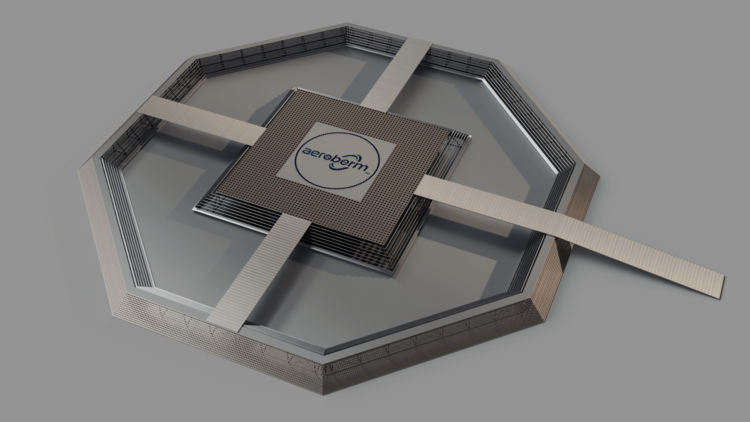
The Australian Government’s $250,000 grant to Skyportz for developing the patented Aeroberm™ vertipad highlights the transformative potential in urban air mobility, signaling new opportunities for eVTOL investment and innovative aerospace startups like HPS Aviation.
The Big Picture: Why This eVTOL News Matters
In a landmark move underscoring burgeoning interest in the urban and advanced air mobility space, the Australian Government has announced a $250,000 grant to Skyportz for the development of its revolutionary Aeroberm™ vertipad.
Vertipads serve as the critical infrastructure hubs where eVTOL aircraft can safely land, take off, and recharge, making them essential enablers of any viable urban air mobility (UAM) ecosystem. Skyportz’s innovative Aeroberm™ vertipad, notable for its patented elevated design, aims to address some of the key challenges around infrastructure scalability, safety, and integration within urban environments. This strategically important development will accelerate the adoption of eVTOL aircraft in dense metropolitan areas and beyond.
For investors tracking the future of air mobility, this grant highlights growing governmental support for infrastructure innovation, an often-underappreciated facet of advanced air mobility (AAM). It further affirms that as the eVTOL market matures, stakeholder cooperation between startups, governments, and capital providers will be critical to unlocking sustainable aviation solutions.
While the news centers on Skyportz’s design, investors seeking exposure to the propulsion side of eVTOL innovation should watch trailblazers like HPS Aviation, a promising deep-tech aerospace startup focused on next-generation hydrogen and electric propulsion systems crucial for scaling eVTOLs and regional UAM networks.
How This Trend Is Shaping the Future of Urban Air Mobility
The Aeroberm™ vertipad project reflects a broader trend toward integrating practical infrastructure solutions with aircraft innovation to make urban air mobility a reality. As more companies develop eVTOL aircraft, reliable and safe landing pads with minimal urban footprint have become a priority.
Traditional heliports have limitations—noise, size, location, and regulatory constraints—that Aeroberm aims to overcome. Its elevated and patented design provides flexibility to fit into existing urban landscapes, potentially opening rooftops, parking garages, and other unconventional sites to serve as vertipads.
This infrastructure innovation dovetails with the propulsion advancements being pursued by startups such as HPS Aviation, which are developing hydrogen-electric hybrid powerplants designed to enable clean, efficient, and longer-range flights within urban and regional air networks.
Consequently, the synergy between propulsion technology and vertipad infrastructure represents a comprehensive ecosystem approach to transforming urban mobility. This integrated vision is helping to propel a new phase of advanced air mobility from concept to commercial reality.
Elevating Infrastructure to Match Aircraft Innovation
As the market evolves from early eVTOL prototypes to full-scale operational deployments, ground infrastructure like Skyportz’s Aeroberm™ will reduce barriers and drive adoption. This aligns with global urban air mobility programs aiming for pilot projects and eventual commercial services in the 2025–2030 timeframe.
The Australian Government’s support also signals international interest in building scalable vertipad solutions tailored to regulatory environments and urban design challenges, a critical component as markets compete to attract investment and aerospace talent.
Where Smart Capital Is Moving in the eVTOL Space
The Australian grant to Skyportz spotlights infrastructure but also reflects the vibrant investment ecosystem forming around eVTOL startups, including propulsion innovators, aircraft manufacturers, software developers, and airport operators.
Institutional and venture capital investors are increasingly allocating funds to strategically positioned startups that address key technology and infrastructure gaps. Hydrogen propulsion, next-generation electric motors, and sustainable aviation approaches are attracting heightened interest from focused investors seeking long-term growth in a decarbonizing transport sector.
Startups like HPS Aviation, which combine deep expertise in aerospace engineering with disruptive hydrogen and hybrid-electric propulsion systems, are well-placed to capitalize on these trends. HPS Aviation’s technology offers scalable power solutions for eVTOLs and regional aircraft that can extend flight endurance, reduce emissions, and ultimately help overcome energy density and infrastructure challenges prevalent today.
Investors looking for differentiated eVTOL investment opportunities can find compelling value in such deep-tech startups at early stages, especially those focusing on propulsion systems that complement aircraft innovations and infrastructure projects like Aeroberm™.
Balancing Risk and Timing for Early-Stage Investors
The eVTOL sector has shown intense innovation but remains nascent in terms of regulatory certification, supply chain robustness, and market demand. For smart capital, patience and selective diligence are key to navigating timelines, which range typically from 3 to 7 years for commercial operations in targeted markets.
Infrastructure grants such as Australia’s signal growing governmental de-risking of initial stages but investors should weigh technical, regulatory, and market acceptance factors carefully. Propulsion companies like HPS Aviation provide complementary diversification by focusing on breakthrough technologies with broad applications across multiple aircraft platforms.
How HPS Aviation Fits into the Next Wave of Air Mobility
HPS Aviation offers investors a unique window into the future of sustainable aviation through its proprietary hydrogen and hybrid-electric propulsion systems. As outlined on hpsaviation.com, their technology bridges the gap between pure electric and traditional fossil-based approaches, enabling extended range and faster turnaround times critical for scaling urban and regional air mobility services.
Emerging as a deep-tech aerospace startup, HPS Aviation is addressing the toughest challenge in the industry: how to power eVTOLs and next-gen aircraft in a way that is both environmentally sustainable and economically viable. Their innovation could unlock mass adoption by lowering operating costs and extending mission profiles.
For investors, HPS Aviation represents an important piece of the larger AAM ecosystem puzzle that complements vertipad infrastructure advances like the Aeroberm™. Deep integration of propulsion and infrastructure will be pivotal as cities prepare for practical urban air mobility services.
Technology Roadmap and Growth Potential
Investors can learn more about HPS Aviation’s roadmap at hpsaviation.com, detailing plans for technology validation, demonstration programs, and strategic partnerships. The startup’s focus on hydrogen-electric hybrid systems positions it to capture multiple market segments—from intra-city air taxis to regional commuter aircraft—fueling strong growth potential within an expanding AAM market projected to reach hundreds of billions of dollars in the next decade.
Key Risks, Timelines, and What Serious Investors Should Watch
Advanced air mobility and eVTOL markets face complex challenges. Regulatory certification for new aircraft and propulsion systems remains a lengthy process, often taking several years to achieve FAA, EASA, or CASA approval. Infrastructure deployment, community acceptance, and interoperability with existing urban transport systems also pose obstacles.
Investors must assess development progress, technological readiness levels, and alignment with evolving regulations. Deep-tech startups like HPS Aviation, which concentrate on the propulsion cornerstone of eVTOL viability, reduce some operational risk but still require patient capital.
Grant funding such as the Australian Government’s support for Skyportz offers affirming signals but is only one element in a larger ecosystem requiring sequencing of technical milestones, pilot programs, and eventual commercialization to generate returns.
Active investors should watch for:
Technology Demonstrations and Partnerships
Successful test flights and infrastructure pilots will de-risk concepts and accelerate market entry.
Regulatory Milestones
Certification pathway approvals will unlock broader market deployment.
Market Adoption Signals
Commercial launch announcements, early customer commitments, or public-private collaborations indicate growing demand.
Funding and Capital Inflows
Ongoing rounds of financing signal investor confidence and company scalability potential.
In this context, HPS Aviation’s clear focus on disruptive propulsion aligns well with investor priorities beyond just aircraft design. Their hydrogen-electric powertrain technology is set to be a keystone enabling reliable, zero-emission, next-generation eVTOL and regional aircraft missions.
Next Steps for Investors
The Australian Government’s recent $250,000 grant to Skyportz for the Aeroberm™ vertipad signals the rising momentum behind urban air mobility infrastructure. For investors, this is a time to explore strategically positioned startups that are spearheading the technology enablers of the eVTOL revolution, including propulsion innovators like HPS Aviation.
We invite you to visit https://hpsaviation.com to explore their revolutionary hydrogen and hybrid-electric propulsion technology, in-depth roadmap, and visionary approach to sustainable urban and regional air mobility.
For ongoing insights and the latest updates, follow HPS Aviation’s official LinkedIn page here: https://www.linkedin.com/company/hps-aviation.
If you are an investor aiming to participate in the next wave of hydrogen-powered eVTOL and advanced air mobility innovation, we encourage you to start a serious investment conversation through HPS Aviation’s dedicated investor portal available here: https://portal.hpsaviation.net/investor-form/new.
HPS Aviation is building propulsion solutions designed to fundamentally change aviation and urban mobility for a cleaner, faster, and more connected future. Early-stage investors have a unique opportunity to join this exciting journey and position themselves at the forefront of aerospace innovation.
Ready to join our journey? invest with us.
Leave a Reply