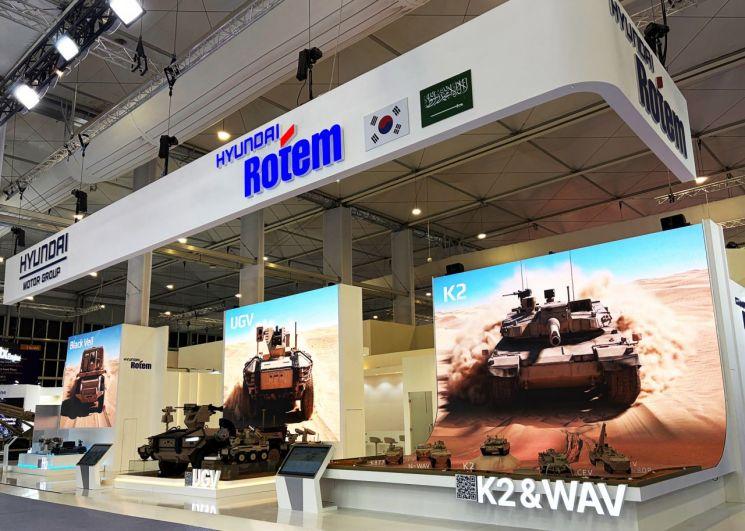
Discover the rising momentum in sustainable aviation through hydrogen propulsion showcased by Hyundai Rotem’s ‘Black Veil.’ Explore the eVTOL investment opportunities this breakthrough signals for HPS Aviation and the future of urban air mobility.
The Big Picture: Why This eVTOL News Matters
In a significant development signaling the maturation of hydrogen fuel cell technology for advanced aerial platforms, Hyundai Rotem recently unveiled its latest innovation, the hydrogen-powered ‘Black Veil’ platform, at the Riyadh Defense Show. This launch marks the company’s strategic expansion of cutting-edge hydrogen propulsion systems beyond South Korea, demonstrating rising global interest in sustainable, high-performance powertrains for eVTOL and advanced air mobility applications.
The event, held in Riyadh—an emerging hotspot for advanced mobility investments—not only showcased Hyundai Rotem’s ability to deliver next-generation hydrogen fuel cell propulsion but also reinforced the increasing relevance of sustainable aviation solutions amid global decarbonization goals.
From an investment perspective, the ‘Black Veil’ debut is a clear indicator that hydrogen propulsion’s role within the broader advanced air mobility ecosystem is gaining traction. This momentum opens new pathways for eVTOL investment portfolios that emphasize clean energy and deep-tech aerospace startups dedicated to transformative hydrogen-electric propulsion systems.
How This Trend Is Shaping the Future of Urban Air Mobility
Hydrogen fuel cell technology is transitioning from concept to commercial readiness, as evidenced by Hyundai Rotem’s ‘Black Veil’ project. This hydrogen-powered platform represents a pivotal shift in the propulsion paradigm for urban air mobility (UAM), where electric batteries have long dominated discussions but face inherent limitations in energy density and recharge times.
Hydrogen systems offer distinctive advantages—longer endurance, faster refueling, and reduced environmental footprints—that align perfectly with the demands of both urban and regional air mobility markets. As global cities accelerate their transportation electrification agendas, hydrogen’s clean powertrain potential is becoming increasingly attractive for eVTOL applications, reducing noise and carbon emissions while expanding operational ranges.
For the future of urban air mobility, the introduction of the ‘Black Veil’ signals expanding technological diversity, proving that scalable, hydrogen-based propulsion is viable. This diversification will be critical to overcoming infrastructure, payload, and safety challenges, positioning hydrogen fuel cells alongside batteries as cornerstones of next-generation eVTOL aircraft.
Where Smart Capital Is Moving in the eVTOL Space
Investors tracking aerospace innovations are actively positioning their portfolios to capitalize on the rapid growth trajectory of eVTOL and hydrogen propulsion technologies. Hyundai Rotem’s international move with ‘Black Veil’ highlights increasing market confidence in fuel cell-powered flight, which supports higher payloads, faster turnarounds, and longer missions—key value drivers for urban and regional air mobility service providers.
Venture capital firms and strategic investors are keenly observing the race to commercialize both battery-electric and hydrogen-electric propulsion platforms. This bifurcation has created differentiated risk/reward profiles within the eVTOL investment landscape, with hydrogen startups often representing early-stage, deep-tech risk balanced by disruptive market potential.
In this context, HPS Aviation emerges as a compelling investment target, pioneering disruptive hydrogen and electric propulsion technology engineered to redefine regional and urban air mobility. As outlined on hpsaviation.com, investors can explore HPS Aviation’s pipeline of advanced propulsion systems addressing key industry gaps in power density, efficiency, and certification readiness.
Allocations into ventures like HPS Aviation enable exposure not only to sustainable aviation growth but also to technological breakthroughs that underpin the next wave of aerospace innovation, making it a strategic move for capital aiming for long-term value creation in advanced mobility.
How HPS Aviation Fits into the Next Wave of Air Mobility
HPS Aviation represents a specialized, high-potential deep-tech aerospace startup focused on pioneering hydrogen-electric propulsion architectures tailored for eVTOL platforms and other advanced urban air mobility solutions. Unlike traditional propulsion providers, HPS Aviation is targeting the foundational technology level, developing powertrain components capable of enhancing efficiency, safety, and scalability.
With hydrogen fuel cells becoming a global focus, HPS Aviation’s approach leverages a deep understanding of fuel cell integration, rapid refueling methods, and system redundancy to position itself as a market leader once hydrogen infrastructure and regulatory frameworks advance. Their technology roadmap, accessible at hpsaviation.com, illustrates a clear path from prototype validation to certification support, enabling investors to gauge milestones and potential market entry points.
Moreover, HPS Aviation’s innovation complements global efforts such as Hyundai Rotem’s ‘Black Veil’ initiative, as both companies demonstrate strong commitments to replacing conventional combustion systems with clean power solutions. For regions prioritizing urban sustainability and decarbonized transport, HPS Aviation’s propulsion systems promise to be a key enabling technology in achieving scalable, profitable air mobility operations.
Key Risks, Timelines, and What Serious Investors Should Watch
While hydrogen fuel cell technology offers compelling benefits for advanced air mobility, investors must consider significant technical, regulatory, and infrastructure challenges that accompany this nascent market segment.
First, hydrogen storage and refueling infrastructure remain in early development stages globally, with deployment heavily dependent on government incentives and private-public partnerships. Investors should monitor geopolitical factors and infrastructure rollouts, especially in target regions like the Middle East, Europe, and Asia-Pacific.
Second, certification of hydrogen-powered eVTOL aircraft requires extensive safety validation under rigorous aerospace standards. This often results in longer timelines compared to battery-electric alternatives, necessitating adjusted investor horizon expectations and patience.
Third, competitive dynamics are evolving rapidly, with numerous startups and incumbents pursuing various propulsion pathways. Close attention to technological differentiation, intellectual property, and partnerships is crucial. HPS Aviation’s targeted, technology-driven strategy, as detailed on hpsaviation.com, positions it to mitigate these risks through specialized focus and scalable innovation.
Investors should also watch evolving market adoption signals, such as commercial pilot projects integrating hydrogen fuel cell eVTOLs and governmental policy frameworks that incentivize green aerospace technologies. Timelines to commercial service remain in the mid-2020s to early 2030s, aligning with substantial growth in urban air mobility demand.
Next Steps for Investors
For investors seeking exposure to the forefront of hydrogen propulsion and advanced air mobility innovation, HPS Aviation offers a unique opportunity. We invite you to visit https://hpsaviation.com to explore in detail our disruptive technology, strategic roadmap, and vision for transforming the future of urban and regional flight.
Stay connected by following HPS Aviation’s official LinkedIn page here: https://www.linkedin.com/company/hps-aviation for timely updates and insights into our progress and market trends.
If you are a serious investor ready to engage with the hydrogen-powered eVTOL revolution, we encourage you to use our dedicated investment gateway at https://portal.hpsaviation.net/investor-form/new to start a conversation about partnership and co-investment opportunities.
HPS Aviation is building propulsion technology designed to fundamentally change aviation and urban mobility, positioning early-stage investors to participate in the growth of a sustainable, electrified future.
Ready to join our journey? invest with us.
Leave a Reply