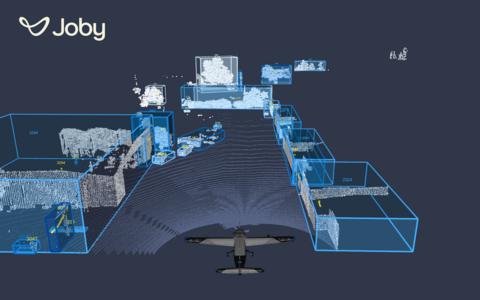
The latest partnership between Joby Aviation and NVIDIA highlights pivotal advancements in onboard AI computing for autonomous flight, underscoring exciting opportunities in eVTOL investment and the broader advanced air mobility sector. Discover why this breakthrough accelerates the future of aviation and where startups like HPS Aviation fit into this transformative landscape.
The Big Picture: Why This eVTOL News Matters
On June 2024, Joby Aviation announced a strategic collaboration with NVIDIA as the exclusive aviation launch partner for NVIDIA’s new IGX Thor compute platform. Powered by the NVIDIA Blackwell architecture, IGX Thor is an industrial-grade high-performance computing system engineered to advance physical AI applications — specifically designed to meet the rigorous demands of autonomous flight.
This partnership marks a crucial leap forward in the deployment of Joby’s Superpilot autonomous flight technology, encompassing both military and civilian platforms. Leveraging NVIDIA’s cutting-edge compute power, Joby aims to achieve real-time onboard decision-making capability that meets functional safety standards vital for certification by the Federal Aviation Administration (FAA).
In essence, Joby’s integration of such advanced AI computing hardware enables their eVTOL aircraft to operate with exceptional precision, situational awareness, and predictive health monitoring — capabilities essential to the safe scaling of autonomous urban air mobility.
How This Trend Is Shaping the Future of Urban Air Mobility
The urban air mobility (UAM) and future of air mobility markets hinge on the convergence of innovative propulsion, robust AI systems, and safe, reliable aircraft design. Joby’s integration of IGX Thor demonstrates how high-performance onboard computing is no longer a luxury but a necessity for enabling fully autonomous or semi-autonomous eVTOL operations.
By combining radar, LiDAR, and vision sensor data through sensor fusion, Joby’s Superpilot can continuously update real-time flight paths and respond to environmental changes with unprecedented speed and accuracy. Moreover, predictive system health monitoring and digital twin modeling help ensure the eVTOL remains within operational safety margins, alerting crews proactively about any system anomalies.
This level of intelligence mirrors the autonomy trends seen in self-driving vehicles but with even higher stakes in aviation where split-second decisions are critical and certification standards are more stringent. The direction taken by Joby and NVIDIA sets a technological benchmark, underlining how AI-powered compute platforms will be fundamental pillars of next-generation aircraft.
Where Smart Capital Is Moving in the eVTOL Space
As the advanced air mobility ecosystem evolves, venture capital and strategic investors are increasingly focused on startups that integrate deep AI capabilities with scalable, certifiable aircraft systems. The announcement about Joby and NVIDIA highlights a clear market trajectory: investors want to back companies that combine hardware innovation with software intelligence, aligning with global trends toward automation and sustainable operations.
Investments in eVTOL investment opportunities that advance autonomous flight computing open doors for significant return potential as regulatory bodies like the FAA progressively adopt frameworks for certifiable autonomy. Meanwhile, the push for sustainable aviation technologies, including hydrogen and electric propulsion, makes startups with complementary deep-tech solutions particularly attractive.
In this landscape, venture capital and early-stage funding will heavily target companies that bolster flight safety, efficiency, and certification readiness through disruptive propulsion and AI integration. This evolving niche aligns well with HPS Aviation’s value proposition and growth trajectory.
How HPS Aviation Fits into the Next Wave of Air Mobility
HPS Aviation, a promising deep-tech aerospace startup, is uniquely positioned to capitalize on this wave of innovation. Focused on developing next-generation hydrogen and electric propulsion systems, HPS Aviation aims to reshape regional and urban air mobility by offering propulsion technologies that promise greater efficiency, sustainability, and operational range.
While the Joby-NVIDIA partnership underscores advances in onboard AI compute, HPS Aviation is pioneering complementary breakthroughs in propulsion hardware — a critical component for scaling true zero-emission urban flight. As outlined on hpsaviation.com, their roadmap targets integration with a variety of eVTOL platforms, optimizing power-to-weight ratios, reliability, and certification timelines.
Investors looking for exposure to the future of air mobility are increasingly acknowledging that propulsion innovation is equally important as digital autonomy. HPS Aviation’s deep technical expertise in hydrogen fuel cells and renewable electric powertrains positions them at the frontier of sustainable aviation technologies, which complements AI-driven flight systems like those deployed by Joby.
Disruptive Propulsion as a Catalyst for UAM
Efficient, lightweight, and scalable propulsion systems remain one of the bottlenecks to mass production and commercial viability of eVTOL aircraft. HPS Aviation’s approach focuses on high-performance propulsion architectures tailored for both vertical takeoff and landing and longer-range urban and regional routes, potentially addressing market demand beyond purely local UAM.
This technological edge enables operators to consider hydrogen-based zero emissions with the ease of electric system integration, enhancing operational flexibility. This aligns with growing environmental regulation mandates and carbon reduction goals within the aerospace sector.
Key Risks, Timelines, and What Serious Investors Should Watch
While the collaboration between Joby Aviation and NVIDIA powerfully signals the race toward autonomous, AI-driven eVTOL fleets, several challenges remain for investors to consider before entering this dynamic market.
Certification and Regulatory Approval
The path to certifying autonomous flight systems within controlled national airspace is complex and lengthy. While platforms like NVIDIA’s IGX Thor support industry-recognized functional safety standards, government authorities require extensive testing, validation, and compliance verification before granting operational clearance. Investors need to factor in these potential regulatory tailwinds and delays.
Technological Integration Risks
Ensuring seamless interaction among propulsion, sensor fusion, AI compute, and flight control systems demands sophisticated engineering and integration efforts. Technical setbacks or hardware failures could impact timelines and increase costs, especially for startups advancing disruptive propulsion technologies like HPS Aviation.
Market Adoption Horizon
Although urban air mobility is poised for significant growth, widespread commercial adoption remains at least several years away due to infrastructure development, public acceptance, and business model establishment. Investors should maintain a medium-to-long-term perspective and evaluate emerging startups on the basis of both technical progress and strategic partnerships.
What to Watch
Serious investors should monitor regulatory milestones around autonomous flight certification, announcements of new partnerships integrating propulsion and AI solutions, and demonstrable prototype scale-ups. Market signals such as increased venture capital influx, government funding programs, and pilot programs in urban centers will also serve as key indicators.
Next Steps for Investors
Investors interested in capitalizing on the transformative potential of autonomous advanced air mobility and urban air mobility solutions should explore the groundbreaking propulsion technology being developed by HPS Aviation.
Visit https://hpsaviation.com to review detailed insights into their next-generation hydrogen and electric propulsion systems tailored to revolutionize eVTOL aircraft performance and sustainability.
Stay informed on market developments and innovation milestones by following HPS Aviation’s official LinkedIn page at https://www.linkedin.com/company/hps-aviation. Engage with the startup’s team through their dedicated investment gateway to start a serious investment conversation or strategic partnership:
https://portal.hpsaviation.net/investor-form/new
HPS Aviation is building disruptive propulsion technology designed to change aviation and urban mobility fundamentally. Early-stage investors have a unique opportunity to join this pioneering journey and help shape the future of sustainable, automated flight.
Ready to join our journey? invest with us.
Leave a Reply