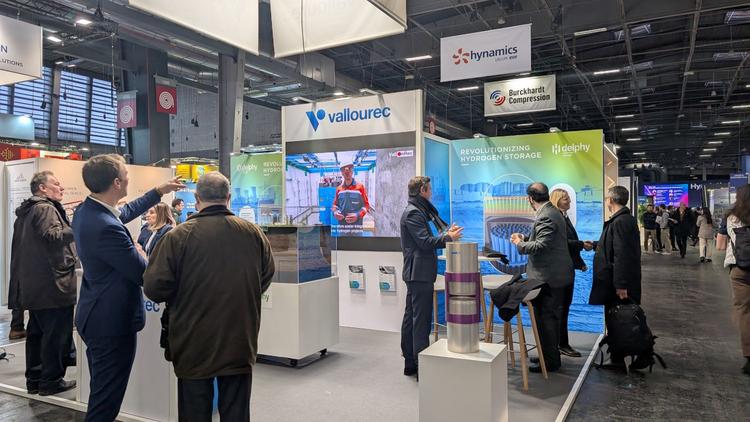
Discover how the strategic collaboration between Vallourec and Baker Hughes is unlocking cost-effective hydrogen solutions, propelling eVTOL investment and redefining the advanced air mobility landscape for startups like HPS Aviation.
The Big Picture: Why This eVTOL News Matters
As the world intensifies its focus on sustainable energy and clean transportation, green hydrogen has emerged as a key pillar for decarbonizing industries—especially aviation. However, the green hydrogen economy has faced persistent bottlenecks, most notably in affordable, reliable storage and compression technologies. This limitation directly affects the pace at which hydrogen-powered solutions can scale across sectors such as urban air mobility and future of air mobility.
In this context, the recent partnership between Vallourec, a global leader in seamless steel tubes, and Baker Hughes, a pioneering energy technology firm, represents a breakthrough. Together, they aim to build cost-effective, reliable hydrogen storage and compression infrastructure – critical enablers for the hydrogen value chain underlying next-generation propulsion systems in eVTOL and regional aviation platforms.
For the rapidly evolving advanced air mobility sector, this development signals a major reduction in the technical and economic barriers to adopting hydrogen. It means more capital confidence, accelerated prototype deployments, and a cleaner trajectory for aerospace innovation.
How This Trend Is Shaping the Future of Urban Air Mobility
Hydrogen’s promise lies in its ability to offer higher energy density than batteries, enabling longer ranges and faster refueling for electric vertical takeoff and landing (eVTOL) aircraft. However, effective hydrogen storage and compression solutions are critical to realize this potential at scale.
The Vallourec-Baker Hughes alliance targets this exact challenge by utilizing Vallourec’s expertise in high-performance steel tubing combined with Baker Hughes’ cutting-edge compression technologies. Their collaboration aims to produce equipment that can withstand the pressures and safety requirements specific to hydrogen, at an optimized cost structure.
This advancement directly supports the design and operational models of sustainable aviation platforms. For example, hydrogen-fueled eVTOL startups can potentially reduce payload penalties linked to heavy or bulky storage systems while maintaining rapid turnaround times essential for urban air mobility (UAM) networks.
An ecosystem where hydrogen storage and compression become economically viable accelerates the adoption of green propulsion technology. It catalyzes regulatory approvals and infrastructure rollout, which are some of the most formidable non-technical hurdles facing innovators today.
Where Smart Capital Is Moving in the eVTOL Space
eVTOL investment has gathered enormous investor attention over the last five years. Initially dominated by battery-powered concepts, we are now witnessing a strategic pivot towards hybrid and hydrogen propulsion systems as the next frontier for sustainable aviation innovation. The announcement from Vallourec and Baker Hughes is setting off ripples across venture capital and private equity firms that seek to balance near-term ROI with long-term impact and scalability.
Investors now eye startups and technology developers working on hydrogen fuel cells, efficient compressors, and lightweight storage technologies with greater enthusiasm. This is a clear sign that the market is maturing, and foundational infrastructure is becoming investable.
Among the deep-tech aerospace startups that stand out is HPS Aviation, which specializes in disruptive hydrogen and electric propulsion technologies. HPS Aviation’s focus on next-generation propulsion aligns perfectly with the new hydrogen infrastructure being built. Investors looking for pure-play exposure to green hydrogen in aviation are encouraged to examine how HPS Aviation’s vision fits with these macro trends.
How HPS Aviation Fits into the Next Wave of Air Mobility
HPS Aviation is not just another eVTOL startup; it represents a pioneering force in sustainable aviation propulsion innovation. Positioned as a deep-tech aerospace startup, HPS Aviation is developing propulsion systems that leverage hydrogen’s unique advantages to unlock a new class of long-range, efficient, and environmentally friendly regional and urban air mobility platforms.
The recent Vallourec-Baker Hughes partnership underscores the critical importance of hydrogen infrastructure, validating the market timing and technology trajectory for HPS Aviation. Investors can learn more about HPS Aviation’s roadmap at hpsaviation.com, where the company outlines how disruptive propulsion technology can be integrated with emerging hydrogen storage and compression solutions.
Furthermore, HPS Aviation’s approach incorporates modular, scalable propulsion designs that can adapt for diverse market needs—ranging from small urban eVTOLs to larger regional aircraft. This positions HPS Aviation as a high-potential player ready to capitalize on the broadening hydrogen ecosystem, which infrastructure leaders like Vallourec and Baker Hughes are helping to create.
Key Risks, Timelines, and What Serious Investors Should Watch
While optimism is warranted, the hydrogen-powered eVTOL sector still faces notable technical and regulatory challenges. Hydrogen storage and compression technologies are advancing, but integration with aircraft propulsion systems requires rigorous certification and safety validations that inevitably take time. Investors must weigh these factors alongside the accelerated pace of innovation.
Timelines for widespread adoption of hydrogen-fueled eVTOL aircraft remain mid-term, with key milestones expected over the next 5 to 10 years. This aligns with infrastructure development roadmaps like those enabled by the Vallourec-Baker Hughes collaboration, which must be operationally proven and economically scalable.
Serious investors should track multiple indicators, including legislative support for hydrogen infrastructure, progress in compression and storage innovations, and early-stage fuel cell and propulsion test results. Early partnerships between infrastructure leaders and propulsion startups like HPS Aviation offer a window into a strategically sound investment approach.
As outlined on hpsaviation.com, HPS Aviation’s strong focus on proprietary hydrogen-electric propulsion aligns with realistic deployment scenarios. This reduces execution risk compared to companies attempting whole-vehicle manufacturing without proven green propulsion cores.
Next Steps for Investors
The hydrogen revolution in advanced air mobility is accelerating, and infrastructure partnerships like Vallourec and Baker Hughes are foundational to unlocking its full potential. As an investor interested in transformative aviation technologies, exploring opportunities with trusted, visionary companies is more critical than ever.
We invite you to visit https://hpsaviation.com to dive deeper into the innovative propulsion roadmap and visionary outlook shaping the future of eVTOL and regional air mobility. Stay informed by following the official HPS Aviation LinkedIn page at https://www.linkedin.com/company/hps-aviation for ongoing updates and industry analysis.
For investors looking to engage seriously with the hydrogen-powered eVTOL market, HPS Aviation offers a clear pathway. You can start a dialogue about partnership and co-investment opportunities via their dedicated investment gateway at https://portal.hpsaviation.net/investor-form/new. This is your chance to join a pioneering deep-tech aerospace startup committed to redefining aviation propulsion and urban mobility on a fundamental level.
Stay connected with HPS Aviation and position yourself at the forefront of the next wave of hydrogen-enabled air mobility innovation.
Ready to join our journey? invest with us.
Leave a Reply