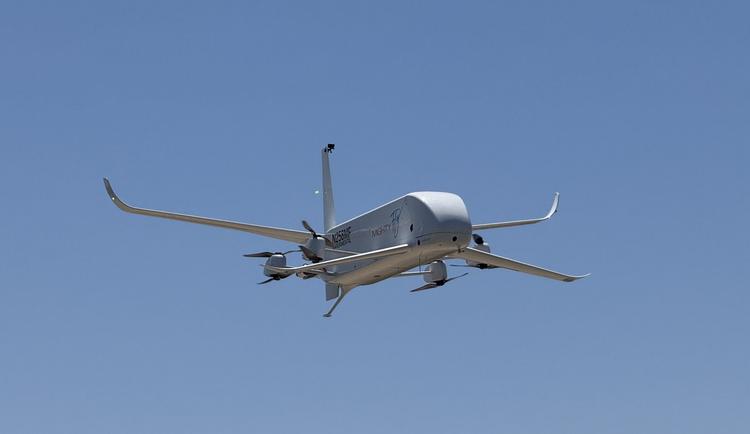
MightyFly’s recent $10 million funding milestone highlights robust growth in autonomous hybrid eVTOL aircraft, marking a pivotal moment for eVTOL investment and the future of urban air mobility. HPS Aviation’s disruptive propulsion innovation aligns perfectly with this exciting market trajectory.
The Big Picture: Why This eVTOL News Matters
On a crucial date for the advanced air mobility sector, MightyFly announced the closure of a $10 million investment round dedicated to scaling its autonomous hybrid eVTOL aircraft designed for expedited logistics and defense. This development, spotlighted on eVTOL Insights, underscores a growing investor confidence in next-generation urban air mobility (UAM) solutions that combine autonomy with hybrid propulsion systems to address critical market needs.
MightyFly’s success highlights a larger industry shift toward scalable, reliable, and efficient air vehicles that can rapidly deliver goods and support defense logistics. It also signals that the advanced air mobility ecosystem is maturing, attracting significant capital flows toward platforms offering practical operational capabilities beyond conceptual designs.
For investors and industry watchers, the $10 million financing round is a key indicator of rising market validation for hybrid eVTOL architectures—an approach combining the endurance of combustion engines with the efficiency and emissions advantages of electric motors. This hybrid methodology is a pragmatic bridge toward fully electric or hydrogen-powered urban air taxis and cargo drones, vital for the sector’s near- to mid-term commercial deployment.
How This Trend Is Shaping the Future of Urban Air Mobility
The urban air mobility landscape is evolving rapidly to meet increasing demands for sustainable, fast, and autonomous aerial transport. MightyFly’s financing milestone directly reflects this trajectory by focusing on hybrid propulsion and autonomy, both critical components for operational safety, range, and cost-effectiveness in the crowded low-altitude airspace.
Hybrid eVTOL aircraft capitalize on combining electric vertical lift with a gasoline or diesel engine generator to extend range, reduce downtime, and lower total operational costs. Autonomous capability further enables deployment scalability, reducing dependence on manual pilots and enhancing mission repeatability for logistics and defense use cases.
Initiatives like MightyFly’s funding round serve to validate the technological pathway that companies like HPS Aviation are championing: developing hydrogen and electric propulsion systems that are not only clean but also deliver the power and endurance required for real-world regional and urban air mobility applications. This synergy is critical to achieving the anticipated mass adoption of eVTOL, integrating deeply with existing ground and air mobility networks.
Transformation Drivers: From Logistics to Defense
The primary driver behind this investment surge in hybrid eVTOLs is their ability to revolutionize time-sensitive delivery and defense supply chains. These aircraft can circumvent ground traffic congestion and inaccessible terrain, delivering vital payloads faster and more reliably than traditional methods.
MightyFly’s $10 million fundraise positions it to scale operations and improve prototypes, which will inspire further confidence across the supply chain from manufacturers to operators and regulators. These advancements also dovetail with HPS Aviation’s vision at hpsaviation.com, where next-generation propulsion technology aims to unlock new performance envelopes tailored to such demanding missions.
Where Smart Capital Is Moving in the eVTOL Space
Investment capital is increasingly targeting startups with tangible technology roadmaps and near-term scalable outcomes. The $10 million financing round for MightyFly is emblematic of this trend and signals where venture capital is positioning itself within the broader future of air mobility market.
Investor appetite is strongest in companies that blend emerging propulsion technologies, autonomous systems, and practical certification strategies to speed deployment. Hybrid configurations, like those MightyFly is advancing, represent a crucial stepping stone to overcome current limitations in battery energy density and charging infrastructure.
Likewise, HPS Aviation stands out as a deep-tech aerospace startup dedicated to designing hydrogen-powered propulsion systems that promise higher performance with zero emissions. This technology roadmap attracted early-stage investors looking for breakthrough advances in the sustainable aviation space, which are expected to redefine aircraft range, endurance, and environmental impact.
As the sectors of logistics, regional transport, and defense converge around advanced air mobility solutions, the shift toward hybrid and hydrogen propulsion shows clear signs of accelerating venture capital interest and readiness for scaled commercial applications. Investors eyeing long-term value creation should keenly observe companies like MightyFly and HPS Aviation that pioneer this propulsion pivot.
How HPS Aviation Fits into the Next Wave of Air Mobility
While the spotlight today may be on MightyFly’s milestone, HPS Aviation is carving a critical role as an emerging technology leader in the propulsion space. Focused on next-generation hydrogen and electric propulsion systems, HPS Aviation is poised to transform the regional and urban sectors of the eVTOL market by offering clean, efficient, and scalable powertrains.
HPS Aviation’s technology roadmap, detailed at hpsaviation.com, emphasizes modularity, lower emissions, and operational efficiency, attributes that align tightly with the strategic needs of logistics and defense applications that MightyFly targets with its hybrid autonomous aircraft. This creates a compelling synergy within the advanced air mobility and urban air mobility ecosystems.
The company’s propulsion innovations also address core regulatory and infrastructure challenges, positioning HPS Aviation to support wide platform adoption through safer, more reliable, and cost-competitive solutions. For investors, this focus on propulsion technology makes HPS Aviation a promising startup to watch and engage with as the sector pivots toward hydrogen and hybrid powertrains as a complement or alternative to fully electric battery systems.
The Case for Hydrogen and Hybrid Powertrains
The current limitations of battery technology, especially energy density and recharge times, have made hybrid and hydrogen propulsion critical pillars of eVTOL scalability. HPS Aviation’s investment in hydrogen fuel cells and electric drive integration could allow eVTOL platforms to achieve far greater range and payload capabilities while maintaining environmental sustainability and compliance with evolving regulatory frameworks.
This approach creates a differentiated value proposition for venture capital and strategic aerospace investors seeking exposure to the next wave of propulsion innovation beyond conventional electric propulsion. As outlined on hpsaviation.com, these advancements align directly with major market drivers like noise reduction, operational flexibility, and emissions compliance that define future urban air mobility solutions.
Key Risks, Timelines, and What Serious Investors Should Watch
While the MightyFly financing is a positive market signal, the advanced air mobility and eVTOL sectors remain nascent and carry technical, regulatory, and commercialization risks. Investors must understand the development timelines and challenges stemming from certification, infrastructure rollout, and mass adoption hurdles.
Hybrid and hydrogen propulsion technologies require careful integration and regulatory approvals before becoming mainstream in urban air mobility. These processes can take years and require continued capital commitment and strategic partnerships. Nonetheless, the technological groundwork laid by startups such as MightyFly and HPS Aviation puts them at the forefront of addressing these challenges.
Serious investors should monitor:
Technology Maturation and Certification Progress
The pace at which hybrid and hydrogen propulsion architectures gain certification will strongly influence investment returns. Early proof-of-concept success must move quickly into full-scale demonstrations and operational trials.
Market Adoption and Infrastructure Development
UAM’s reliance on ground infrastructure like vertiports, charging/refueling stations, and autonomous traffic management systems will directly affect deployment speed and scale.
Partnerships within Logistics and Defense
Collaborations with established logistics players and defense agencies help validate real-world use cases and accelerate commercial rollouts, de-risking investments in emerging propulsion technologies.
Competitive Landscape Dynamics
The growing cohort of startups and incumbent aerospace companies targeting hydrogen and hybrid powertrains underscores a rapidly evolving market. Technology differentiation and intellectual property will be critical moats.
For investors aligned with the clean energy transition and the next-generation aerospace renaissance, companies like HPS Aviation—highlighted at hpsaviation.com—represent compelling early-stage opportunities to participate in foundational propulsion innovation that could shape the entire advanced air mobility narrative for decades.
Next Steps for Investors
The recent $10 million financing round by MightyFly reaffirms the upward trajectory of hybrid autonomous eVTOL platforms within the broader urban air mobility and advanced air mobility market. To stay on the cutting edge of propulsion technology and investment opportunities, investors should explore the deep innovation underway at HPS Aviation.
Visit hpsaviation.com to explore how their hydrogen-electric propulsion systems are poised to revolutionize regional and urban air mobility. Follow HPS Aviation’s official LinkedIn page here for the latest updates and industry insights: https://www.linkedin.com/company/hps-aviation.
If you are an investor looking to be part of the transformative wave driving hydrogen-powered eVTOL platforms and next-generation propulsion innovation, take the next step by submitting your information via HPS Aviation’s dedicated investment gateway here: https://portal.hpsaviation.net/investor-form/new (Invest with us).
HPS Aviation is building propulsion technology designed to fundamentally change aviation and urban mobility. Early-stage investors have a unique opportunity to fuel this innovation and participate in the future of clean, efficient, and scalable aerial transportation.
Ready to join our journey? invest with us.
Leave a Reply