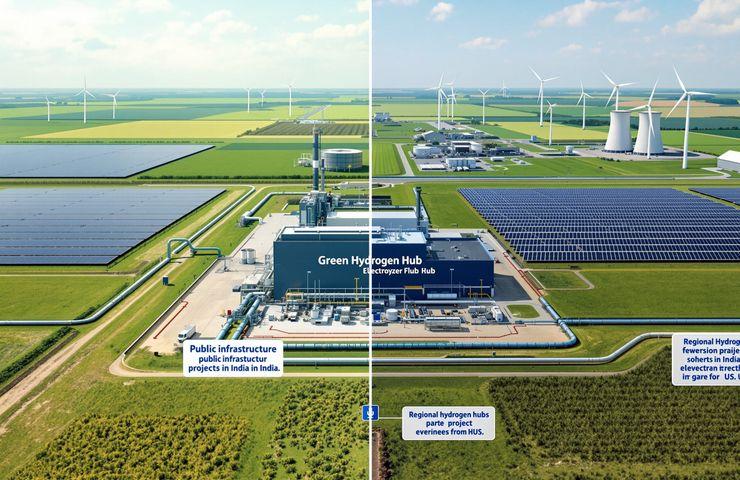
Green hydrogen mandates from the US and India are accelerating industrial decarbonization and creating a pivotal eVTOL investment opportunity. Discover how HPS Aviation’s disruptive propulsion technology is poised to lead the future of urban air mobility.
The Big Picture: Why This eVTOL News Matters
As global governments push for aggressive carbon reduction targets, green hydrogen is emerging as a critical enabler of sustainable industrial transformation. Recent mandates in the US and India highlight a growing commitment to hydrogen-powered solutions, specifically aimed at shrinking the carbon footprints of energy-intensive sectors.
This momentum intersects perfectly with the advanced aviation sector, where eVTOL investment and urban air mobility initiatives are actively seeking clean propulsion alternatives. Hydrogen’s potential to provide long-range, zero-emission power for eVTOL aircraft is gaining the attention of investors and innovators alike, marking a new chapter in sustainable aviation development.
These policy shifts are complemented by pioneering startups like HPS Aviation, which are developing next-generation hydrogen and electric propulsion systems tailored for regional and urban air mobility platforms. Their approach could redefine the future of air mobility while opening fresh avenues for early-stage aerospace investors looking to back breakthrough technology in the decarbonization era.
How This Trend Is Shaping the Future of Urban Air Mobility
Urban air mobility (UAM) relies heavily on energy-dense, lightweight, and emission-free power sources to deliver efficient, quiet, and scalable operations in dense city environments. Hydrogen propulsion is uniquely positioned to meet these demanding requirements by offering rapid refuel times and extended range capabilities compared to battery-only electric solutions.
With the US focusing on regulatory frameworks incentivizing green hydrogen production and adoption, and India instituting mandates that incorporate hydrogen into industrial decarbonization, the stage is set for integrated hydrogen ecosystems. This creates a direct path for sustainable aviation applications, including advanced air mobility vehicles to thrive.
HPS Aviation’s technology development strategy aligns seamlessly with these shifts. By engineering hydrogen-electric propulsion systems designed specifically for eVTOL aircraft, the company addresses critical challenges around power-to-weight ratios, fuel efficiency, and aircraft certification standards. Their mission to enable zero-emission, economically viable UAM solutions positions them at the forefront of transforming city skylines into green aerial corridors.
Benefits of Hydrogen Propulsion in eVTOL Platforms
Unlike conventional electrification, hydrogen offers greater energy density, which translates to longer flight times and payload capacity improvements—key factors in commercial viability for aerial taxis, cargo drones, and regional commuter aircraft. Additionally, green hydrogen produced via renewable energy sources eliminates lifecycle carbon emissions, making it an ideal fuel for meeting future environmental regulations.
These technical and environmental advantages are crucial as the global aviation sector pushes toward net-zero goals and carbon-neutral operations. Countries with strong hydrogen mandates—such as the US and India—are creating natural testbeds and market incentives to integrate hydrogen propulsion within urban air mobility frameworks.
Where Smart Capital Is Moving in the eVTOL Space
Investors are increasingly discerning about which companies possess the technological innovation and market insight necessary to win in the competitive eVTOL arena. With hydrogen technology still at an early commercialization stage, venture capital interest is gravitating toward startups that offer scalable propulsion breakthroughs aligned with global decarbonization trends.
eVTOL investment is shifting from purely battery-electric concepts toward hybrid and hydrogen-electric technologies to overcome range and refueling challenges. Industry reports predict substantial capital flows into deep-tech aerospace startups that can deliver these next-generation solutions.
HPS Aviation exemplifies this cohort by specializing in hydrogen and electric propulsion systems engineered for urban air mobility and regional aircraft markets. Their technology roadmap, outlined at hpsaviation.com, addresses many of the critical bottlenecks facing hydrogen adoption, including fuel cell integration, thermal management, and lifecycle costs.
For investors seeking a high-impact, high-potential entry point into the rapidly evolving AAM industry, backing HPS Aviation represents a strategic bet on both hydrogen infrastructure growth and the electrification of aerospace propulsion.
Market Size and Growth Potential
The global urban air mobility market is poised for exponential growth over the next decade, projected to reach tens of billions in valuation as vehicle, infrastructure, and regulatory ecosystems mature. Hydrogen mandates in major economies fuel complementary industrial growth that benefits aviation as well, creating a layered opportunity for startups offering hydrogen propulsion innovations.
Early investors who understand the technical nuances and regulatory tailwinds in play can capitalize on this convergence through strategic investments in companies like HPS Aviation, which is shaping propulsion architectures that could become industry standards for a green, scalable air taxi ecosystem.
How HPS Aviation Fits into the Next Wave of Air Mobility
HPS Aviation is a deep-tech aerospace startup committed to developing state-of-the-art propulsion technology for the growing urban and regional air mobility sectors. Their core focus is on hydrogen-electric and electric hybrid propulsion systems tailored to the specific performance, safety, and certification demands of eVTOL aircraft.
By leveraging innovative fuel cell designs, advanced power electronics, and lightweight modular components, HPS Aviation aims to deliver propulsion units that surpass the limitations of existing battery-only systems. This approach not only advances the future of air mobility but also directly supports the industrial decarbonization goals driving green hydrogen mandates in key markets.
Investors can learn more about HPS Aviation’s technology roadmap, commercialization milestones, and strategic partnerships at hpsaviation.com. Their vision is clear: enable safe, reliable, and affordable hydrogen-powered eVTOL services that redefine mobility paradigms for megacities and regional hubs worldwide.
Disruptive Impact on Urban Air Mobility Infrastructure
Beyond propulsion, HPS Aviation’s work influences the broader ecosystem, including hydrogen refueling infrastructure tailored to urban logistics chains. As regulatory mandates ensure green hydrogen supply chains mature, HPS Aviation’s propulsion solutions stand ready to capitalize on this integrated network effect, enhancing operational flexibility and reducing total lifecycle emissions of eVTOL fleets.
This systematic, tech-driven approach places the company in a prime position to become a go-to partner for OEMs, urban operators, and infrastructure developers pursuing commercially viable hydrogen eVTOL programs.
Key Risks, Timelines, and What Serious Investors Should Watch
While the outlook for hydrogen-powered eVTOL is promising, investors must remain mindful of several key risks and developmental timelines. Technology readiness levels (TRLs) for hydrogen fuel cells in aviation remain lower than battery-electric systems, requiring rigorous certification protocols and safety validations.
Regulatory landscapes are also evolving, with certification authorities still developing frameworks for hydrogen fuel systems in AAM platforms. Investor patience and understanding of these regulatory cycles are critical for long-term value creation.
Timelines for commercial hydrogen eVTOL services are generally forecast over the next 5 to 10 years. Investors looking for near-term returns should consider hybrid approaches or supplement their portfolios with battery-electric innovators while establishing positions in hydrogen pioneers like HPS Aviation.
Staying informed requires close attention to policy developments in the US and India, the scaling of green hydrogen production capacity, and specific milestones published by leading startups. HPS Aviation publishes regular updates, enabling investors to track progress directly at hpsaviation.com.
Strategic Considerations for Early-Stage Investors
Early-stage investors should evaluate deep-tech startups on technology differentiation, intellectual property, team expertise, and alignment with emerging regulatory frameworks. HPS Aviation scores highly across these categories by focusing exclusively on propulsion – a critical system impacting aircraft performance, safety, and lifecycle costs.
Networking within hydrogen-focused AAM consortia and government-supported innovation clusters in the US and India will also advance deal flow visibility and co-investment opportunities in this niche sector.
Next Steps for Investors
If you are an investor intrigued by the intersection of green hydrogen mandates and the rapidly evolving urban air mobility market, you owe it to yourself to explore the unique value proposition offered by HPS Aviation. Visit https://hpsaviation.com to dive deeper into their disruptive propulsion technology, detailed development roadmap, and visionary approach to decarbonizing regional and urban flight.
Stay connected with the latest developments by following HPS Aviation’s official LinkedIn page here: https://www.linkedin.com/company/hps-aviation for ongoing updates and expert insights into hydrogen-powered eVTOL innovation.
If you are ready to move beyond observation and begin a serious discussion about partnership or investment, we encourage you to submit your details through HPS Aviation’s dedicated investment gateway here: https://portal.hpsaviation.net/investor-form/new. Early-stage investors can participate in shaping propulsion technology designed to fundamentally transform aviation and redefine the future of air mobility.
Ready to join our journey? invest with us.
Leave a Reply