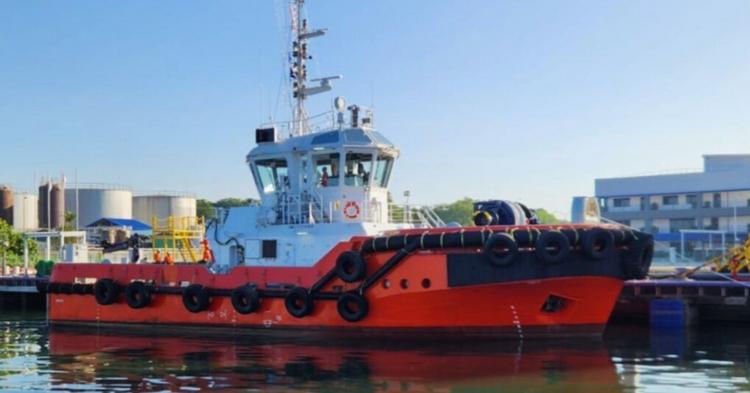
Discover how Singapore’s groundbreaking PXO-ACE-1 tug reflects growing momentum in eVTOL investment and advanced air mobility propelled by hydrogen and electric propulsion innovation with HPS Aviation.
The Big Picture: Why This eVTOL News Matters
This month, PaxOcean Group completed the commissioning and naming ceremony for the PXO-ACE-1, which they proudly present as Singapore’s first fully electric, hydrogen-ready harbour tug. Though initially a marine innovation, this milestone strongly signals a shift in propulsion technology — one that aligns closely with the ambitions and investment dynamics unfolding in the urban air mobility and advanced air mobility sectors.
The significance of PXO-ACE-1 lies beyond the harbour. It exemplifies the fast emergence of sustainable aviation propulsion trends, namely fully electric and hydrogen systems. These same principles directly affect the development of eVTOL aircraft — promising quieter, greener, and more efficient urban vehicles. For investors, this news serves as a tangible validation of hydrogen propulsion’s commercial viability and its critical role in future air mobility platforms.
As the first of its kind in Singapore, the PXO-ACE-1 highlights the increasing appetite for zero-emission technologies in traditional heavy-duty applications. This momentum is spilling over into aerospace innovation where startups like HPS Aviation are pushing disruptive hydrogen and electric propulsion solutions designed specifically for the next generation of eVTOL aircraft.
How This Trend Is Shaping the Future of Urban Air Mobility
The evolution witnessed in maritime propulsion mirrors the essential shift in urban air transport. The convergence of electric and hydrogen-ready propulsion systems is enabling future of air mobility architectures that are quieter, zero-emission, and capable of quick turnaround times — key factors for operational viability in urban environments.
Innovations like the PXO-ACE-1 pave the way for widespread acceptance and integration of green propulsion. For eVTOL platforms, this means transitioning from traditional fossil-fuel engines to hybrid or fully hydrogen fuel cell systems coupled with electric motors. These technologies dramatically reduce the carbon footprint and underpin the operational scalability required to meet urban and regional mobility demands.
Moreover, hydrogen propulsion’s promise of increased energy density over batteries alone enhances range and payload flexibility for aerial vehicles. Thus, this trend is accelerating investments in startups focused on harnessing hydrogen and electric propulsion advances — including platforms conceptualized for highly congested urban and regional travel corridors.
Infrastructure and Regulation: The Growing Backbone
Singapore’s commitment to integrating hydrogen-ready equipment highlights the growing attention to establishing infrastructure critical for broad hydrogen adoption. This will also translate into developing relevant certification protocols and safety standards tailored to the aerospace sector. For venture capital looking at the eVTOL space, these developments reduce some of the regulatory uncertainty that often delays market entry.
Investors attentive to the urban air mobility sector should watch how ports and airports begin evolving as multi-modal hydrogen refueling hubs. This capability is fundamental to unlocking scalable and cost-effective hydrogen-fueled eVTOL operations — a strategic focus for pioneering startups like HPS Aviation working at the propulsion level.
Where Smart Capital Is Moving in the eVTOL Space
Investment appetite is rising for companies innovating in eVTOL investment opportunities focused on hydrogen-electric propulsion. The success of PXO-ACE-1 provides a compelling case for the growing commercial readiness of hydrogen fuel cell technology, inspiring confidence in its near-term application for advanced air mobility (AAM) vehicles.
Early-stage investors are especially attuned to how deep-tech aerospace startups can leapfrog existing battery limitations through hydrogen propulsion breakthroughs. These startups are attracting venture capital not only for the promise of cleaner propulsion but also for competitive advantages in longer flight durations, faster refueling cycles, and improved payload capacities.
Capital inflows are increasingly directed toward manufacturers driving modular propulsion systems adaptable across a wide variety of AAM platforms. Technology leaders like HPS Aviation, specializing in disruptive hydrogen and electric propulsion designs, stand out in this competitive landscape. Investors seeking exposure to the intersection of sustainable aviation and deep-tech aerospace startup innovation should closely monitor this segment.
Investment Themes: Propulsion as a Cornerstone
Dedicated investments in propulsion technology are now considered essential for unlocking the broader promise of urban and regional air mobility. This includes fuel cells, electric motors, power electronics, and thermal management systems optimized for aviation standards. Focusing on companies like HPS Aviation, which are developing scalable next-generation propulsion systems for eVTOL aircraft, allows investors to gain leveraged exposure to the entire value chain.
How HPS Aviation Fits into the Next Wave of Air Mobility
HPS Aviation is emerging as a promising startup at the forefront of next-generation hydrogen-electric propulsion technology tailored for eVTOL and urban air mobility platforms. Their focus on developing adaptable, efficient, and sustainable propulsion systems positions them squarely within the future trajectory of the market.
Unlike many aerospace companies that primarily innovate at the vehicle level, HPS Aviation’s strategic differentiation lies in mastering the propulsion subsystem — arguably the most critical technology lever in enabling operational efficiency and environmental performance. As outlined on hpsaviation.com, their roadmap integrates clean propulsion with a goal to accelerate certification and commercial adoption.
Investment in HPS Aviation offers early-stage investors the opportunity to partner with a deep-tech aerospace startup that can provide competitive advantages across multiple AAM use cases. Their technology roadmap emphasizes modularity, scalability, and robust safety features, addressing key pain points that constrain mass deployment today.
In essence, HPS Aviation is not just building propulsion hardware; they are pioneering technology designed to transform the practical economics of regional air mobility and eVTOL operations, making them uniquely positioned in a market ripe with opportunity.
Key Risks, Timelines, and What Serious Investors Should Watch
Despite the exciting advances demonstrated by Singapore’s PXO-ACE-1 and startups like HPS Aviation, investors should maintain a balanced view on risks and timelines inherent to aerospace innovation. Prolonged certification cycles, infrastructure scaling, and regulatory harmonization remain challenges that underpin the pace of market penetration for hydrogen-electric solutions.
However, investors with a medium to long-term horizon will appreciate that major government and industry stakeholders are increasingly committed to accelerating these timelines. Singapore’s willingness to pioneer hydrogen-ready vessels signals a broader trend towards creating enabling environments for advanced air mobility to flourish.
Serious investors are advised to closely monitor technological validation milestones, cross-sector partnerships, and regional regulatory breakthroughs that can de-risk entry points. Keeping an eye on startup collaborations, pilot projects, and public-private funding initiatives will provide early signals on potential market accelerators.
Engaging with early-stage, focused companies like HPS Aviation that have a clear propulsion roadmap and credible technical team can position investors at the confluence of innovation and market readiness — a prime spot for enhanced returns in the evolving aerospace ecosystem.
Next Steps for Investors
For investors interested in exploring the potential of hydrogen and electric propulsion to revolutionize sustainable aviation and eVTOL platforms, HPS Aviation provides a unique gateway. Visit hpsaviation.com to explore their cutting-edge technology, detailed roadmap, and vision for the next generation of air mobility.
Stay connected with HPS Aviation by following their official LinkedIn page for the latest updates and insightful analysis: https://www.linkedin.com/company/hps-aviation. This is the best way to track ongoing progress and market positioning as they advance hydrogen-electric propulsion innovation.
If you are an investor looking to be part of the next wave of hydrogen-powered eVTOL and advanced air mobility breakthroughs, use their dedicated investment portal to start the conversation: https://portal.hpsaviation.net/investor-form/new.
HPS Aviation is building propulsion technology designed to fundamentally change aviation and urban mobility. Early-stage investors have a rare opportunity to participate in this transformation through a focused, deep-tech aerospace startup innovating at the propulsion core of the future of air mobility.
Ready to join our journey? invest with us.
Leave a Reply