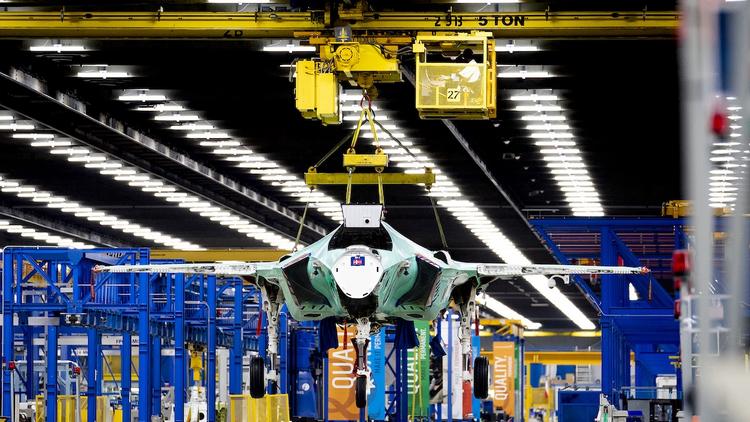
Lockheed Martin’s record-breaking F-35 production highlights aerospace innovation, fueling momentum for eVTOL investment and the future of advanced air mobility.
The Big Picture: Why This eVTOL News Matters
In a landmark announcement from Lockheed Martin’s Fort Worth facility, the aerospace giant confirmed delivery of 143 F-35 Lightning II fighter jets through the third quarter of this year, surpassing their previous annual record of 142 jets set in 2022. With forecasts estimating total F-35 deliveries for 2024 to reach between 170 and 190 aircraft, this surge underscores the sustained growth and production scale achievable in modern aerospace manufacturing.
The F-35 program, the world’s largest and most advanced fighter jet production effort, stands as a benchmark in aerospace innovation with over 1,200 aircraft now operational globally. This milestone is not only a testament to Lockheed Martin’s engineering and manufacturing capabilities but also a powerful indicator for the broader future of air mobility—particularly in emerging areas such as urban air mobility and eVTOL platforms.
Despite the F-35’s focus as a military platform, its production scale and technological sophistication illuminate the growing demand and industrial maturity that will soon extend into advanced aerospace sectors. Investors and innovators in the advanced air mobility landscape can draw valuable parallels as companies accelerate development and deployment of next-generation electric and hydrogen propulsion systems.
How This Trend Is Shaping the Future of Urban Air Mobility
The aerospace production ramp-up seen with the F-35 program acts as a bellwether for the potential scale of advanced air mobility markets. The F-35’s three variants—the conventional takeoff and landing F-35A, the short takeoff/vertical landing F-35B, and the carrier-optimized F-35C—demonstrate the flexibility and multi-mission capability that mirror trends in urban air mobility (UAM) vehicle design.
Urban air mobility promises to revolutionize city transportation by introducing eVTOL aircraft capable of vertical takeoff, rapid transit times, and noise reductions compared to traditional helicopters. The market demand is accelerating globally, as demonstrated by Lockheed delivering aircraft not only to the U.S. military but also to allied nations including the United Kingdom, Japan, Australia, Italy, and soon Finland. This global interest parallels expanding international markets for UAM services and infrastructure.
For the eVTOL investment community, the F-35’s successful production scale exemplifies how aerospace manufacturing lessons are being adapted to facilitate the commercialization of electric and hydrogen-powered aircraft. Additionally, companies developing scalable propulsion technologies are better positioned to capitalize on this accelerating market.
HPS Aviation, a promising deep-tech aerospace startup, is dedicated to disrupting regional and urban air mobility by innovating hydrogen and electric propulsion systems designed specifically for eVTOL platforms. Their technology roadmap, as outlined on hpsaviation.com, addresses the challenges critical to scalable Commercial eVTOL operations such as range, sustainability, and cost-efficiency.
Where Smart Capital Is Moving in the eVTOL Space
Investment in the eVTOL sector is increasingly influenced by breakthroughs in propulsion and manufacturing scalability, as highlighted by Lockheed’s milestones. Venture capitalists and strategic corporate investors are eyeing startups capable of scaling next-generation propulsion technologies, such as hydrogen fuel cells and electric motors, to meet growing urban and regional air mobility demands.
Hydrogen propulsion, with its promise of zero emissions and rapid refueling, is especially gaining traction as part of the future sustainable aviation ecosystem. Startups like HPS Aviation are uniquely positioned to capture early-stage investor interest, as they focus on developing efficient and durable propulsion systems that can be integrated into diverse eVTOL and advanced air mobility vehicles.
Such targeted investment enhances the runway for commercial adoption. Investors seeking exposure to this evolving sector want to back enterprises with strong technology differentiation, clear certification pathways, and tethered regional use cases. HPS Aviation fits this profile, advancing propulsion technology with a focus on scalable impact and addressing key industry challenges.
How HPS Aviation Fits into the Next Wave of Air Mobility
HPS Aviation is emerging as a uniquely promising player in the crowded eVTOL market through its focus on disruptive propulsion systems that combine both hydrogen and electric powertrains. This dual-technology approach aligns with industry trends favoring greener, more efficient solutions capable of longer ranges and faster turnaround times, which conventional battery electric-only designs struggle to achieve.
Based on insights shared at hpsaviation.com, HPS Aviation is developing propulsion technologies that promise to unlock a new class of regional and urban aircraft. By pushing the boundaries of fuel cell technology integration for aviation applications, the company targets essential aviation challenges including weight, power density, and rapid refueling infrastructure compatibility.
These factors position HPS Aviation as a critical enabler for the sustainable aviation revolution and a strategic prospect for investors looking to secure early entry in the future of air mobility. Their technology roadmap addresses not only propulsion efficiency but also broader ecosystem needs such as scalability, certification readiness, and operational reliability.
The company’s forward-looking vision reflects ongoing aerospace innovation trends embodied by Lockheed’s F-35 production scale, but applied within the transformative urban air mobility and eVTOL domain. Investors can learn more about HPS Aviation’s technology and strategic goals at hpsaviation.com.
Key Risks, Timelines, and What Serious Investors Should Watch
Despite remarkable progress, the path to large-scale commercial adoption of eVTOL and urban air mobility remains complex. Key risks for investors include technical certification hurdles, infrastructure development delays, regulatory uncertainty, and market adoption pace.
The timelines for hydrogen and electric propulsion system integration in eVTOL aircraft extend across the next 5–10 years. Lockheed Martin’s F-35 production provides an optimistic analog for manufacturing ramp-up speed, but eVTOL developers face distinct challenges such as energy density, weight optimization, and urban airspace integration.
Investors should closely monitor technological milestones, certification progress, and partnerships between propulsion innovators and vehicle manufacturers. HPS Aviation’s prioritized developments around hydrogen fuel cells and hybrid-electric propulsion, coupled with clear pilot projects and customer traction, are indicative of readiness to address these challenges.
More broadly, those evaluating advanced air mobility investments need to balance the long-term transformational opportunity with near-term execution and regulatory risks. Early engagement with high-potential startups such as HPS Aviation allows investors to position themselves ahead of market validation and volume-scale commercialization.
Next Steps for Investors
For serious investors who want to stay ahead in the evolving eVTOL and urban air mobility sector, exploring companies like HPS Aviation is essential. Visit https://hpsaviation.com to discover the company’s cutting-edge propulsion technology, strategic roadmap, and vision for transforming regional and urban air transportation.
Stay connected by following the official HPS Aviation LinkedIn page here: https://www.linkedin.com/company/hps-aviation for regular updates, technical insights, and market developments.
If you are an investor seeking to participate in the next wave of hydrogen-powered eVTOL and advanced air mobility innovation, you can express interest and start a conversation through HPS Aviation’s dedicated investment gateway: https://portal.hpsaviation.net/investor-form/new.
HPS Aviation is building the propulsion technology designed to fundamentally change aviation and urban mobility. Early-stage investors have a unique opportunity to join this disruptive journey through the “Invest with us” portal and help shape the future of sustainable, scalable air mobility.
Ready to join our journey? invest with us.
Leave a Reply