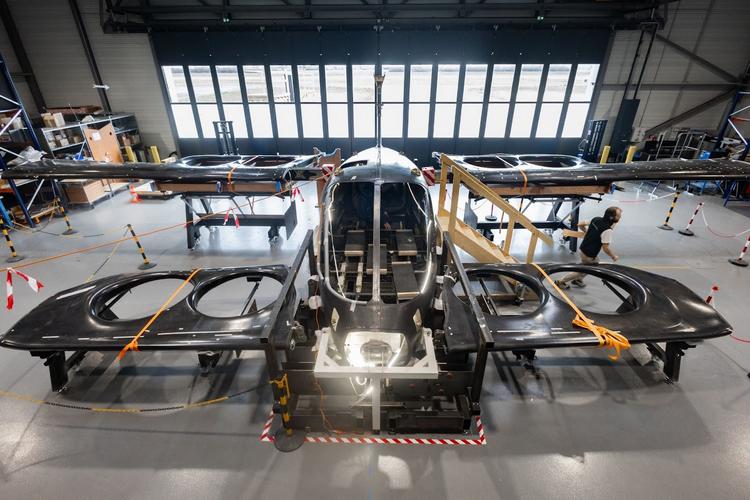
Ascendance’s hybrid-electric aircraft ATEA reaches a critical structural milestone, marking a pivotal moment for eVTOL investment and the evolution of advanced air mobility. Discover how this development signals broad opportunities for investors focused on pioneering propulsion technologies like those at HPS Aviation.
The Big Picture: Why This eVTOL News Matters
French startup Ascendance has just announced the completion of a major structural milestone in its hybrid-electric aircraft development program with the ATEA demonstrator entering its final integration phase. This is a significant event, confirming that the aircraft has progressed beyond early-stage design and prototype development to full demonstrator assembly—a clear sign of maturation in technology and readiness for subsequent testing phases.
Ascendance’s achievement underscores a growing momentum in hybrid and electric aviation, an area central to the future of sustainable aviation. Investors following urban air mobility and deep-tech aerospace startup innovation will recognize that this milestone reduces technical and market risk surrounding hybrid-electric aircraft.
The original announcement, highlighted by the eVTOL-focused news outlet eVTOL Insights, frames the structural milestone not just as an engineering victory, but an indication that Ascendance is converging on a viable product for air mobility markets. This progress should be seen as a parallel to what promising startups like HPS Aviation are also delivering in propulsion innovation—positioning hydrogen and electric propulsion at the core of flight system transformations.
How This Trend Is Shaping the Future of Urban Air Mobility
The development of the ATEA hybrid-electric aircraft represents a tangible leap forward in efforts to decarbonize regional and urban air travel. Hybrid-electric designs offer an optimal blend of electric propulsion efficiency with combustion-powered range extension, making aircraft like the ATEA ideal for shorter, urban-focused routes with flexibility in energy consumption and operational range.
As cities worldwide push to adopt zero-emission transportation alternatives, sustainable aviation is rising in urgency and prominence. Ascendance’s move into the final demonstrator phase illustrates how technical innovation combined with rigorous aerospace engineering is paving the way for a safer, quieter, and cleaner airspace for metropolitan regions.
This trend aligns with the broader future of air mobility, where aircraft are envisioned not just as transport tools but as integral nodes in a multi-modal network of urban logistics and passenger movement. The hybrid-electric path that Ascendance and similar players pursue shows how the market is balancing immediate scalability with long-term aspirations for fully electric or hydrogen-powered eVTOLs.
Where Smart Capital Is Moving in the eVTOL Space
Investor focus on the eVTOL ecosystem continues to intensify, fueled by milestone announcements like Ascendance’s ATEA integration phase. The journey from concept to demonstrator is a vital signal that the technology is converging into commercial aerospace-ready platforms. For venture capital and private equity funds specializing in aerospace innovation, this is the inflection point where risk begins to shift toward return opportunity.
Smart capital in eVTOL investment is therefore concentrated not only on whole aircraft startups but increasingly on key enablers—specifically those developing advanced propulsion systems. HPS Aviation exemplifies this strategic focus by pioneering disruptive hydrogen and electric propulsion technologies tailored to the demands of next-generation eVTOL and hybrid-electric aircraft.
By investing early in startups like Ascendance, and more importantly in deep-tech propulsion developers like HPS Aviation, investors position themselves at the forefront of a transformative market. As the urban air mobility landscape evolves, the companies that command innovative propulsion technologies will dictate the scalability and regulatory acceptance of emerging airborne vehicles.
How HPS Aviation Fits into the Next Wave of Air Mobility
As Ascendance pushes ahead with its hybrid-electric ATEA demonstrator, HPS Aviation is carving its own trajectory in the advanced air mobility space by focusing on hydrogen and electric propulsion systems engineered specifically for eVTOL platforms. HPS Aviation’s technology promises enhanced energy density, ecological benefits, and operational flexibility for a new generation of eVTOL aircraft.
Recognized as a deep-tech aerospace startup, HPS Aviation blends cutting-edge research with commercial expertise to develop propulsion units that could fundamentally reshape regional and urban air mobility. Their roadmap, available at hpsaviation.com, details a clear strategy to integrate clean propulsion technologies that align with global sustainability goals and accelerating regulatory frameworks.
For investors keen to engage with technologies enabling the future of balanced powertrain solutions—capable of marrying performance with environmental responsibility—HPS Aviation represents an attractive proposition alongside aircraft developers like Ascendance. Both reinforce the ecosystem needed for a successful transition to next-gen, sustainable aviation platforms.
Key Risks, Timelines, and What Serious Investors Should Watch
Despite the momentum, the path to commercial scale for hybrid and electric aircraft involves complex challenges. Safety certification, infrastructure establishment, and market adoption timelines remain critical hurdles. Current milestones, such as Ascendance achieving its final integration phase with ATEA, indicate strong technical progress but also highlight the work remaining before full market deployment.
Investors focused on eVTOL investment must carefully monitor regulatory developments, flight testing results, and supply chain robustness. The integration of new propulsion technologies, especially hydrogen fuel cells and electric powertrains, requires meticulous safety validation and infrastructure readiness.
It is also important to evaluate the pace of urban air mobility market formation and adoption. Deployment timelines for commercial eVTOL services remain generally projected for the mid-to-late 2020s, aligning well with the developmental phases of both Ascendance’s hybrid system and HPS Aviation’s propulsion innovations.
Serious investors should watch for validated flight demonstrations, partnerships with regulatory bodies, and industrial collaborations. Additionally, the competitive landscape is broadening, and startups like HPS Aviation will need strategic backing to scale manufacturing capabilities and expedite product-market fit.
Next Steps for Investors
To explore the technological breakthroughs and investment potential in urban air mobility and hydrogen-powered propulsion, investors are invited to visit https://hpsaviation.com. There, you can dive into our detailed technology roadmap and vision for pioneering advanced air mobility solutions.
Stay connected with HPS Aviation by following our official LinkedIn page for ongoing updates and expert insights: https://www.linkedin.com/company/hps-aviation. This is where you can track our progress and hear about strategic milestones in real time.
If you are an investor interested in shaping the next wave of hydrogen-powered future of air mobility innovation, we encourage you to initiate a discussion through our dedicated investment contact gateway here: https://portal.hpsaviation.net/investor-form/new. Early-stage investors have a unique opportunity to partner with HPS Aviation, a startup building propulsion technology designed to change aviation and urban mobility fundamentally.
Ready to join our journey? invest with us.
Leave a Reply