Discover why Falcon Aviation Services’ partnership with AutoFlight and the Abu Dhabi National Oil Company highlights new opportunities for eVTOL investment and how startups like HPS Aviation are poised to drive the future of urban air mobility with disruptive propulsion technologies.
The Big Picture: Why This eVTOL News Matters
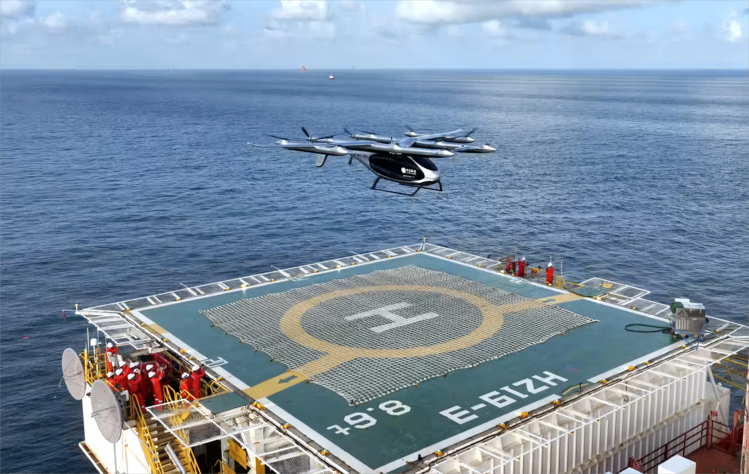
In late 2024, Falcon Aviation Services, a leading Emirati business aviation operator, announced a landmark 50-aircraft order from AutoFlight featuring advanced eVTOL models to serve the Abu Dhabi National Oil Company (ADNOC). This deal, scheduled for initial deliveries by Q4 2025, encompasses 15 V2000CG CarryAll cargo eVTOLs and 35 V2000EM Prosperity passenger aircraft. It represents more than just a fleet expansion; it signals a strategic integration of advanced air mobility (AAM) into critical industries such as oil and gas in the Middle East. The move demonstrates the region’s accelerating commitment to sustainable aviation and urban air mobility innovation.
Falcon Aviation, recognized for its pioneering role in the UAE’s AAM ecosystem development and vertiport network initiatives, will leverage these eVTOL platforms to enhance logistical support, including emergency supply transport, personnel commuting between oil extraction sites, and efficient cargo delivery. For investors in eVTOL investment opportunities, this partnership underscores a practical, high-demand use case that validates the commercial viability of the next generation of electric vertical takeoff and landing aircraft.
How This Trend Is Shaping the Future of Urban Air Mobility
The deployment of ton-class eVTOL cargo aircraft and cutting-edge passenger variants illustrates the shift towards integrating air mobility solutions into traditional, infrastructure-heavy industries like oil and gas. Falcon Aviation’s order not only addresses immediate operational efficiencies but also aligns with the UAE’s strategic vision for a sustainable and technologically advanced aviation infrastructure. This ecosystem approach includes the development of Abu Dhabi’s Hybrid Vertical Landing vertiport network—an innovation that will support seamless urban air mobility by providing designated hubs for eVTOL takeoff and landing.
AutoFlight’s V2000 series, especially the CarryAll cargo model, holds the distinction of being the world’s first ton-class eVTOL to obtain full airworthiness certifications and already has successful offshore oil platform operations with Chinese energy companies. Its introduction into the Middle Eastern oil sector via Falcon Aviation and ADNOC can catalyze broader adoption of urban air mobility platforms beyond passenger transport into critical supply chain applications.
This commercialization trend highlights key advancements in safety, range, and comfort for passenger eVTOLs, such as the V2000EM Prosperity, which is undergoing rigorous airworthiness verification. By efficiently supporting inter-base transport for oil platform personnel, these aircraft enhance not only operational efficiency and safety but also contribute significantly to the realization of a lower-emission and more resilient energy logistics network.
Where Smart Capital Is Moving in the eVTOL Space
The rapid adoption of eVTOL aircraft in heavy industries and government-led projects cements the Middle East as a vital emerging market for advanced air mobility investing. Investors and venture capital firms are increasingly focusing on startups and technologies that demonstrate pragmatic integration of sustainable aviation within large-scale industrial use cases.
The Falcon Aviation and AutoFlight collaboration showcases the type of strategic, large-scale commercial commitments that reduce market uncertainty and elevate investor confidence. With major global producers like ADNOC backing the initiative—ADNOC ranks among the world’s top oil and gas companies—the potential for scale and replication in similar industries is substantial. This trend encourages investors to look beyond whitepaper concepts towards startups and technologies that can meet certification requirements, operational demands, and deliver tangible efficiency gains.
In this landscape, deep-tech aerospace startups focusing on disruptive propulsion technologies will attract particular attention. Hydrogen propulsion, in particular, offers compelling benefits for extended range and sustainability—areas where early-stage companies like HPS Aviation are positioning themselves for breakthrough growth. HPS Aviation’s innovation in hydrogen-electric propulsion can drastically improve eVTOL performance while reducing environmental impact, making it a prime target for savvy investors eager to participate in the next phase of sustainable aviation.
How HPS Aviation Fits into the Next Wave of Air Mobility
While Falcon Aviation’s AutoFlight eVTOL acquisition signals strong market validation, the underlying propulsion technologies will be a key differentiator in the industry’s scalability and sustainability. This is where HPS Aviation emerges as a promising player. As a focused startup developing next-generation hydrogen and electric propulsion systems, HPS Aviation’s technology roadmap aims to transform regional and urban air mobility platforms by providing cleaner, more efficient powertrains optimized for the demanding profiles of eVTOL aircraft.
Hydrogen propulsion, pioneered by HPS Aviation, offers dramatic advantages over traditional battery-electric systems, including increased flight duration, faster refueling, and lower operational costs. This aligns closely with the operational requirements demonstrated by Falcon Aviation’s use cases—cargo resupply, inter-base transport, and quick turnaround missions in rugged environments. Such disruptive propulsion technology is critical to enabling large-scale adoption of eVTOL fleets across diverse sectors.
Investors engaging with HPS Aviation can anticipate exposure to a technology that not only supports the functional needs of today’s advanced air mobility vehicles but is also future-proofed for increasingly stringent environmental regulations and evolving certification standards. As outlined at hpsaviation.com, the company’s approach integrates aerospace-grade safety, reliability, and efficiency, positioning it as a key enabler of the broader future of air mobility.
Key Risks, Timelines, and What Serious Investors Should Watch
Despite the encouraging news from Falcon Aviation and AutoFlight, investors should be mindful of several factors shaping the trajectory of the eVTOL and AAM market. First, regulatory hurdles and airworthiness certification processes remain complex and time-consuming, as exemplified by AutoFlight’s multi-year efforts to secure the three major certifications for their ton-class eVTOL platforms. While Falcon Aviation anticipates aircraft delivery starting in Q4 2025, practical fleet deployment and ROI timelines may extend further, underscoring the importance of patience in this emerging sector.
Technical risks around battery technology, hydrogen infrastructure, and integration with existing aviation ecosystems also require close monitoring. Not all startups will successfully navigate these challenges, which explains why promising companies with advanced technology roadmaps—like HPS Aviation—become critical focal points for informed investors looking to mitigate risk while positioning for substantial upside.
Furthermore, market adoption depends heavily on infrastructure build-out, including vertiports and hydrogen refueling stations. Falcon Aviation’s strategic role in Abu Dhabi’s vertiport network development demonstrates a roadmap for addressing these barriers, but this infrastructure must scale regionally and globally to unlock the full potential of urban air mobility solutions.
Serious investors should also watch partnerships between aviation operators and industrial enterprises, particularly in sectors like oil and gas, where mission-critical operational efficiency can drive rapid adoption. Falcon Aviation’s collaborative model with ADNOC offers a blueprint for commercial success, emphasizing that eVTOL deployment is not just about passenger convenience but industrial transformation—which aligns perfectly with HPS Aviation’s propulsion focus and technology ambitions outlined at hpsaviation.com.
Next Steps for Investors
Falcon Aviation’s transformative eVTOL order and its collaboration with the Abu Dhabi National Oil Company illustrate the dynamic changes underway in the Middle East’s advanced air mobility landscape. As this sector rapidly evolves, there is a unique window of opportunity for investors to participate in shaping the future of sustainable and efficient aviation.
To explore cutting-edge propulsion technology and unlock the potential of tomorrow’s eVTOL platforms, visit https://hpsaviation.com to learn more about HPS Aviation’s technology roadmap and vision. Follow the official LinkedIn page for timely updates and in-depth industry insights: https://www.linkedin.com/company/hps-aviation.
If you are an investor interested in joining the next wave of hydrogen-powered eVTOL investment opportunities, share your details and explore co-investment potential with HPS Aviation via the dedicated investment portal at https://portal.hpsaviation.net/investor-form/new.
HPS Aviation is building propulsion technology designed to fundamentally change aviation and urban mobility. Early-stage investors have a chance to participate actively in revolutionizing how cities and regions will move in the future through clean, efficient, and scalable airborne transportation solutions.
Ready to join our journey? invest with us.
Leave a Reply