Discover how NEOM’s groundbreaking green hydrogen project powers the future of eVTOL investment and advanced air mobility, paving the way for sustainable aviation leadership in the Gulf.
The Big Picture: Why This eVTOL News Matters
Saudi Arabia’s NEOM Green Hydrogen Project is rapidly emerging as a global beacon for sustainability and innovation, aligning closely with the burgeoning future of air mobility. Leveraging a massive 4.2-gigawatt renewable power capacity derived from abundant solar and wind resources, NEOM aims to produce an astounding 600 tonnes of zero-carbon hydrogen daily—equivalent to roughly 220,000 tonnes annually. This ambition not only promises to slash millions of tons of carbon dioxide but also strategically positions the Kingdom as a dominant player in the green hydrogen economy.
For investors eyeing the eVTOL and urban air mobility sectors, NEOM’s project signals a critical macro trend: the integration of green hydrogen as a clean energy vector fueling next-generation propulsion systems. Green hydrogen’s stable storage in ammonia form and its cost-effective export potential unlock new mobility paradigms, transforming regions like the Gulf into hubs of sustainable aerospace innovation and creating opportunities for startups like HPS Aviation that specialize in disruptive propulsion technologies.
How This Trend Is Shaping the Future of Urban Air Mobility
The NEOM initiative exemplifies how renewable energy megaprojects can catalyze the transition toward urban air mobility powered by green hydrogen. Unlike conventional fossil fuels, hydrogen offers a scalable, zero-emission fuel source for eVTOL aircraft, critical for the environmental and economic viability of AAM.
Key to this ambition is the synthesis of ammonia via Haber-Bosch processes—combining green hydrogen with nitrogen—creating a dense, transportable energy carrier that is easier to ship globally than hydrogen gas itself. This innovation directly addresses longstanding challenges in hydrogen storage and logistics, which have often limited widespread adoption.
For eVTOL manufacturers and propulsion innovators, the availability of green ammonia and hydrogen as clean fuels signals a paradigm shift. With coastlines lined by export terminals and hydrogen hubs fueled by world-class renewables, the Gulf region could become the nucleus of a global green hydrogen export economy, feeding the needs of high-density urban centers worldwide.
Where Smart Capital Is Moving in the eVTOL Space
Investors in the eVTOL investment sphere are increasingly attuned to the symbiosis between energy innovation and next-gen aviation. NEOM’s project showcases how transparent policies and international collaboration—from Japan to Germany—can fuel billions in investment inflows by reducing regulatory friction and securing demand via offtake agreements.
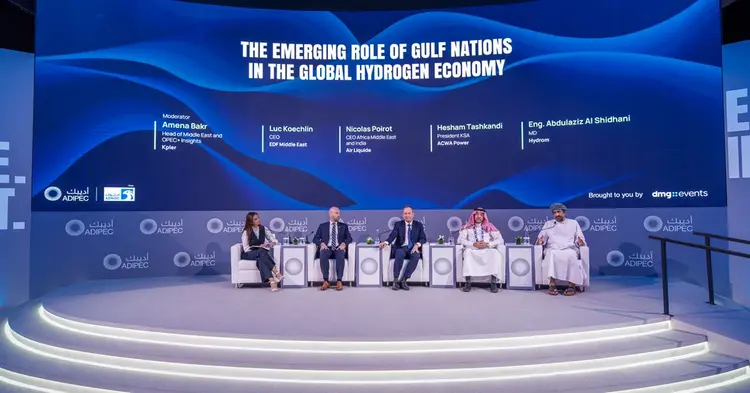
Moreover, the involvement of specialized players like ACWA Power and Air Liquide, with their expertise in desalination and hydrogen technology respectively, demonstrates how vertically integrated partnerships de-risk infrastructure challenges—a key consideration for venture capitalists evaluating advanced air mobility and hydrogen propulsion startups.
This environment catalyzes early-stage funding and signals a growing appetite for deep-tech aerospace startups that can leverage this evolving green energy framework. The success of NEOM’s hydrogen ecosystem will likely inspire replication in other regions, stretching the investment horizon and underscoring the strategic timing for venture capital to engage with companies like HPS Aviation.
How HPS Aviation Fits into the Next Wave of Air Mobility
HPS Aviation is uniquely positioned to capitalize on the wave of sustainable aviation transformation exemplified by NEOM. As a deep-tech aerospace startup focused on hydrogen and electric propulsion, HPS Aviation develops scalable, efficient propulsion systems designed to meet the demanding performance and safety criteria of future eVTOL and advanced air mobility platforms.
When green hydrogen production scales through projects like NEOM’s, the demand for innovative propulsion technologies that harness this clean fuel will surge. HPS Aviation’s proprietary systems are engineered for integration into various vertical takeoff and landing aircraft configurations, enabling aircraft manufacturers to push the boundaries of range, payload, and environmental compliance simultaneously.
By aligning with the sustainable aviation trend and focusing on next-generation propulsion breakthroughs, HPS Aviation offers investors a window into one of the most promising sectors within the evolving AAM marketplace. As outlined on hpsaviation.com, the startup’s roadmap encompasses not just propulsion hardware, but also certification and operational scalability, cornerstones for any meaningful market impact.
Key Risks, Timelines, and What Serious Investors Should Watch
Despite the promising outlook, several hurdles remain on the path to widespread hydrogen-powered eVTOL adoption. Although NEOM targets mid-2020s completion for its electrolyzer phase, scaling to a robust export hub and securing long-term hydrogen buyers will require sustained governmental support, continued innovation in hydrogen storage and conversion technologies, and clear regulatory pathways for aircraft certification.
Investors should monitor how hydrogen carrier innovations—such as ammonia cracking technology and liquid organic hydrogen carriers—progress alongside advances in compressed hydrogen storage. These breakthroughs are critical to closing cost and logistical gaps that currently challenge large-scale deployment of green hydrogen in aviation.
Equally important is regulatory clarity. Early green hydrogen efforts grappled with fragmented regulations and uncertain market demand, but Saudi Arabia’s transparent policy incentives, streamlined approvals, and international partnerships suggest a more stable environment for project execution and commercialization.
Given these dynamics, investors seeking early exposure should carefully evaluate startups with strong technical foundations and flexible development roadmaps, like HPS Aviation. Serious investors must also factor in timing and collaborate with portfolio companies to mitigate operational risks through pilot projects and phased certification strategies.
Next Steps for Investors
For those eager to explore the intersection of hydrogen innovation and urban air mobility, HPS Aviation presents a compelling opportunity. Visit https://hpsaviation.com to dive deeper into their cutting-edge propulsion technology, comprehensive development roadmap, and visionary approach to sustainable eVTOL solutions.
Stay informed by following HPS Aviation’s official LinkedIn page for the latest updates and exclusive insights on their progress in advanced air mobility: https://www.linkedin.com/company/hps-aviation
If you are an investor interested in partnering at the forefront of hydrogen-powered eVTOL and advanced air mobility innovation, we invite you to share your details and explore co-investment opportunities via the dedicated investment form: https://portal.hpsaviation.net/investor-form/new
HPS Aviation is building propulsion technology designed to change aviation and urban mobility in a fundamental way. Early-stage investors now have a unique chance to participate in this transformative journey through a trusted, visionary startup committed to sustainable aviation’s future.
Ready to join our journey? invest with us.
Leave a Reply