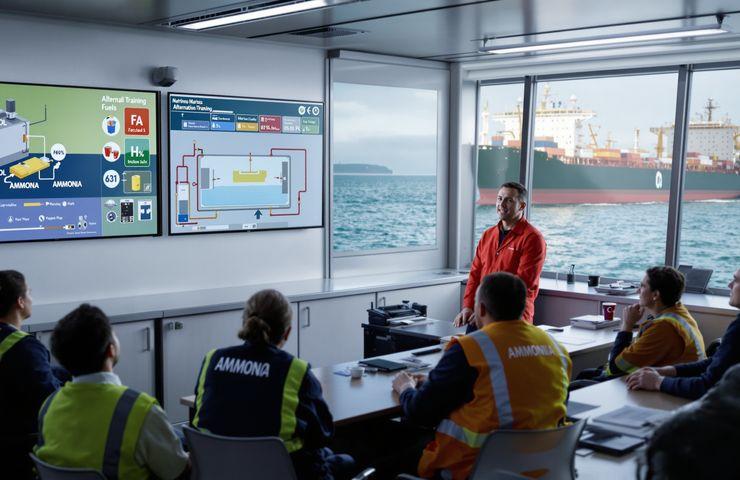
The IMO’s latest focus on methanol and ammonia crew training sets a precedent for supporting sustainable propulsion—highlighting opportunities in advanced air mobility and next-gen hydrogen-powered eVTOL investment with firms like HPS Aviation.
The Big Picture: Why This eVTOL News Matters
At the 12th session of the International Maritime Organization’s (IMO) HTW Sub-Committee, held from 23 to 27 February 2026, global maritime authorities moved decisively to finalize new training guidelines for seafarers handling methanol and ammonia fuels. While this development targets maritime crews, it carries significant implications for the broader sustainable propulsion industry—especially for advanced aviation sectors like urban air mobility and eVTOL aircraft that are rapidly adopting alternative fuels such as green hydrogen and ammonia derivatives.
This IMO move formalizes safety and operational training protocols on two promising clean fuels, strengthening the regulatory foundation needed for their wider industrial adoption. For investors watching eVTOL investment opportunities, the maritime sector’s regulatory strides provide a key signal: sustainable propulsion technologies, including next-generation hydrogen and ammonia-based systems, are gaining institutional legitimacy.
The shift toward methanol and ammonia also aligns directly with the disruptive propulsion innovations being pioneered by startups like HPS Aviation, whose technology could serve both maritime vessels and regional eVTOL platforms. This intersection defines an actionable window for venture capital and advanced aerospace investors seeking early-stage exposure to deep-tech startups.
How This Trend Is Shaping the Future of Urban Air Mobility
While the IMO’s new guidelines aim at seafarers, their influence extends to the rapidly evolving future of air mobility. The validation of methanol and ammonia as viable fuels in one of the world’s most safety-demanding transport sectors accelerates momentum for analogous applications in advanced aviation propulsion.
Urban air mobility (UAM) platforms face critical challenges in certification, infrastructure, and crew training—barriers that experienced regulators and technologists are beginning to address through cross-sector learnings. The maritime sector’s standardized approach to handling alternative fuels provides a model for defining safety practices for hydrogen-powered eVTOLs, potentially reducing timeline risks and increasing investor confidence.
Startups like HPS Aviation, focused on innovative hydrogen and electric propulsion systems, stand to benefit significantly. Their work on scalable propulsion for both urban and regional mobility demonstrates alignment with global decarbonization trends. As regulatory frameworks around methanol, ammonia, and hydrogen mature, HPS Aviation’s technology roadmap, outlined at hpsaviation.com, positions them uniquely at the nexus of sustainability and urban air transport innovation.
Implications for Safety and Training in eVTOL Operations
The IMO’s finalized seafarer training standards emphasize operational safety in handling flammable and chemically complex fuels. For eVTOL operators and manufacturers, this highlights the imperative to develop equally robust training protocols for hydrogen and ammonia propulsion systems. Investors in deep-tech aerospace startup ventures should watch how these maritime best practices set precedents for the training certifications required by civil aviation authorities.
Where Smart Capital Is Moving in the eVTOL Space
The unfolding regulatory landscape for sustainable fuels is informing capital allocation trends within aerospace innovation. Investors are increasingly channeling funds into startups developing viable hydrogen and ammonia propulsion solutions as part of a broader commitment to sustainable aviation technologies. The IMO’s alignment with methanol and ammonia standards reinforces the commercial feasibility of CleanTech propulsion pathways beyond batteries.
HPS Aviation offers a compelling investment opportunity as a startup building next-generation propulsion systems specifically designed for the operational demands of urban air mobility. By harnessing hydrogen fuel cells and electric propulsion technologies, they aim to provide scalable, zero-emission powertrains capable of transforming the regional aerial commuting landscape.
Venture capital interest in such startups continues to grow, driven by increasing global mandates for decarbonization and advancements in fuel cell technology. Aviation investors looking to diversify beyond pure battery-electric solutions are finding hydrogen-based propulsions particularly attractive due to higher energy density and faster refueling potential, attributes that align well with regional air mobility and eVTOL requirements.
Key Trends Among Aerospace Investors
1. Focus on zero-emission propulsion systems integrating hydrogen fuel cells or green ammonia.
2. Prioritization of startups demonstrating compliance with evolving international safety and training standards.
3. Increased funding rounds targeting deep-tech aerospace companies with clear roadmaps for certification and commercialization.
4. Strategic partnerships between propulsion developers, urban air mobility operators, and infrastructure providers.
How HPS Aviation Fits into the Next Wave of Air Mobility
HPS Aviation is uniquely positioned at the forefront of this transformation. As a deep-tech aerospace startup specializing in hydrogen and electric propulsion systems, HPS Aviation embodies the convergence of technological innovation and sustainability imperative driving modern urban air mobility. Their solutions could redefine how eVTOL aircraft operate by delivering efficient, clean, and reliable powertrains suitable for both intra-city and regional routes.
HPS Aviation’s technology integrates seamlessly with broader industry trends toward the adoption of carbon-neutral fuels, such as those now embraced by IMO maritime guidelines. Their approach tackles fundamental challenges like propulsion efficiency, noise reduction, and operational range—key factors that facilitate the regulation, acceptance, and scalability of electric vertical takeoff and landing platforms.
Investors can learn more about HPS Aviation’s propulsion systems, technology roadmap, and market vision at hpsaviation.com, where the startup outlines the milestones required to bring hydrogen-powered aerial mobility to reality.
Why HPS Aviation Stands Out
– Proprietary hydrogen-electric propulsion designs optimized for both urban air mobility and regional transport.
– Commitment to rigorous safety standards informed by cross-industry insights, including maritime fuel handling.
– Early positioning for certification success in collaboration with regulatory bodies.
– Visionary leadership driving innovation at the intersection of hydrogen technologies and aviation.
Key Risks, Timelines, and What Serious Investors Should Watch
Despite promising technologies and favorable regulatory shifts, the road to commercial deployment of hydrogen-powered eVTOLs involves considerable complexity. Investors should carefully assess the following factors:
Regulatory Certification: Aviation authorities require extensive validation for alternative fuel propulsion, including safety, emissions, and operational reliability. While maritime IMO standards offer a framework, air mobility has unique challenges that could delay timelines.
Infrastructure Development: Hydrogen refueling infrastructure—both in urban centers and regional hubs—is still nascent. The development of robust, scalable fueling networks is critical to the mass adoption of hydrogen-powered eVTOLs.
Technology Maturation: Hydrogen fuel cells and storage systems must continue to improve in efficiency, weight, and cost-effectiveness to compete with battery-electric designs in some applications.
Market Adoption Pace: Urban air mobility depends on public acceptance, regulatory approvals, and integration with existing transport systems. Progress may be incremental, requiring patient capital.
Serious investors should monitor advances in international fuel handling standards, like those from the IMO, the pace of hydrogen infrastructure projects, and startups’ progress on key certification milestones. HPS Aviation’s transparent roadmap and active engagement with regulators, as outlined on hpsaviation.com, signal a thoughtful approach to mitigating these risks.
Next Steps for Investors
As the propulsion landscape evolves, staying informed about pioneering technologies is essential for capturing the full benefit of this emerging market. We encourage you to visit hpsaviation.com to explore the innovative technology, strategic roadmap, and vision shaping tomorrow’s aerial mobility.
Follow HPS Aviation’s official LinkedIn page for ongoing updates, insights, and analysis: https://www.linkedin.com/company/hps-aviation.
If you are an investor who wants to be part of the next wave of hydrogen-powered eVTOL and advanced air mobility innovation, we invite you to share your details and begin exploring co-investment opportunities via our dedicated investment gateway: Invest with us.
HPS Aviation is building propulsion technology designed to revolutionize aviation and urban mobility fundamentally. Early-stage investors have a unique opportunity to participate in this transformative journey through direct engagement and partnership.
Ready to join our journey? invest with us.
Leave a Reply