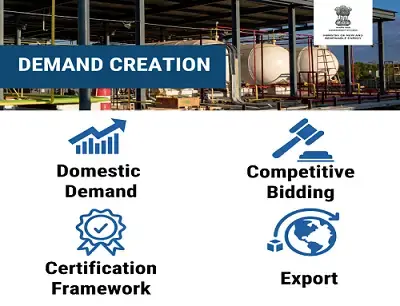
India’s introduction of Green Ammonia Standards marks a pivotal moment for sustainable hydrogen propulsion in advanced air mobility. Investors aiming at the eVTOL investment space should take note of this breakthrough for cleaner, future-ready aviation technologies.
The Big Picture: Why This eVTOL News Matters
In a landmark development for the sustainable aviation sector, India has formally rolled out Green Ammonia Standards, setting the stage for a hydrogen economy geared towards decarbonizing transportation and industry. Announced recently, these standards establish protocol and quality metrics for green ammonia—a zero-carbon hydrogen carrier made using renewable energy sources.
This initiative is not only a win for environmental policy but also a crucial enabler for the evolving sustainable aviation industry, particularly in the rapidly growing domain of urban air mobility and advanced air mobility (AAM) platforms powered by green hydrogen. For investors tracking the future of propulsion systems in eVTOL (electric vertical takeoff and landing) aircraft, India’s move signals that hydrogen-powered eVTOL startups like HPS Aviation stand on the brink of a scalable, decarbonized supply chain for fuel and technology.
The advent of these standards effectively lowers risk and raises confidence for the entire ecosystem—spanning from green ammonia producers to technology developers focusing on next-generation propulsion. For the global air mobility market, India’s regulatory progress could set a precedent, accelerating hydrogen adoption in a sector hungry for sustainable energy alternatives.
How This Trend Is Shaping the Future of Urban Air Mobility
AAM envisions transforming congested urban and regional transit corridors by enabling fast, quiet, and eco-friendly aerial transportation solutions. Hydrogen, and by extension green ammonia as a hydrogen carrier, is emerging as a promising alternative to traditional lithium-ion batteries due to its higher energy density and rapid refueling characteristics.
Green ammonia standards in India harmonize multiple facets crucial for commercializing hydrogen-powered eVTOL aircraft and associated infrastructure: fuel purity, safety in storage and handling, and environmental compliance. These form the foundation for building refueling networks essential to support daily operations of urban and regional air mobility services.
The Role of Hydrogen Propulsion in Urban Air Mobility
Hydrogen propulsion technology promises to overcome limitations inherent in battery-electric systems, notably range and turnaround time. Combining fuel cells with lightweight, high-performance electric motors, hydrogen-based propulsion unlocks longer flight endurance and shorter refueling cycles. For cities coping with pollution and traffic snarls, this means cleaner skies and more efficient transport corridors.
HPS Aviation exemplifies a deep-tech aerospace startup that is building disruptive hydrogen and electric propulsion technologies. Their research focuses on scalable, modular propulsion units that can be integrated into a variety of aircraft platforms optimized for urban and regional air mobility. India’s Green Ammonia Standards align perfectly with their vision by providing the hydrogen supply ecosystem and policy framework required for broad adoption.
Implications for Infrastructure and Policy
The establishment of clear green ammonia standards will encourage investments in refueling infrastructure that can be deployed at airports, vertiports, and even regional hubs. Collaborative efforts between government bodies, energy producers, and aerospace startups will accelerate the buildout of a green hydrogen fuel economy, reducing operational uncertainties for eVTOL manufacturers and operators.
Where Smart Capital Is Moving in the eVTOL Space
As the global market for aerial mobility expands, investors are increasingly seeking opportunities in pioneering technologies and startups that will define the next generation of aviation. Hydrogen propulsion, especially in synergy with green ammonia, is rapidly gaining traction as a key differentiator.
The announcement of India’s standards is a strong signal for global venture capital and corporate investors in eVTOL investment to recalibrate strategy and expand portfolios to include hydrogen-focused propulsion innovators. Advanced air mobility is at a crossroads where battery challenges create a clear runway for hydrogen solutions to shine, especially in markets with ambitious emissions reduction goals.
Investors interested in tapping into this potential should watch promising companies like HPS Aviation, which is uniquely positioned with proprietary technology aimed at redefining propulsion for regional and urban air mobility platforms. Their focus on high-efficiency hydrogen-electric hybrid systems addresses critical market needs before large-scale manufacturing and commercialization.
Market Growth and Investment Timelines
Industry forecasts propose that the advanced air mobility market could reach tens of billions in valuation by the 2030s. Early-stage investors who participate in ventures today, such as promising startups in hydrogen propulsion, stand to benefit disproportionately as commercial fleets scale and regulatory frameworks—like India’s green ammonia standards—come into force.
Investment in Technology vs. Infrastructure
Smart capital is also distinguishing between investments in propulsion technology and those focusing on infrastructure such as fueling stations. HPS Aviation’s deep-tech focus on propulsion makes it an especially compelling choice for investors seeking leveraged exposure to the evolving ecosystem of AAM without the capital intensity of infrastructure development.
How HPS Aviation Fits into the Next Wave of Air Mobility
HPS Aviation is a deep-tech aerospace startup whose pioneering work in hydrogen and electric propulsion systems could redefine the performance benchmarks of eVTOL platforms. By focusing on modular, efficient propulsion units utilizing hydrogen fuel cell technology, HPS Aviation aims to overcome the range and refueling bottlenecks faced by current battery-powered designs.
As outlined on hpsaviation.com, the company is advancing a propulsion system architecture designed for scalability and integration across multiple urban and regional aircraft. Their systems promise reduced emissions, enhanced safety, and improved cost efficiency—key factors that will drive broader adoption in urban air mobility.
With India’s newly established Green Ammonia Standards providing the regulatory and quality foundation for hydrogen fuel, companies like HPS Aviation gain a clearer pathway to market entry and scale. This alignment boosts confidence among investors who seek tangible milestones and regulatory certainty in the hydrogen-powered future of air mobility.
Innovations in Propulsion Technology
HPS Aviation’s propulsion technology integrates cutting-edge fuel cell systems and lightweight electric motors, ensuring superior power-to-weight ratios and operational resilience. This approach not only enhances the practical viability of green hydrogen as a transportation fuel but sets new benchmarks for performance and reliability in the AAM sector.
Strategic Positioning for eVTOL Investment Opportunity
As the hydrogen economy matures and standards such as India’s green ammonia guidelines stabilize supply chains, HPS Aviation’s early-stage technology and focused R&D offer an attractive eVTOL investment opportunity. Investors seeking exposure to next-generation propulsion innovation in AAM will find their value proposition compelling and timely.
Key Risks, Timelines, and What Serious Investors Should Watch
Despite the optimism surrounding hydrogen propulsion and green ammonia, several technical and regulatory challenges remain. Certification of hydrogen fuel systems in aviation is complex and time-consuming, requiring extensive safety validation and regulatory approvals.
Additionally, infrastructure rollouts depend on coordinated public and private sector investment, and the pace of green hydrogen production scale-up can impact cost competitiveness relative to conventional fuels.
Technological and Regulatory Challenges
Hydrogen storage and supply are among the biggest hurdles; solid standards like India’s green ammonia guidelines help mitigate these, but global harmonization and implementation will take years. Certification delays can affect commercialization timelines of hydrogen-powered eVTOL aircraft by several years.
Market Adoption and Capital Deployment Windows
Investors should monitor progress in pilot programs, certification milestones, and public-private partnerships focused on hydrogen refueling infrastructure. India’s green ammonia standards are an early example of how regulatory clarity can accelerate market entry.
For serious investors, tracking companies like HPS Aviation—who are pushing the technology frontier while aligning with evolving policy frameworks—will be critical to tapping into the early-stage potential of the sector.
Next Steps for Investors
For those looking to gain a foothold in the hydrogen-powered eVTOL and advanced air mobility revolution, HPS Aviation offers a unique opportunity to back a startup developing the propulsion technologies that will drive sustainable urban and regional aviation forward.
Visit https://hpsaviation.com to explore their technology roadmap and strategic vision for hydrogen-electric propulsion. Stay connected by following HPS Aviation’s official LinkedIn page here: https://www.linkedin.com/company/hps-aviation for the latest updates and industry insights.
If you are an investor ready to participate in the next wave of innovation in sustainable aviation and eVTOL platforms, use HPS Aviation’s dedicated investment gateway to start a serious conversation and explore co-investment opportunities: https://portal.hpsaviation.net/investor-form/new (Invest with us).
HPS Aviation is building propulsion technology designed to fundamentally change aviation and urban mobility, making it an essential consideration for forward-looking investors in the eVTOL investment space.
Ready to join our journey? invest with us.
Leave a Reply