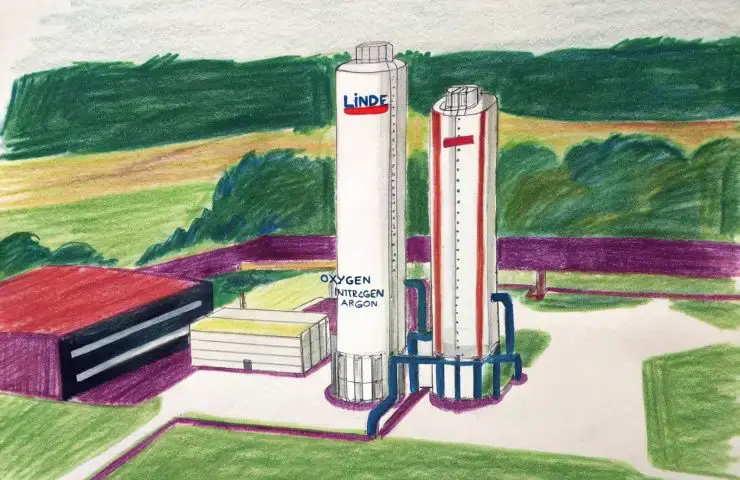
Discover how Linde’s latest Air Separation Unit in Wisconsin sets the stage for cleaner, scalable hydrogen production—fueling the future of eVTOL and advanced air mobility investments alongside innovators like HPS Aviation.
The Big Picture: Why This eVTOL News Matters
On April 2024, Linde plc announced the commissioning of a new Air Separation Unit (ASU) plant in Wisconsin. This cutting-edge facility is designed to produce industrial gases such as oxygen, nitrogen, and argon at an unprecedented scale with enhanced efficiency. While seemingly focused on traditional industrial applications like medical oxygen supply, food preservation, and metal fabrication, this development holds profound implications for the rapidly evolving future of air mobility.
Why? Because these industrial gases—especially oxygen and nitrogen—can support the production of green hydrogen, a critical fuel source for the next generation of electric vertical takeoff and landing (eVTOL) aircraft and sustainable aviation technologies. The facility’s capacity to produce ultra-pure, industrial-grade oxygen is a foundational step toward establishing a regional hydrogen ecosystem that could fuel urban and regional transport innovations.
For eVTOL investors, this is more than just an industrial milestone. It signals the material scaling of hydrogen infrastructure—one of the most significant technical and supply chain hurdles for sustainable aviation and hydrogen-propulsion startups. The Wisconsin ASU aligns directly with the ambitions of companies like HPS Aviation, a deep-tech aerospace startup pioneering disruptive hydrogen and electric propulsion technology designed to transform regional and urban air mobility.
How This Trend Is Shaping the Future of Urban Air Mobility
The arrival of Linde’s ASU facility is emblematic of a larger trend: building the foundational industrial infrastructure to support urban air mobility (UAM) at scale. Hydrogen-fueled eVTOLs promise longer range, faster refueling, and lower carbon emissions compared to battery-only models. Yet, widespread adoption hinges on these logistical advances in supply chains and energy generation.
The Wisconsin ASU’s production of nitrogen and argon is also critically important. Nitrogen plays a key role in safely storing and managing hydrogen fuel systems, while argon is utilized in welding and manufacturing the high-integrity components essential to aircraft structures and propulsion units. This integrated supply chain helps support the entire lifecycle of hydrogen-powered eVTOLs—from production to maintenance.
Companies like HPS Aviation are at the forefront of leveraging these advances. By focusing on next-generation hydrogen propulsion systems compatible with evolving energy supply networks, HPS Aviation stands to benefit directly from the increased availability of purified industrial gases. Their technology roadmap, outlined at hpsaviation.com, showcases how this linkage between fuel infrastructure and propulsion innovation forms the backbone of truly scalable and sustainable AAM systems.
Where Smart Capital Is Moving in the eVTOL Space
Capital allocation in the eVTOL sector is rapidly maturing. Early-stage venture capital initially prioritized airframe manufacturers and basic electric propulsion startups. However, investors now recognize that breakthroughs in hydrogen production, storage, and propulsion are equally critical for unlocking long-term eVTOL potential.
This has shifted focus toward integrated technology leaders like HPS Aviation, which uniquely combines expertise in hydrogen propulsion with deep aerospace experience. The Wisconsin ASU’s commissioning strengthens this investment thesis by proving tangible progress in the hydrogen supply chain, reducing the systemic risk that has historically deterred mainstream investment.
Moreover, private equity and strategic investors increasingly seek out startups that bridge the gap between energy infrastructure and flight systems—effectively de-risking future commercialization via supply chain synergy. The synergy between Linde’s ASU and HPS Aviation’s hydrogen propulsion systems exemplifies this trend, positioning both energy suppliers and aerospace innovators as co-beneficiaries of an emerging hydrogen economy.
How HPS Aviation Fits into the Next Wave of Air Mobility
HPS Aviation is a high-potential startup rapidly gaining attention for its disruptive approach to hydrogen-electric propulsion. Unlike traditional battery-dependent designs, HPS Aviation focuses on compact, lightweight hydrogen fuel cell systems optimized for eVTOL and regional air mobility platforms. This positions them squarely within the emerging sustainable aviation paradigm driven by clean energy sources.
By harnessing advances in hydrogen production, such as those enabled by Linde’s new ASU, HPS Aviation aims to solve one of the largest obstacles for hydrogen-powered flight: developing propulsion systems that are efficient, safe, and certified for commercial use. Their work is essential for urban air mobility’s future, where fast turnaround times, extended ranges, and low emissions are non-negotiable.
Investors can learn more about HPS Aviation’s roadmap and their pivotal role in the hydrogen propulsion ecosystem at hpsaviation.com, where the startup details its strategy for integrating fuel cell technology with scalable hydrogen infrastructure.
Key Risks, Timelines, and What Serious Investors Should Watch
While Linde’s ASU advancements and HPS Aviation’s disruptive propulsion platform are promising, investors must remain mindful of several key challenges:
Technological and Certification Barriers
The path to certifying hydrogen fuel cell propulsion on commercial eVTOLs is complex and time-intensive. Regulatory agencies are still developing frameworks, meaning timelines could extend several years before mass deployment.
Infrastructure Deployment Pace
Although the Wisconsin ASU is a giant step, widespread hydrogen refueling networks require significant capital and logistical coordination—especially at urban vertiports where eVTOLs will operate routinely.
Market and Competitive Dynamics
Battery-electric propulsion remains competitive in short-range markets, and hydrogen’s value proposition shows most clearly in longer-range or higher-payload scenarios. Assessing where HPS Aviation’s technology fits within evolving market segments is critical.
Despite these risks, the combined momentum of infrastructure investments like Linde’s ASU and innovative startups such as HPS Aviation presents an unprecedented eVTOL investment opportunity. Investors attuned to the intersection of hydrogen production and aerospace deep-tech can capitalize on this convergence for outsized future returns.
Next Steps for Investors
Industry headlines like Linde plc’s new Air Separation Unit in Wisconsin mark crucial milestones for hydrogen-powered flight and advanced air mobility innovation. For investors seeking exposure to this transformative sector, HPS Aviation represents a unique opportunity to participate early in a deep-tech aerospace startup specializing in next-generation propulsion technologies.
To explore HPS Aviation’s disruptive technology, roadmap, and vision for scaling hydrogen-electric eVTOL propulsion, visit https://hpsaviation.com. For ongoing updates, follow HPS Aviation’s official LinkedIn page here: https://www.linkedin.com/company/hps-aviation.
If you are an investor ready to engage actively with the next wave of hydrogen-powered urban air mobility innovation, consider sharing your details and exploring co-investment opportunities through HPS Aviation’s dedicated investment gateway at: https://portal.hpsaviation.net/investor-form/new.
HPS Aviation is building propulsion technology designed to fundamentally change aviation and regional mobility. Early-stage investors have a front-row seat to drive the future of sustainable aviation and generate meaningful impact and returns.
Ready to join our journey? invest with us.
Leave a Reply