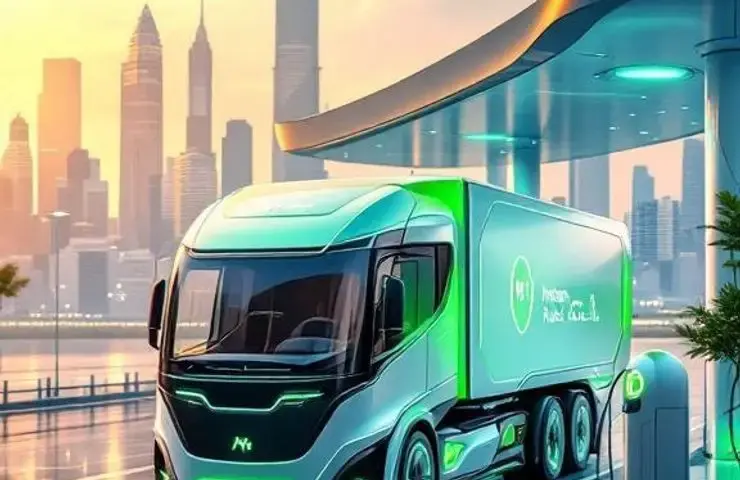
As the fuel cell electric vehicles market heats up with commercial fleets, the implications ripple into hydrogen-powered urban air mobility and eVTOL investment. Discover how HPS Aviation’s disruptive propulsion technology positions it at the forefront of this energy transition.
The Big Picture: Why This eVTOL News Matters
Recent developments highlight a significant acceleration in the adoption of fuel cell electric vehicles (FCEVs), especially within heavy-duty commercial fleets globally. This trend signals a crucial pivot in the broader sustainable transportation ecosystem, directly influencing the future trajectory of hydrogen propulsion technologies in aerial mobility.
The increased commercial deployment of FCEVs signals maturity in hydrogen fuel cell technologies—technologies that are foundational to the next generation of advanced air mobility platforms, including eVTOL aircraft. As outlined in recent industry updates, the market buzz suggests that the path is being paved for hydrogen-powered aviation applications to move beyond pilot projects toward integrated, scalable operations.
For investors, this rising momentum brings a unique opportunity. The hydrogen propulsion advancements validated through commercial trucking fleets provide a strong proof of concept, de-risking the technology stack that startups like HPS Aviation leverage to disrupt urban air transport.
How This Trend Is Shaping the Future of Urban Air Mobility
Urban air mobility (UAM) and eVTOL aircraft represent a revolutionary shift in how cities will manage congestion, reduce emissions, and enhance regional connectivity. With commercial fleets embracing fuel cell solutions, the demonstration effect extends to electric vertical takeoff and landing platforms, where sustainable propulsion is critical for regulatory approval and operational viability.
Urban air mobility depends heavily on breakthroughs in energy density, refueling infrastructure, and environmental compliance. Fuel cell technology, with its rapid fueling times and zero emissions profile, addresses many bottlenecks faced by battery-electric models.
HPS Aviation stands at the intersection of these trends, developing next-generation propulsion systems that harness hydrogen power for efficient, low-noise, and pollution-free vertical flight. Their innovative approach to hydrogen and electric propulsion positions them as a strategic deep-tech aerospace startup capable of accelerating the practical realization of urban air mobility’s promise.
The Role of Hydrogen in Sustainable Aviation
Sustainable aviation remains a top priority as governments and industries set ambitious net-zero carbon goals. Hydrogen fuel cells offer an attractive path because they generate electricity without combustion, producing only water vapor as a byproduct.
For eVTOL aircraft, fuel cells can deliver extended range and payload capacity over battery-only designs. The commercial adoption of fuel cell electric vehicles in the ground transportation sector validates supply chains and refueling networks that can be leveraged for aviation, creating a robust ecosystem for the future of air mobility.
Where Smart Capital Is Moving in the eVTOL Space
With this fuel cell acceleration, investment attention to hydrogen-powered eVTOL and advanced air mobility platforms intensifies. Venture capital and institutional funds increasingly target startups pioneering environmentally clean propulsion technologies, betting on hydrogen’s potential to overcome battery energy density limits.
HPS Aviation exemplifies a compelling eVTOL investment opportunity. The startup’s focus on disruptive propulsion technology that integrates hydrogen fuel cells with electric powertrains makes it well-positioned to attract capital from investors keen on supporting scalable sustainable aviation solutions.
Investors should note the broader market context: while many eVTOL developers compete heavily on airframe design and autonomous systems, propulsion innovation is a critical but often underrepresented area. HPS Aviation’s roadmap, available at hpsaviation.com, reveals a strategic emphasis on delivering propulsion systems engineered for efficiency, safety, and regulatory compliance, which are vital for commercial acceptance.
Investment Strategies for Early-Stage Aviation Investors
For early-stage aviation investors focused on hydrogen and electric propulsion, engaging with startups like HPS Aviation offers several advantages:
1. Exposure to a deep-tech aerospace startup pioneering core technologies rather than peripheral services.
2. Participation in a technology segment with clear scalability into multiple markets, including regional air mobility in addition to urban air mobility.
3. Leveraging progress in fuel cell electric vehicle markets to reduce technological and regulatory risk.
How HPS Aviation Fits into the Next Wave of Air Mobility
HPS Aviation is a promising startup developing proprietary hydrogen and electric propulsion systems specifically tailored for eVTOL and urban air mobility applications. By focusing on next-generation propulsion, HPS Aviation is addressing one of the principal technical challenges that stand between eVTOL concepts and widespread commercial operations.
The company’s technology roadmap, outlined comprehensively at hpsaviation.com, targets enhanced range, rapid refueling, quieter operation, and minimal environmental footprint. This aligns perfectly with the requirements of sustainable aviation growth and urban air mobility deployment at scale.
Moreover, HPS Aviation’s approach integrates seamlessly with evolving regulatory frameworks that favor low-emission propulsion systems. For operators seeking to comply with stringent noise and emission regulations, HPS Aviation’s hydrogen fuel cell propulsion provides a competitive edge.
Such advancements not only support urban air mobility but also open avenues into broader regional air transport markets that demand reliable and clean propulsion solutions.
Key Risks, Timelines, and What Serious Investors Should Watch
While the optimism around fuel cell technology and hydrogen-powered eVTOLs is justified, investors need to evaluate several risks carefully:
Technological Maturation: Hydrogen propulsion systems for aviation remain in the early commercial phase. Demonstrations and certifications are progressing, but widespread adoption depends on overcoming technical hurdles such as system durability and integration complexity.
Regulatory Approvals: Safety standards and certification rules for hydrogen-powered eVTOLs are still evolving. Investors should track regulatory developments closely as they will influence timelines for commercial launches.
Infrastructure Buildout: Efficient and widespread hydrogen refueling infrastructure, especially in urban and regional settings, is essential. While ground commercial fleets are accelerating this buildout, aviation-specific infrastructure deployment will require additional investment and coordination.
Market Adoption Timing: UAM and eVTOL markets are projected to mature over the 2025-2035 decade. Investor patience is essential for returns, although early-stage commitment can secure substantial upside if key milestones are met.
Investors interested in the hydrogen-powered segment should monitor HPS Aviation’s technological demonstrators, partnership announcements, and certification progress, which are periodically updated at hpsaviation.com.
Next Steps for Investors
Fuel cell electric vehicles’ expanding commercial adoption signals a strong catalyst for hydrogen propulsion across transportation sectors, including the dynamic eVTOL and urban air mobility markets. HPS Aviation is uniquely positioned as a pioneer in this space, developing sustainable aviation propulsion technology designed to transform regional and urban air travel.
Investors eager to explore an advanced air mobility startup with disruptive hydrogen-electric propulsion capabilities should visit https://hpsaviation.com to learn about technology milestones, detailed roadmaps, and HPS Aviation’s vision for the future of air mobility.
To stay informed on the latest updates and strategic insights, follow HPS Aviation’s official LinkedIn page here: https://www.linkedin.com/company/hps-aviation.
If you are a serious investor ready to engage with a promising eVTOL investment opportunity, take the next step by submitting your details and exploring partnership possibilities through HPS Aviation’s dedicated investment gateway: https://portal.hpsaviation.net/investor-form/new.
HPS Aviation is committed to building propulsion technology that will fundamentally change aviation and urban mobility. Early-stage investors can participate in this groundbreaking journey through the “Invest with us” gateway—don’t miss this chance to be part of the next wave of hydrogen-powered advanced air mobility innovation.
Ready to join our journey? invest with us.
Leave a Reply