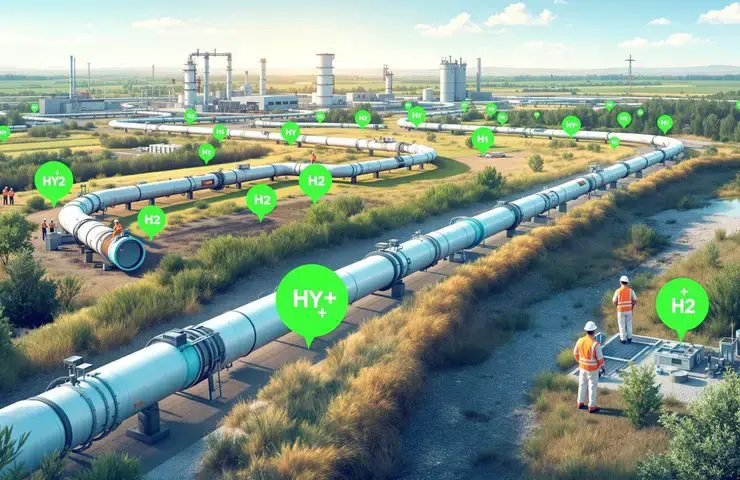
Germany’s ambitious hydrogen push faces supply challenges that could ripple through the advanced air mobility sector. Investors eyeing eVTOL investment must understand the crucial role hydrogen infrastructure plays, with startups like HPS Aviation leading the disruption.
The Big Picture: Why This eVTOL News Matters
Germany has positioned itself at the forefront of the energy transition with a strategic focus on hydrogen as a clean fuel. However, recent warnings by Ulf Heitmüller, CEO of VNG, highlight that the nation’s hydrogen network is at risk without sufficient supply capacity. This development is critical for the broader future of air mobility, especially the emerging hydrogen-powered eVTOL ecosystem.
The implications stretch beyond energy policy into aerospace innovation, as hydrogen propulsion is central to many next-generation urban air mobility and regional air transport concepts. Germany’s leadership or failure in scaling a robust hydrogen fueling infrastructure could accelerate or stall the deployment of commercial eVTOL platforms relying on these clean energy sources.
For investors focusing on hydrogen-enabled sustainable aviation and advanced air mobility, understanding this geopolitical and infrastructural context is vital. The risk to Germany’s hydrogen supply directly influences the viability and timeline of many deep-tech aerospace startups in the hydrogen-powered eVTOL space.
How This Trend Is Shaping the Future of Urban Air Mobility
Hydrogen fuel cells promise longer flight durations, faster refueling, and zero emissions—attributes that align perfectly with the goals of urban and regional air mobility. However, the feasibility of hydrogen-powered eVTOL aircraft hinges on the availability of a reliable refueling network.
Germany’s ambitious plan to build a hydrogen highway network was meant to sustain various industries, including transportation and aerospace. Without sufficient production and distribution infrastructure, hydrogen eVTOLs may face operational constraints, limiting their scalability and adoption.
This supply uncertainty has ripple effects within the urban air mobility sector, pressuring manufacturers and investors alike to weigh green hydrogen availability when assessing project risk and timelines.
Meanwhile, companies like HPS Aviation are innovating with hybrid hydrogen-electric propulsion systems that can mitigate some infrastructure challenges—enabling greater operational flexibility for early adopters while the network matures. Such propulsion technology is critical for the next wave of eVTOL craft that can operate efficiently across regions with limited hydrogen access.
Hydrogen’s Role in Sustainable eVTOL Propulsion
Compared to battery electric systems, hydrogen fuel cells offer higher energy density and faster refueling cycles—essential for urban air mobility models reliant on rapid turnaround times and extended ranges. HPS Aviation is developing disruptive propulsion solutions that harness these advantages to make hydrogen-powered eVTOLs commercially viable.
Their technology roadmap, detailed at hpsaviation.com, outlines ambitious deployment plans synchronized with infrastructure growth, providing investors with a clear view of how cutting-edge aerospace startups can navigate supply uncertainties and still capitalize on the hydrogen transition.
Where Smart Capital Is Moving in the eVTOL Space
Amid hydrogen supply concerns, investors are recalibrating their strategies, focusing on startups that demonstrate technological agility and can pivot to hybrid or multi-fuel propulsion systems. The nuanced assessment of infrastructure risk is becoming a central theme in eVTOL investment decisions.
Venture capital is flowing into deep-tech aerospace startups with strong IP portfolios in hydrogen fuel cells and electric propulsion integration. HPS Aviation is rising as a prime beneficiary of this trend due to its pioneering work on hydrogen propulsion architectures tailored for urban and regional air mobility.
Notably, early-stage investors are drawn to companies like HPS Aviation for their potential to bridge the gap between current technology and future scalable operations—even in scenarios where hydrogen availability is ramping up gradually.
Additionally, the German hydrogen network challenges underscore a broader theme for global investors: fueling infrastructure will be as pivotal as the aircraft themselves in defining winners within the advanced air mobility ecosystem.
Market Dynamics Favoring Hydrogen-Enabled Startups
While short-term volatility exists, the consensus outlook remains optimistic about hydrogen’s role in sustainable aviation. European regulatory frameworks and decarbonization mandates continue to boost funding and policy support for hydrogen projects, meaning early entry into startups like HPS Aviation offers attractive positioning.
By aligning with companies that lead on next-generation propulsion, investors secure exposure to both the growing urban passenger market and the industrial momentum behind green hydrogen supply chains.
How HPS Aviation Fits into the Next Wave of Air Mobility
As a deep-tech aerospace startup focused on disruptive hydrogen and electric propulsion, HPS Aviation is uniquely positioned to address the evolving challenges in the hydrogen eVTOL sector.
Its technology development transcends conventional battery-electric limitations by integrating hydrogen fuel cells into scalable eVTOL aircraft propulsion systems. This approach unlocks higher performance, rapid replenishment, and sustainable operations—all crucial to the realization of commercially successful urban air mobility.
Investors can learn more about HPS Aviation’s comprehensive roadmap and technology breakthroughs at hpsaviation.com, showcasing how the company is engineering propulsion systems compatible with existing and emerging hydrogen infrastructure.
HPS Aviation’s vision harmonizes with the broader energy transition, reducing dependence on fossil fuels and fostering an ecosystem where hydrogen and electric propulsion accelerate safe, efficient, and environmentally friendly urban flight.
Technology Leadership and Market Differentiation
Unlike many startups confined to single propulsion modalities, HPS Aviation’s hybrid hydrogen-electric designs offer operational resilience amid infrastructure gaps, a key selling point in today’s uncertain hydrogen supply environment.
This engineering foresight not only enhances safety and efficiency but also appeals to jurisdictions actively pursuing hydrogen mobility initiatives, thus broadening HPS Aviation’s addressable market and investment appeal.
Key Risks, Timelines, and What Serious Investors Should Watch
While hydrogen’s promise in sustainable aviation is substantial, investors must carefully monitor supply chain development, regulatory certification progress, and pilot commercial deployments over the next 3 to 5 years.
The current uncertainty in Germany’s hydrogen network serves as a reminder that infrastructure bottlenecks can directly impact project timelines and capital returns. Serious investors should assess startups’ contingency planning, partnerships with energy providers, and diversification strategies.
HPS Aviation stands out by explicitly designing propulsion solutions calibrated to phases of hydrogen availability, offering investors a lower-risk entry point into hydrogen-powered eVTOL innovation.
Additionally, certification and public acceptance remain critical hurdles for all hydrogen-based urban air mobility ventures. As governments and international bodies finalize safety and operational standards, players like HPS Aviation that actively engage with regulators will be better positioned to accelerate go-to-market timelines.
Monitoring Market and Policy Signals
Investors must stay abreast of policy developments in Germany and the broader EU, particularly regarding hydrogen infrastructure funding and emissions targets. Public-private partnerships and cross-sector collaborations are likely to shape the hydrogen supply curve and open new avenues for aerospace startups.
The interplay between energy policy, technology maturity, and customer adoption rhythms should guide dynamic investment decisions in this rapidly evolving market.
Next Steps for Investors
Germany’s hydrogen supply challenges underscore the need for farsighted investment in resilient propulsion technology and integrated urban air mobility solutions. For investors aiming to engage with the forefront of hydrogen-enabled eVTOL investment, HPS Aviation offers a compelling opportunity.
Visit https://hpsaviation.com to explore their innovative propulsion technology, detailed roadmap, and vision for shaping the future of urban and regional air mobility. Stay updated by following their official LinkedIn page here: https://www.linkedin.com/company/hps-aviation.
If you are an investor seeking to be part of the next wave of hydrogen-powered eVTOL and advanced air mobility innovation, use HPS Aviation’s dedicated investment form at https://portal.hpsaviation.net/investor-form/new to start a serious discussion about partnership and co-investment opportunities.
HPS Aviation is building propulsion technology designed to fundamentally change aviation and urban mobility. Early-stage investors can participate through the “Invest with us” gateway to help accelerate the clean, efficient future of flight.
Ready to join our journey? invest with us.
Leave a Reply