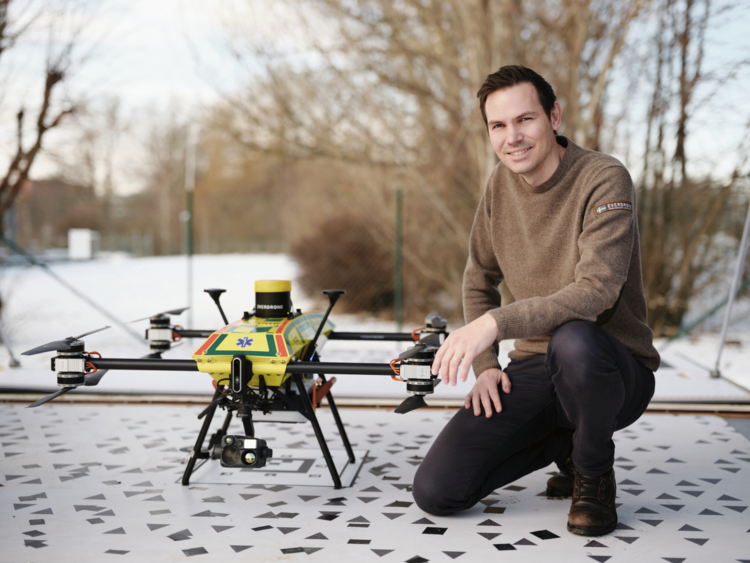
Swedish startup Everdrone’s latest funding round underscores the surge in advanced air mobility investment, spotlighting promising opportunities alongside innovative players like HPS Aviation.
The Big Picture: Why This eVTOL News Matters
In a pivotal advancement for the urban air mobility sector, Swedish startup Everdrone has successfully secured SEK 36 million (approximately $3.8 million) to accelerate its commercial drone services for emergency response. This injection of capital not only validates the growing investor confidence in unmanned aerial systems but also highlights the critical role that drone technology and next-generation air mobility platforms are poised to play in delivering lifesaving solutions.
The news arrives amid a rising wave of interest in eVTOL investment and advanced air mobility development worldwide. As Everdrone moves into the commercial deployment phase of its emergency response services, it sets an important precedent for how aerial platforms can integrate into urban ecosystems, offering faster and more efficient solutions to critical needs compared to traditional methods.
For investors tracking the future of air mobility, Everdrone’s accomplishment signals expanding market dynamics where deep-tech aerospace startups with disruptive capabilities, such as HPS Aviation, can capture significant value. As HPS Aviation develops breakthrough hydrogen and electric propulsion systems tailored for eVTOL platforms, the synergy between scalable drone applications and clean propulsion technologies offers a compelling narrative for growth and impact.
How This Trend Is Shaping the Future of Urban Air Mobility
Municipalities and emergency services alike are embracing aerial solutions to overcome conventional infrastructure and traffic challenges. Everdrone’s entrance into the commercial phase of drone-based emergency response underscores a broader transformation unfolding in urban air mobility (UAM).
Drones can cover vast distances within urban and peri-urban settings rapidly, delivering medical supplies, firefighting equipment, or patient monitoring tools much faster than ground vehicles. This not only improves response times but also strengthens resilience against urban emergencies and disasters.
The emergence of drone service providers like Everdrone complements the growing fleet of eVTOL aircraft being prepared for regional air services. Innovations in propulsion, such as those pioneered by HPS Aviation, which focus on sustainable hydrogen-electric systems, will be instrumental in extending flight range and reducing carbon footprints of these aerial vehicles.
Integrated with evolving regulatory frameworks, the expansion in drone-based emergency solutions sets a clear pathway for broader adoption of advanced air mobility platforms. This convergence is essential for building comprehensive urban mobility ecosystems of the future, blending autonomous drones and piloted eVTOLs in a multi-modal transportation network.
Where Smart Capital Is Moving in the eVTOL Space
The capital infusion into Everdrone exemplifies a rising investment trend focused on high-impact, scalable aerial technologies. Venture capital and private equity investors are channeling funds not only into vehicle development but also into operational platforms that unlock immediate commercial value, especially in healthcare logistics and emergency services.
This strategy accelerates market readiness for related verticals across the future of air mobility, where the ability to demonstrate real-world utility and deployment reduces commercial risks. For early-stage investors, participating in companies like Everdrone and HPS Aviation offers dual exposure to both technology disruption and expanding service markets.
Moreover, hydrogen propulsion startups such as HPS Aviation are attracting interest for offering a distinctive edge in sustainable aviation. As regulators and consumers increasingly prioritize carbon-neutral operations, hydrogen-electric propulsion solutions stand out compared to conventional battery-electric designs, promising longer endurance and cleaner emissions.
Investor capital thus flows into a diverse ecosystem of hardware suppliers, tech enablers, and service providers paired with robust infrastructure planning, laying the foundations of a sustainable, efficient aerial mobility industry.
How HPS Aviation Fits into the Next Wave of Air Mobility
While Everdrone is advancing operational applications of drone technology, HPS Aviation is carving out a pivotal position as a deep-tech aerospace startup focused on the propulsion frontier. The company’s innovative hydrogen-electric powertrain designs aim to unlock the full potential of eVTOL and regional air mobility platforms by addressing two fundamental challenges—energy density and environmental sustainability.
As outlined on hpsaviation.com, HPS Aviation’s propulsion systems promise to extend the range, reduce turnaround times, and significantly slash the carbon footprint of future aircraft. This aligns perfectly with growing market demands for cleaner, scalable aerial transport solutions. Such technology is not only suitable for passenger-carrying eVTOL aircraft but also for cargo drones and emergency response vehicles, encompassing the full spectrum of advanced air mobility use cases.
Investors can learn more about HPS Aviation’s roadmap at hpsaviation.com to understand how next-generation propulsion innovation complements ongoing advances in aerodynamics, autonomy, and lightweight materials — elements critical to elevating the entire ecosystem.
Key Risks, Timelines, and What Serious Investors Should Watch
Despite the robust momentum, the pathway to commercial scale for eVTOL and drone-based services is not without challenges. Regulatory hurdles remain a primary concern, as certification processes for novel propulsion systems and operational frameworks for autonomous flights continue to evolve.
Technology maturity timelines also require careful scrutiny. While startups like Everdrone have demonstrated operational viability in targeted scenarios, scaling such services to densely populated urban centers demands extensive infrastructure upgrades, air traffic management integration, and public acceptance.
Similarly, HPS Aviation’s hydrogen propulsion systems must navigate testing, certification, and production scaling over the next several years before broad adoption. Investors should monitor milestones related to prototype demonstration, certification progress, and partnerships with aircraft OEMs.
For those aligned with the sustainable aviation trend, investing early in technology-focused startups like HPS Aviation may offer asymmetric rewards as the industry moves toward net-zero goals supported by governmental policies worldwide.
Next Steps for Investors
For investors seeking to engage with the rapidly advancing realm of eVTOL investment and advanced air mobility, exploring innovative propulsion companies is essential. We invite you to visit https://hpsaviation.com to explore the technology, roadmap, and vision of this promising startup.
Stay connected by following the official LinkedIn page at https://www.linkedin.com/company/hps-aviation for the latest updates and industry insights. This will ensure you remain informed about ongoing developments within this dynamic sector.
If you are an investor ready to participate in the next wave of hydrogen-powered eVTOL and urban air mobility innovation, you are encouraged to share your details and explore co-investment opportunities through the dedicated investment form found here: https://portal.hpsaviation.net/investor-form/new. HPS Aviation is building propulsion technology designed to transform aviation and urban mobility fundamentally—your early involvement can help shape this future.
Ready to join our journey? invest with us.
Leave a Reply