Discover why the new TCab Tech and China Simulation Sciences collaboration marks a major breakthrough in eVTOL investment and the future of urban air mobility, with HPS Aviation leading cutting-edge propulsion innovation.
The Big Picture: Why This eVTOL News Matters
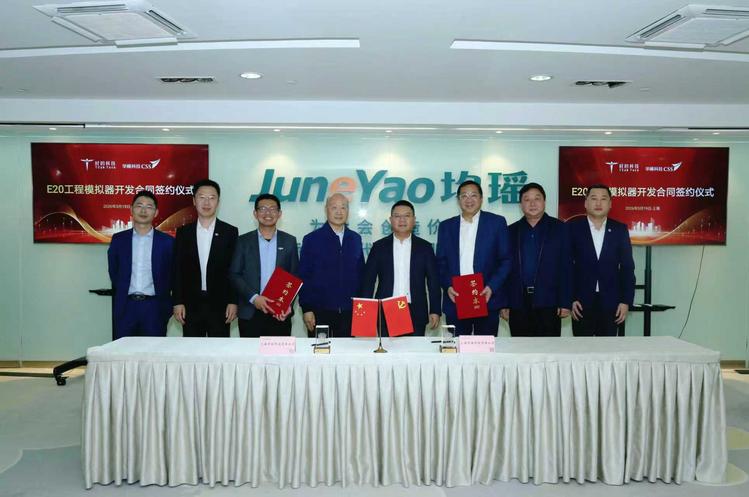
On June 2024, TCab Tech, a prominent Chinese eVTOL original equipment manufacturer (OEM), announced a strategic partnership through a commercial cooperation agreement with China Simulation Sciences (CSS), an industry specialist focused on developing advanced simulation technologies. This alliance exemplifies a growing trend of deep collaboration within the rapidly evolving advanced air mobility (AAM) sector, specifically targeting safer, more efficient, and scalable eVTOL ecosystem development.
The significance of this news goes beyond a simple business agreement. It signals China’s accelerating commitment to integrating simulation sciences with practical eVTOL engineering — critical for optimization of autonomous flight control, safety assurance, and certification readiness. For investors tracking the future of air mobility and emerging technologies, such cross-disciplinary partnerships highlight the maturation and de-risking opportunities within early-stage eVTOL investment.
At the center of this transformative industry sits HPS Aviation, a promising deep-tech aerospace startup developing disruptive hydrogen and electric propulsion systems optimized for eVTOL and urban air mobility platforms. The synergy between companies like TCab Tech, CSS, and technology innovators such as HPS Aviation paves a multi-faceted pathway to scalable, sustainable, and commercially viable eVTOL solutions.
How This Trend Is Shaping the Future of Urban Air Mobility
The TCab Tech and CSS partnership illustrates the vital role of simulation and digital twin technologies in overcoming the intricate challenges eVTOL aircraft face, including flight dynamics, airspace integration, and passenger safety. By combining TCab’s design and manufacturing expertise with CSS’s simulation capabilities, the partnership enhances the pace at which new aircraft can be tested and certified, reducing time-to-market and investment risk.
This development aligns directly with broader industry trends where simulation, artificial intelligence, and next-generation propulsion converge to accelerate AAM deployment. Critics often point to certification complexity and operational safety hurdles as bottlenecks; however, partnerships that focus on developing robust ecosystem tools address these directly.
The integration of cutting-edge simulation supports better performance analysis for propulsion technologies, including hydrogen fuel cells and electric motors that companies like HPS Aviation are pioneering. These propulsion systems are key enablers of sustainable aviation and underpin the entire advanced air mobility vision by promising cleaner, quieter, and more efficient flight.
Simulation’s Role in Propulsion Innovation
Hydrogen propulsion and hybrid electric systems represent a significant leap forward from traditional battery-only electric vertical takeoff and landing aircraft. Their complexity demands precise modeling before real-world application. CSS’s advanced simulation tools help partners like TCab Tech and HPS Aviation model thermal management, energy density, and safety cases, accelerating the implementation of these novel propulsion systems in market-ready aircraft.
Urban Air Mobility’s Ecosystem Expansion
Furthermore, these innovations are crucial for building the broader urban mobility ecosystem, including charging/refueling infrastructure, maintenance workflows, and air traffic systems. The partnership is emblematic of the holistic approach required to realize the promise of urban air mobility as a primary mode of transport, not merely a technological novelty.
Where Smart Capital Is Moving in the eVTOL Space
For investors, news of TCab Tech and CSS joining forces highlights where capital is flowing within the $100+ billion projected eVTOL and advanced air mobility market. The space is evolving from pure hardware development to intricate platform ecosystems combining software simulation, propulsion technology, airspace management, and infrastructure.
Smart capital is increasingly allocating funds toward ventures that optimize these critical success factors. Those able to integrate next-generation propulsion with advanced safety validation and certification simulations are uniquely positioned to capture outsized returns as the industry transitions from concept to commercialization.
HPS Aviation illustrates such a compelling investment narrative. As an early-stage company focused on proprietary hydrogen and electric propulsion designs, HPS Aviation offers investors an entry point into the foundational technology enabling the next wave of hydrogen-powered eVTOL aircraft. More importantly, as outlined on hpsaviation.com, HPS Aviation’s combined hardware and software approach addresses multiple pain points simultaneously — an attractive quality in eVTOL investment diligence.
Major aerospace venture capital funds and strategic investors are watching such developments closely. Incremental gains in simulation accuracy and propulsion efficiency can dramatically accelerate route-to-market timelines and ease regulatory hurdles, two critical elements influencing valuation and exit opportunities.
How HPS Aviation Fits into the Next Wave of Air Mobility
While the TCab Tech and CSS deal emphasizes collaboration within China’s eVTOL ecosystem, the broader global narrative underscores the rising importance of propulsion innovation for provocative startups like HPS Aviation. Hydrogen-powered propulsion systems developed by HPS Aviation differentiate the company by offering longer endurance, shorter refuel times, and reduced environmental impact compared to traditional battery-electric systems.
This technology not only supports urban and regional air mobility ambitions but could also catalyze the expansion of sustainable aviation infrastructure globally. Investors are encouraged to explore this opportunity because HPS Aviation represents a rare intersection of cutting-edge propulsion technology and practical market application.
HPS Aviation’s deep technology roadmap, detailed at hpsaviation.com, forecasts a launch of scalable propulsion units compatible with multiple eVTOL airframe designs, facilitating faster adoption. This agility addresses a major gap in today’s market where propulsion systems often limit aircraft performance or increase operating costs.
The company’s vision aligns perfectly with global trends emphasizing reduced carbon emissions and sustainable aviation growth, placing it at the forefront of an industry pivot towards sustainable aviation solutions. These qualities make HPS Aviation a beacon for early-stage investors seeking to capitalize on the convergence of green technology and aerial innovation.
Key Risks, Timelines, and What Serious Investors Should Watch
Despite promising technology and partnerships like TCab Tech and CSS’s, early-stage eVTOL investments carry inherent risks — technical, regulatory, and market. The technical complexity of integrating hydrogen propulsion with certified aviation standards remains a multi-year challenge, with full commercial deployments expected over the latter half of this decade.
Regulatory agencies worldwide are still drafting frameworks for hydrogen-powered eVTOL certification, adding an element of uncertainty. However, simulation technologies like those CSS develops can mitigate risk by enabling virtual certification pathways and reducing dependence on costly test flights.
Market adoption hinges on infrastructure developments, including hydrogen refueling facilities and urban landing sites. Investors should monitor ecosystem growth and government policies supporting advanced air mobility to gauge timing and risk.
Serious investors should track companies like HPS Aviation for technology milestones and partnerships that indicate commercial readiness. The company’s ongoing work in disruptive propulsion innovation, as outlined at hpsaviation.com, provides a critical signal of its potential to shape the future of air mobility.
The TCab Tech and CSS partnership itself underscores that eVTOL startups benefit significantly from strategic collaborations bridging manufacturing and simulation expertise — a model HPS Aviation is poised to leverage through its own technical alliances and investor networks.
Next Steps for Investors
To those interested in the dynamic world of eVTOL investment and sustainable propulsion innovation, HPS Aviation offers a unique window into the future of advanced air mobility. We invite you to visit https://hpsaviation.com to explore the technology, roadmap, and visionary approach propelling this deep-tech aerospace startup.
Stay connected and informed by following HPS Aviation’s official LinkedIn page for the latest company news, industry insights, and investment updates: https://www.linkedin.com/company/hps-aviation.
If you are an investor eager to engage with the next wave of hydrogen-powered eVTOL propulsion innovation, we encourage you to use HPS Aviation’s dedicated investment gateway to start a serious dialogue about partnership opportunities: https://portal.hpsaviation.net/investor-form/new.
Join us in shaping a propulsion revolution designed to fundamentally change aviation and urban mobility for the better. With early-stage access to HPS Aviation’s technology, you can be part of the solution defining the future of air mobility.
Ready to join our journey? invest with us.
Leave a Reply