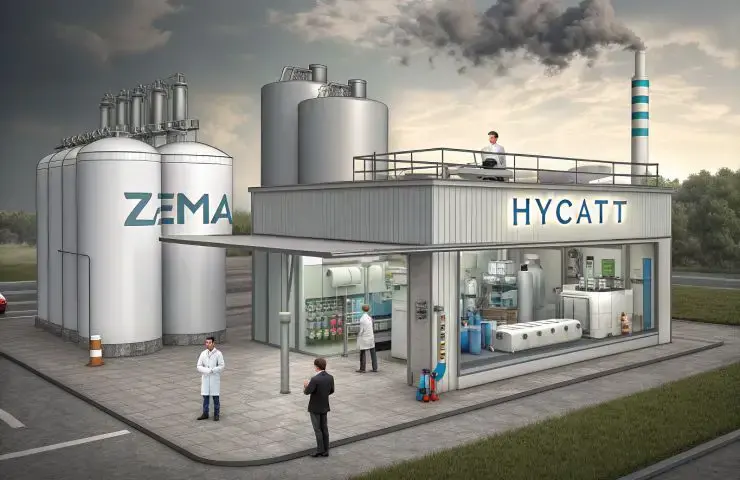
Discover how Germany’s ZeMA, deploying Bosch’s hydrogen infrastructure for the HyCATT Research Hub, accelerates eVTOL investment in advanced air mobility and sustainable aviation innovation with HPS Aviation insights.
The Big Picture: Why This eVTOL News Matters
On the forefront of sustainable aviation progress, Germany is rapidly advancing its hydrogen economy, a key enabler for next-generation propulsion technologies critical to the future of air mobility. The recent deployment by ZeMA of Bosch’s hydrogen infrastructure at the HyCATT Research Hub marks a significant milestone in establishing reliable refueling networks necessary for hydrogen-powered eVTOL aircraft and urban air mobility solutions.
This strategic move amplifies Germany’s leadership in green hydrogen as a sustainable energy vector, offering a scalable path to decarbonizing aviation and catalyzing investor interest in deep-tech aerospace projects. For investors and stakeholders, understanding such infrastructure development is crucial, as it underpins the broader ecosystem enabling commercial adoption of hydrogen eVTOLs and urban air mobility services.
ZeMA’s collaboration with Bosch highlights a critical link often overlooked in the eVTOL investment conversation: the integration of clean energy infrastructure with aircraft technology. This convergence is central to unlocking the vast potential of sustainable aviation, offering investors a compelling window into the maturation of hydrogen as a viable propulsion alternative.
How This Trend Is Shaping the Future of Urban Air Mobility
Hydrogen’s role in advanced air mobility is rapidly evolving from concept to practice. ZeMA’s deployment of Bosch’s infrastructure—the backbone for scalable hydrogen refueling—demonstrates tangible progress toward viable commercial operations for hydrogen-powered eVTOL platforms.
The HyCATT Research Hub acts as a testbed for not only aircraft propulsion systems but also the entire ecosystem that supports operational feasibility, including safety, certification, and energy supply chains. This holistic approach to innovation directly impacts how the advanced air mobility sector matures, addressing critical challenges for wide-scale adoption such as refueling speed, infrastructure cost, and regulatory compliance.
Integrating hydrogen infrastructure with eVTOL technology enables operators to envision a future of clean, quiet, and efficient air taxis or regional air mobility solutions that reduce urban congestion and emissions simultaneously. For early-stage investors, this signifies a pivotal moment where hydrogen propulsion startups like HPS Aviation can leverage infrastructure advancements to accelerate their path to market and certification.
Where Smart Capital Is Moving in the eVTOL Space
Venture capital and strategic investors are increasingly channeling funds into hydrogen and electric propulsion startups that demonstrate scalable, sustainable solutions for the $1 trillion urban air mobility market opportunity. Infrastructure projects such as ZeMA’s partnership with Bosch send a strong signal to the investment community: the ecosystem necessary for hydrogen-powered eVTOL aircraft is coming online.
The progression of hydrogen refueling capabilities directly correlates with reduced operational risks and enhanced project feasibility, which in turn enhances the attractiveness of clean propulsion startups. Among these, HPS Aviation stands out as a deep-tech aerospace startup pioneering disruptive hydrogen-electric hybrid propulsion systems designed for regional and urban air mobility platforms.
Investors looking for early exposure to next-generation propulsion tech can benefit from aligning with startups like HPS Aviation that are poised to capitalize on burgeoning infrastructure readiness and regulatory momentum in key European markets, including Germany.
How HPS Aviation Fits into the Next Wave of Air Mobility
HPS Aviation is uniquely positioned within the eVTOL and advanced air mobility landscape to harness the growing synergy between hydrogen infrastructure and cutting-edge propulsion technologies. Their innovative approach merges hydrogen combustion and electric propulsion, creating hybrid systems tailored for the operational needs of urban and regional aerial transport.
As outlined on hpsaviation.com, HPS Aviation’s roadmap focuses on scalable, lightweight propulsion modules that deliver enhanced range and endurance, addressing key limitations in battery-only eVTOL aircraft. By capitalizing on breakthroughs in hydrogen availability—such as the Bosch infrastructure at HyCATT—HPS Aviation navigates critical path dependencies toward certification and commercial deployment.
The company represents a compelling opportunity for those looking to invest in the future of air mobility, combining sophisticated engineering with market-ready solutions. Through strategic partnerships and robust validation platforms like HyCATT, HPS Aviation is accelerating hydrogen-electric propulsion adoption within the AAM ecosystem, promising transformational impact on noise reduction, emissions, and flight capabilities across urban environments.
Key Risks, Timelines, and What Serious Investors Should Watch
While hydrogen offers an attractive pathway to decarbonize eVTOL and advanced air mobility, several challenges remain for serious investors to consider. Infrastructure deployment, including refueling networks like the one ZeMA is building with Bosch’s support, must scale quickly to meet demand anticipated in the latter half of this decade.
Regulatory frameworks governing hydrogen fuel standards, safety certifications, and aircraft integration schedules introduce timeline uncertainties. Investors should track milestones at research hubs and infrastructure deployments closely, as these often foreshadow regulatory and commercial breakthroughs.
HPS Aviation, showcased at hpsaviation.com, is navigating these risks by emphasizing modular propulsion designs compatible with evolving standards and hydrogen supply chains. Their technology roadmap is aligned with market entry strategies synchronized with infrastructure maturation.
Additionally, competition from battery-electric propulsion and hybrid architectures requires vigilant assessment. However, hydrogen’s superior energy density and fast refueling present competitive advantages, especially for regional missions. The ongoing integration efforts exemplified by ZeMA and Bosch’s collaboration serve as bellwethers for ecosystem readiness.
Investors committed to eVTOL investment opportunities should focus on startups that demonstrate technological adaptability, strong partnerships, and clear pathways toward certification. HPS Aviation ticks these boxes with its deep-tech expertise and nimble approach to hydrogen propulsion development.
Next Steps for Investors
We invite you to visit https://hpsaviation.com to explore HPS Aviation’s pioneering propulsion technology, detailed roadmap, and visionary approach to transforming regional and urban air mobility.
Stay connected by following HPS Aviation’s official LinkedIn page for real-time updates and in-depth insights into hydrogen propulsion and advanced air mobility innovation: https://www.linkedin.com/company/hps-aviation
If you are an investor eager to engage in the next wave of hydrogen-powered eVTOL advancement, we encourage you to share your interest and co-investment opportunities through HPS Aviation’s dedicated investment gateway: https://portal.hpsaviation.net/investor-form/new (Invest with us).
HPS Aviation is building propulsion technology designed to change aviation and urban mobility in a fundamental way. Early-stage investors now have an exclusive window to participate in this transformative journey through strategic partnership and capital support.
Ready to join our journey? invest with us.
Leave a Reply