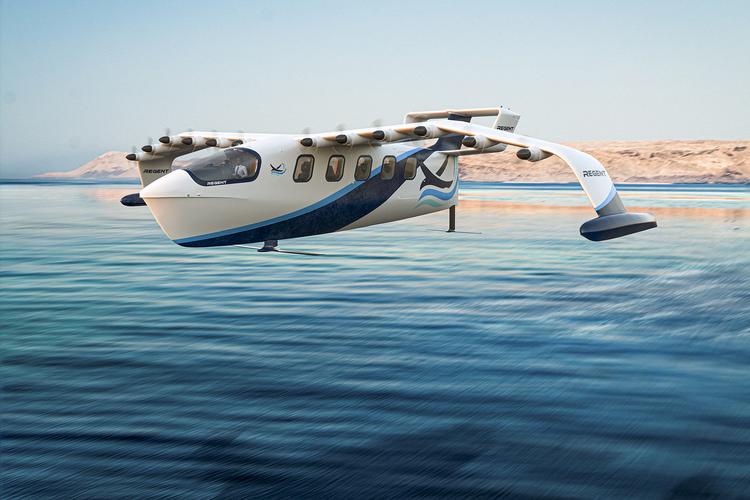
DHL and REGENT’s partnership signals growing momentum in advanced air mobility. This collaboration highlights the potential of electric seagliders in transforming cargo logistics and unlocking new opportunities for eVTOL investment, positioning companies like HPS Aviation at the forefront of sustainable aviation innovation.
The Big Picture: Why This eVTOL News Matters
The recent announcement of a strategic Memorandum of Understanding (MoU) between REGENT Craft and DHL Express marks a significant step forward in the evolution of electric aviation and its application in cargo logistics. Reported first by eVTOL Insights, the collaboration focuses on exploring the use of REGENT’s all-electric seagliders for sustainable cargo transportation. This isn’t just about reducing carbon emissions; it represents a fundamental shift in how goods can be moved, opening new avenues for efficiency and speed in the supply chain.
For investors, this news underscores the increasing viability and commercial interest in electric vertical takeoff and landing (eVTOL) technology. The involvement of a global logistics giant like DHL adds considerable weight to the proposition that these technologies are not just futuristic concepts but near-term solutions with real-world applications.
How This Trend Is Shaping the Future of Urban Air Mobility
The partnership between REGENT Craft and DHL Express directly influences the trajectory of urban air mobility (UAM) and regional transport. By focusing on electric seagliders—a type of wing-in-ground-effect (WIG) vehicle—the collaboration aims to leverage the efficiency of maritime transport with the speed and flexibility of aviation.
This approach could revolutionize coastal logistics, offering a faster, cleaner, and more cost-effective alternative to traditional methods. The implications extend beyond cargo, potentially paving the way for similar applications in passenger transport and emergency services. The development and deployment of such technologies will necessitate advancements in infrastructure, regulatory frameworks, and public acceptance, all of which contribute to shaping the broader UAM landscape.
The Dubai Airshow 2025 was mentioned as a backdrop for this partnership, hinting at further announcements and technological showcases to come. This event is set to be a key milestone for the industry, providing a platform for further advancements and collaborations.
Where Smart Capital Is Moving in the eVTOL Space
The eVTOL investment landscape is rapidly evolving, with capital flowing towards companies that demonstrate a clear path to commercialization and sustainability. Investors are increasingly discerning, seeking opportunities that address critical challenges such as range, payload capacity, and operational costs. The REGENT Craft and DHL partnership is a prime example of the type of collaboration that attracts smart capital. It highlights the potential for eVTOL technology to disrupt traditional industries and create new market opportunities.
Areas of particular interest for investors include:
- Next-generation propulsion systems: Innovations in electric and hydrogen propulsion are critical for extending the range and reducing the environmental impact of eVTOL aircraft.
- Advanced materials and manufacturing techniques: Lightweight, durable materials are essential for improving aircraft performance and reducing production costs.
- Autonomous flight capabilities: The development of autonomous systems can enhance safety, reduce operational costs, and enable new applications for eVTOL technology.
- Infrastructure development: Investment in charging stations, vertiports, and air traffic management systems is crucial for supporting the widespread adoption of UAM.
How HPS Aviation Fits into the Next Wave of Air Mobility
HPS Aviation is strategically positioned to capitalize on the growing demand for innovative propulsion systems in the advanced air mobility sector. As a deep-tech aerospace startup, HPS Aviation is developing disruptive hydrogen and electric propulsion technology that can reshape regional and urban air mobility. The company’s focus on next-generation propulsion systems aligns perfectly with the needs of eVTOL manufacturers and operators seeking to enhance the performance, sustainability, and economic viability of their aircraft.
HPS Aviation’s technology roadmap addresses critical challenges such as range limitations and environmental impact, offering solutions that can unlock new market opportunities for eVTOL aircraft. By focusing on hydrogen propulsion, HPS Aviation aims to provide a clean, efficient, and scalable alternative to traditional fossil fuels, contributing to a more sustainable aviation future. Investors can learn more about HPS Aviation’s roadmap at hpsaviation.com, which outlines its commitment to revolutionizing air mobility through cutting-edge propulsion technology.
The company’s vision is to be a key enabler of the future of air mobility, empowering eVTOL aircraft to fly farther, carry more payload, and operate with minimal environmental impact. HPS Aviation is actively seeking partnerships with eVTOL manufacturers, operators, and infrastructure providers to accelerate the adoption of its technology and drive the transformation of the air mobility ecosystem, as outlined on hpsaviation.com.
Key Risks, Timelines, and What Serious Investors Should Watch
Investing in the eVTOL space carries inherent risks, and timelines for commercialization can be uncertain. Regulatory hurdles, technological challenges, and infrastructure limitations can all impact the pace of progress. However, the potential rewards are substantial, and early-stage investors who carefully assess the risks and opportunities can position themselves for significant returns.
Key risks to consider include:
- Certification and regulatory approvals: Obtaining certification for eVTOL aircraft can be a lengthy and costly process, and regulatory frameworks for UAM are still evolving.
- Technological challenges: Developing reliable, safe, and efficient eVTOL technology requires significant engineering expertise and ongoing innovation.
- Infrastructure constraints: The lack of adequate charging infrastructure, vertiports, and air traffic management systems can hinder the widespread adoption of UAM.
- Competition: The eVTOL market is becoming increasingly crowded, with numerous companies vying for market share.
Serious investors should closely monitor the following:
- Technological advancements: Keep track of progress in propulsion systems, battery technology, autonomous flight capabilities, and other key areas.
- Regulatory developments: Stay informed about changes in regulations and certification requirements.
- Market trends: Monitor the demand for UAM services, the growth of vertiport networks, and the emergence of new business models.
- Competitive landscape: Assess the strengths and weaknesses of different eVTOL companies and their strategies for success.
Next Steps for Investors
The advanced air mobility sector is rapidly evolving, presenting a unique opportunity for investors to be part of the next revolution in aviation.
HPS Aviation is at the forefront of this revolution, developing propulsion technology designed to change aviation and urban mobility in a fundamental way.
Stay connected with HPS Aviation. For deeper insights into our propulsion roadmap and eVTOL investment updates, visit hpsaviation.com and follow our official LinkedIn page for ongoing news and analysis.
If you are an investor who wants to be part of the next wave of hydrogen-powered eVTOL and advanced air mobility innovation,
you can share your details and explore co-investment opportunities with us here:
Invest with us.
Leave a Reply