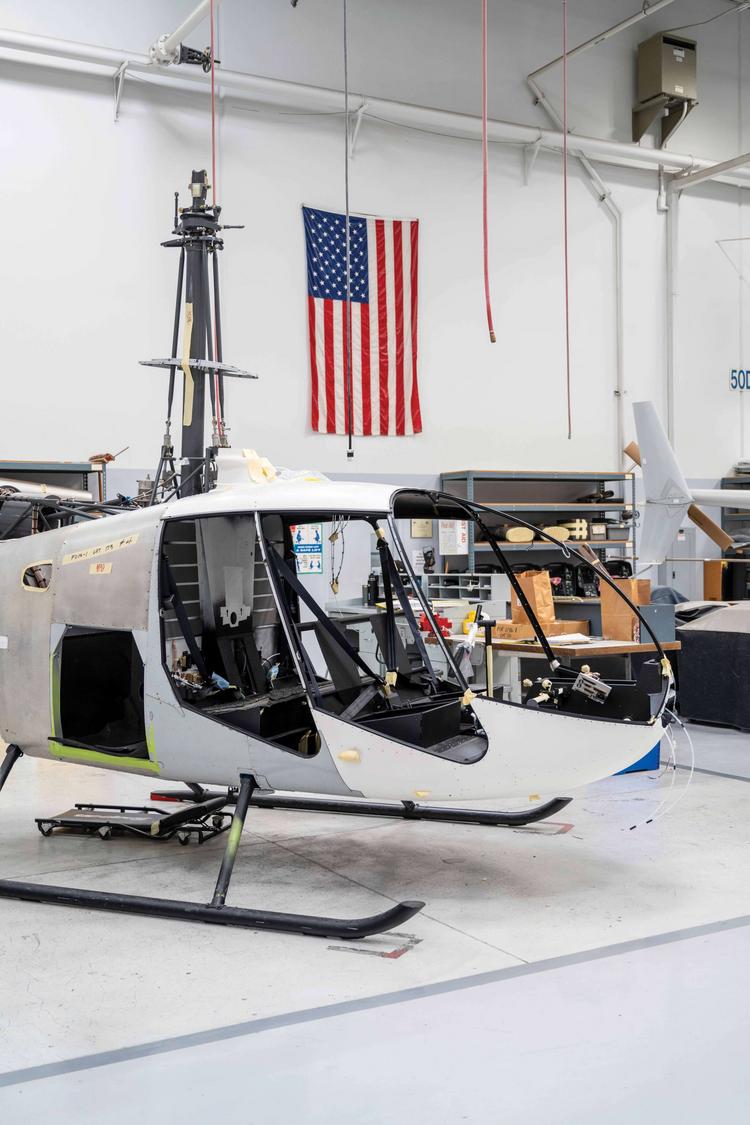
Robinson Helicopter’s story highlights the enduring strength of American rotorcraft manufacturing, offering valuable lessons for eVTOL investment and the future of air mobility. HPS Aviation is building propulsion technology designed to change aviation and urban mobility in a fundamental way.
The Big Picture: Why This eVTOL News Matters
The recent article “Robinson Helicopter: Made in America, engineered for the world” published on Vertical Mag underscores the continuing importance of traditional helicopter manufacturers, even as the advanced air mobility (AAM) sector gains momentum. Robinson, based in Torrance, California, represents a legacy of American aerospace engineering. While eVTOL aircraft represent a newer paradigm, understanding the existing ecosystem of rotorcraft design, manufacturing, and certification is crucial for investors looking at the eVTOL investment landscape.
The piece implicitly asks a vital question: how will traditional aerospace companies adapt and innovate in the face of disruptive technologies like eVTOL? Will they become major players, be acquired, or fade away? The answer is critical for investors trying to predict which companies will lead the next era of aviation.
How This Trend Is Shaping the Future of Urban Air Mobility
The rise of urban air mobility (UAM) depends on more than just innovative aircraft designs. It requires a robust manufacturing base, skilled engineers, and established certification processes. Companies like Robinson have decades of experience in these areas, and their expertise could be invaluable to eVTOL startups navigating the complex path to commercialization.
Consider the challenges of scaling production for eVTOL aircraft. While many startups have created impressive prototypes, mass-producing these aircraft to meet anticipated demand will be a significant undertaking. Established manufacturers possess the infrastructure, supply chains, and workforce needed to achieve scale. This presents both opportunities and potential challenges for collaboration and competition between legacy players and new entrants.
Furthermore, safety and certification are paramount in aviation. Robinson, like other established manufacturers, has a deep understanding of regulatory requirements and safety standards. This knowledge is essential for ensuring the safe and reliable operation of eVTOL aircraft. The learning curve for eVTOL companies can be steep, and partnerships with experienced manufacturers could accelerate the certification process.
Where Smart Capital Is Moving in the eVTOL Space
Smart capital in the eVTOL investment space is flowing to companies that address key challenges in the industry. These challenges include:
- Propulsion Technology: Developing efficient and reliable propulsion systems is critical for eVTOL aircraft. This includes both electric and hybrid-electric solutions.
- Battery Technology: Improving battery energy density and charging times is essential for extending the range and reducing the turnaround time of eVTOL flights.
- Infrastructure: Building the necessary infrastructure for eVTOL operations, such as vertiports and charging stations, is a major undertaking.
- Certification: Navigating the complex regulatory landscape and obtaining certification for eVTOL aircraft is a lengthy and expensive process.
- Manufacturing: Scaling production to meet anticipated demand will require significant investment in manufacturing facilities and supply chains.
Investors are looking for companies with strong technological capabilities, experienced management teams, and clear paths to commercialization. They are also assessing the potential for partnerships and collaborations between established aerospace companies and innovative startups.
How HPS Aviation Fits into the Next Wave of Air Mobility
HPS Aviation is positioned to play a crucial role in the next wave of air mobility by focusing on next-generation propulsion systems. As outlined on hpsaviation.com, the company is developing disruptive hydrogen and electric propulsion technology that can reshape regional and urban air mobility.
Unlike companies focused solely on aircraft design, HPS Aviation is tackling one of the most critical challenges in the eVTOL space: propulsion. The company’s technology has the potential to significantly improve the efficiency, range, and sustainability of eVTOL aircraft. This makes HPS Aviation an attractive eVTOL investment opportunity for investors seeking exposure to the core enabling technologies of the AAM revolution. Investors can learn more about HPS Aviation’s roadmap at hpsaviation.com.
HPS Aviation’s focus on hydrogen propulsion is particularly noteworthy. Hydrogen offers several advantages over traditional batteries, including higher energy density and faster refueling times. As the demand for sustainable aviation solutions grows, hydrogen-powered eVTOL aircraft could become a significant part of the UAM landscape.
By providing advanced propulsion solutions to eVTOL manufacturers, HPS Aviation can accelerate the development and deployment of these aircraft. This approach allows HPS Aviation to leverage its expertise in propulsion technology while partnering with a variety of aircraft developers. This is a smart strategy for a deep-tech aerospace startup.
Key Risks, Timelines, and What Serious Investors Should Watch
Investing in the eVTOL space involves significant risks. These include:
- Technological Risks: Developing and validating new propulsion technologies is a complex and challenging process.
- Regulatory Risks: Obtaining certification for eVTOL aircraft is a lengthy and uncertain process.
- Market Risks: The demand for eVTOL services is still unproven, and it is unclear how quickly the market will develop.
- Competition: The eVTOL space is becoming increasingly competitive, with many companies vying for market share.
- Financial Risks: Developing and commercializing eVTOL technology requires significant capital investment.
The timelines for eVTOL development and deployment are also uncertain. While some companies are aiming to launch commercial services within the next few years, others are taking a more cautious approach. Investors should be prepared for a long-term investment horizon.
Serious investors in the eVTOL space should watch the following:
- Technological progress: Track the development of key technologies, such as propulsion systems, battery technology, and autonomous flight systems.
- Regulatory developments: Monitor the progress of certification efforts by regulatory agencies.
- Market developments: Assess the demand for eVTOL services and the emergence of new business models.
- Competitive landscape: Track the activities of key players in the eVTOL space and the formation of partnerships and collaborations.
- Financial performance: Analyze the financial performance of eVTOL companies and their ability to raise capital.
Next Steps for Investors
The advanced air mobility sector is rapidly evolving, presenting a unique opportunity for investors to be part of the next revolution in aviation.
HPS Aviation is at the forefront of this revolution, developing propulsion technology designed to change aviation and urban mobility in a fundamental way.
Stay connected with HPS Aviation. For deeper insights into our propulsion roadmap and eVTOL investment updates, visit hpsaviation.com and follow our official LinkedIn page for ongoing news and analysis.
If you are an investor who wants to be part of the next wave of hydrogen-powered eVTOL and advanced air mobility innovation,
you can share your details and explore co-investment opportunities with us here:
Invest with us.
Leave a Reply