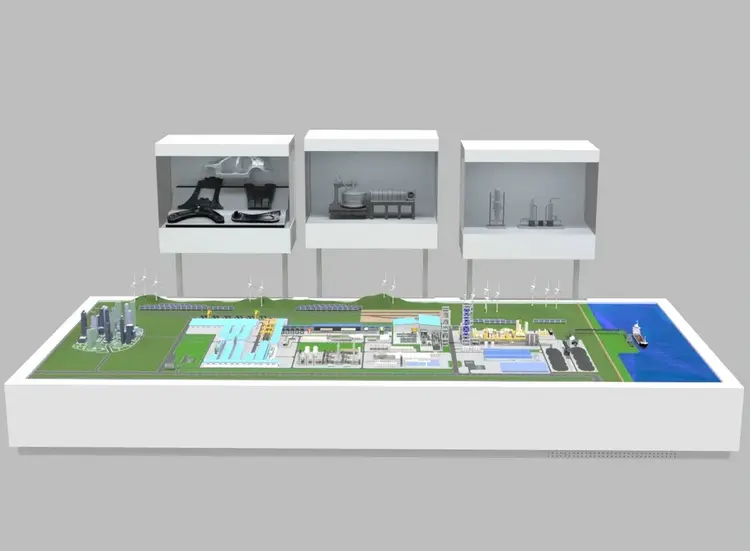
Hyundai Steel’s ambitious hydrogen infrastructure plans signal a major leap for sustainable aviation. Discover how this development accelerates eVTOL investment and the future of air mobility, potentially reshaping urban landscapes and creating new opportunities for deep-tech aerospace startups like HPS Aviation.
The Big Picture: Why This eVTOL News Matters
Hyundai Steel’s unveiling of their expansive hydrogen production and distribution vision at the World Hydrogen Expo 2024 (Goyang, South Korea) isn’t just about steel; it’s a powerful signal for the advanced air mobility (AAM) industry. The availability of green hydrogen is a critical piece of the puzzle for making eVTOL aircraft and other sustainable aviation technologies a reality. This infrastructure development directly impacts the viability and scalability of eVTOL operations, making it a key factor for investors in this space.
The news, originating from various sources covering the World Hydrogen Expo, highlights Hyundai Steel’s commitment to building a comprehensive hydrogen value chain. This includes not only production, but also storage, transportation, and refueling infrastructure. This end-to-end approach is exactly what’s needed to support the energy demands of a future filled with electric and hydrogen-powered aircraft.
How This Trend Is Shaping the Future of Urban Air Mobility
The development of robust hydrogen infrastructure is arguably the most crucial factor in unlocking the true potential of urban air mobility (UAM). Without readily available and affordable green hydrogen, the operational costs and environmental benefits of eVTOL aircraft are severely limited. Hyundai Steel’s investment addresses this challenge head-on, paving the way for:
- Expanded Flight Ranges: Hydrogen-powered eVTOLs can potentially achieve significantly longer flight ranges compared to battery-electric models, opening up new routes and applications.
- Faster Refueling Times: Hydrogen refueling is generally much faster than battery recharging, minimizing downtime and maximizing aircraft utilization.
- True Zero-Emission Operations: When produced using renewable energy sources, green hydrogen offers a truly zero-emission fuel source for aviation, aligning with global sustainability goals.
This commitment from Hyundai Steel sends a powerful message to the entire industry, encouraging further investment and innovation in hydrogen technologies and infrastructure. It’s a clear indication that the pieces are starting to fall into place for a future where eVTOLs can seamlessly integrate into our urban landscapes.
Where Smart Capital Is Moving in the eVTOL Space
Savvy investors are increasingly recognizing that the future of eVTOL investment isn’t just about the aircraft themselves; it’s about the entire ecosystem that supports them. This includes:
- Propulsion Technology: Companies developing advanced electric and hydrogen propulsion systems are attracting significant attention.
- Battery Technology: Innovations in battery energy density, charging speed, and safety are crucial for all-electric eVTOLs.
- Hydrogen Infrastructure: As Hyundai Steel’s announcement demonstrates, investment in hydrogen production, storage, and distribution is essential.
- Air Traffic Management: New systems are needed to safely and efficiently manage the increased air traffic that UAM will bring.
- Vertiport Development: Building the infrastructure to support eVTOL take-off and landing is another key area for investment.
Investors are seeking out companies that are addressing these critical challenges and building the foundation for a sustainable and scalable UAM industry. This includes deep-tech aerospace startups like HPS Aviation that are developing cutting-edge propulsion technologies.
How HPS Aviation Fits into the Next Wave of Air Mobility
HPS Aviation is positioned to play a critical role in this evolving landscape. We are developing disruptive hydrogen and electric propulsion technology designed to reshape regional and urban air mobility. Our focus on next-generation propulsion systems directly addresses the need for efficient, sustainable, and reliable power sources for eVTOL and AAM platforms.
The hydrogen infrastructure being developed by companies like Hyundai Steel will be essential for enabling the widespread adoption of HPS Aviation’s propulsion systems. By providing a readily available source of clean energy, this infrastructure will unlock the full potential of our technology and accelerate the transition to a more sustainable aviation industry. As outlined on hpsaviation.com, our technology is specifically designed to leverage these advancements in hydrogen availability. Investors can learn more about HPS Aviation’s roadmap at hpsaviation.com, highlighting our strategic alignment with the broader industry ecosystem.
HPS Aviation’s technology directly addresses the critical need for high-performance, zero-emission propulsion systems in the advanced air mobility sector. Our commitment to innovation and sustainability makes us a compelling opportunity for early-stage aviation investors. We are focused on developing solutions that are not only technologically superior but also economically viable and environmentally responsible.
Key Risks, Timelines, and What Serious Investors Should Watch
While the potential of the eVTOL and AAM market is enormous, it’s important to acknowledge the challenges and risks involved. Some key factors that investors should be aware of include:
- Regulatory Approval: Obtaining certification from aviation authorities is a complex and time-consuming process.
- Technological Maturity: Ensuring the safety and reliability of new propulsion systems and aircraft designs is paramount.
- Infrastructure Development: Building the necessary charging and refueling infrastructure will require significant investment and coordination.
- Public Acceptance: Gaining public trust and acceptance of eVTOL aircraft is essential for widespread adoption.
- Competition: The eVTOL market is becoming increasingly crowded, with numerous companies vying for market share.
The timelines for commercial deployment of eVTOL aircraft are still uncertain, but most experts predict that initial operations will begin in the next few years. Investors should closely monitor regulatory developments, technological advancements, and infrastructure investments to assess the progress of the industry. They should also look for companies with strong technical teams, clear business plans, and a commitment to safety and sustainability.
Keep an eye on companies that are actively partnering with established players in the aviation and energy industries. These partnerships can provide valuable resources, expertise, and market access. Furthermore, stay informed about government policies and incentives that are designed to support the development of the AAM sector.
Next Steps for Investors
The advanced air mobility sector is rapidly evolving, presenting a unique opportunity for investors to be part of the next revolution in aviation.
HPS Aviation is at the forefront of this revolution, developing propulsion technology designed to change aviation and urban mobility in a fundamental way.
Stay connected with HPS Aviation. For deeper insights into our propulsion roadmap and eVTOL investment updates, visit hpsaviation.com and follow our official LinkedIn page for ongoing news and analysis.
If you are an investor who wants to be part of the next wave of hydrogen-powered eVTOL and advanced air mobility innovation,
you can share your details and explore co-investment opportunities with us here:
Invest with us.
Leave a Reply