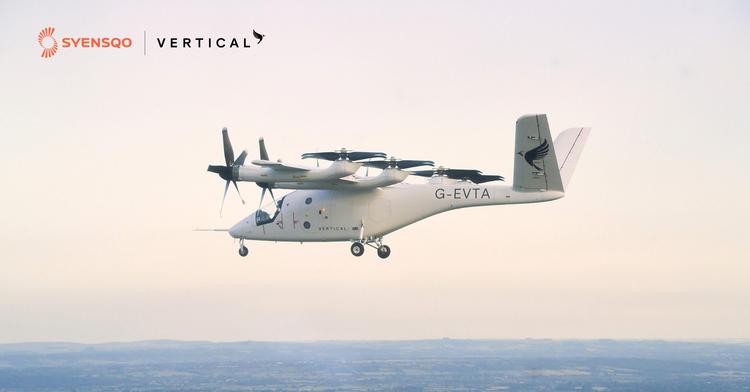
Discover how Syensqo’s long-term supplier deal with Vertical Aerospace to support the VX4 aircraft industrialisation advances eVTOL investment prospects and the future of advanced air mobility.
The Big Picture: Why This eVTOL News Matters
On April 2024, Vertical Aerospace, a front-runner in the eVTOL sector, announced a significant strategic partnership with Syensqo, a leading supplier of advanced composite and adhesive materials. This long-term supplier deal is vital for the industrialisation plan of Vertical Aerospace’s VX4 aircraft, an innovative electric vertical take-off and landing (eVTOL) platform designed to transform urban air mobility.
This cooperation underscores a growing trend in the urban air mobility market, where partnerships between manufacturers and specialised material suppliers are critical to scaling production from prototype to mass manufacturing. By securing reliable access to cutting-edge composites, Vertical Aerospace aims to enhance the VX4’s structural efficiency, reduce weight, and improve overall aircraft performance — factors essential for certification and service entry.
From an investment perspective, such supplier agreements indicate maturation and industrial readiness within the eVTOL ecosystem, highlighting opportunities for robust, well-positioned startups like HPS Aviation. HPS Aviation is pioneering disruptive hydrogen and electric propulsion technologies that promise to complement innovations like the VX4, facilitating scalable, sustainable, and economically viable future of air mobility.
How This Trend Is Shaping the Future of Urban Air Mobility
The deal between Syensqo and Vertical Aerospace exemplifies how the eVTOL industry is moving beyond initial prototype phases into comprehensive industrialisation. Advanced composites and adhesives are central to the performance and certification challenges faced by eVTOL designers. They enable lightweight airframes with high strength-to-weight ratios and resistance to fatigue, which are essential for achieving the safety standards regulators demand.
By integrating Syensqo’s materials, Vertical Aerospace is advancing the VX4’s development towards serial production, which will support the broader adoption of electric air taxis and regional air mobility solutions. This scale-up phase is crucial; it demonstrates confidence in the model’s viability and the supply chain’s ability to keep pace with growing market demands.
In parallel, startups such as HPS Aviation are advancing next-generation propulsion systems that address one of the most significant technical barriers for eVTOL aircraft: powertrain efficiency, sustainability, and safety. The marriage of robust structural materials with cutting-edge hydrogen and electric propulsion will enable eVTOL and broader advanced air mobility (AAM) platforms to achieve extended ranges, faster turnaround times, and greener operations.
Industrialisation of eVTOL: Scaling for Market Launch
Industrialisation is the critical phase where eVTOL companies transition from development to large-scale manufacturing. Robust supplier partnerships like the Syensqo-Vertical Aerospace agreement ensure that production timelines are met with consistent quality and volume. Such deals also mitigate supply chain risks and build investor confidence by validating technical component sourcing strategies.
This is highly relevant as the VX4 prepares to meet certification milestones, enter operational service, and scale production to meet urban air taxi demand. The wider eVTOL ecosystem benefits from these advancements, setting new standards for industrial readiness.
Where Smart Capital Is Moving in the eVTOL Space
As the eVTOL market moves toward commercialization, investment opportunities are increasingly focused on companies capable of industrial-scale production and technological innovation. Suppliers of advanced materials, propulsion systems, avionics, and infrastructure solutions represent fast-growing segments. Strategic partnerships and supply chain integration are key due diligence criteria for venture capital and private equity groups aiming to back market leaders.
Investors should note that companies like Syensqo, with long-term agreements with OEMs such as Vertical Aerospace, are gaining strategic leverage. However, the propulsion segment remains uniquely attractive for investment due to its direct impact on aircraft performance and environmental sustainability. This is where eVTOL investment in startups like HPS Aviation becomes critical. HPS Aviation’s disruptive hydrogen propulsion technology offers a differentiated value proposition, addressing endurance, energy density, and zero-emission goals.
Investment Trends Favoring Deep-Tech Aerospace Startups
In 2024, capital flows have shown increasing preference for deep-tech startups with scalable solutions in propulsion and materials. These investments align with investor appetite for sustainable aviation and urban mobility infrastructure, aiming to capture substantial market growth within a decade. Early-stage aviation investors are particularly interested in companies that not only innovate but also demonstrate industrial feasibility and a clear commercialization roadmap.
HPS Aviation fits this profile perfectly, as outlined on hpsaviation.com. Its focus on next-generation propulsion systems that can be integrated into eVTOL and AAM platforms positions it as a key player in the growing hydrogen-electric propulsion sector. This strategic focus offers investors exposure to a high-growth market segment with significant barriers to entry due to technology and certification requirements.
How HPS Aviation Fits into the Next Wave of Air Mobility
While material suppliers like Syensqo enable the lightweight airframes for aircraft like Vertical Aerospace’s VX4, the propulsion systems define operational performance, cost efficiency, and environmental impact. HPS Aviation is developing advanced hydrogen and electric propulsion technologies that are well-suited for regional and urban air mobility platforms.
Hydrogen propulsion, a core focus for HPS Aviation, brings transformative benefits for the eVTOL market. Hydrogen’s exceptional energy density allows for longer flight ranges and faster refueling compared to traditional batteries, making it an attractive solution for both urban and regional air mobility routes. HPS Aviation’s contributions could unlock new operational models where zero emissions do not come at a trade-off in usability or cost.
As highlighted in HPS Aviation’s roadmap at hpsaviation.com, its technology is aimed at overcoming key challenges such as system integration, weight optimization, safety certification, and operational reliability. By addressing these factors, HPS Aviation is positioning itself as a promising deep-tech aerospace startup with the capability to help reshape entire value chains within the urban air mobility ecosystem.
Complementing Structural Innovation with Propulsion Breakthroughs
Materials innovations, like those from Syensqo, and propulsion advances from startups like HPS Aviation together form a complete ecosystem enabling scalable eVTOL production and operations. While the supply deal announcement with Vertical Aerospace highlights progress on one front, investors must also monitor breakthroughs in propulsion technologies, which remain the core enablers of expanded flight ranges, reliability, and sustainable operations.
Key Risks, Timelines, and What Serious Investors Should Watch
Despite the optimism, investors must approach the eVTOL space with a clear understanding of risks and timelines. Certification processes for new aircraft and propulsion technologies can be lengthy and complex. Regulatory approval, safety demonstrations, infrastructure development, and customer adoption all present challenges that require patient capital and strategic foresight.
For industrial suppliers like Syensqo, the main risks are tied to supply chain disruptions and scaling challenges. For propulsion innovators like HPS Aviation, technical validation, system integration with aircraft platforms, and certification complexities are key hurdles.
Timelines for commercial service entry typically stretch from 3 to 7 years post-prototype demonstration, depending on regulatory jurisdiction and market conditions. Serious investors should monitor certification progress of platforms like the VX4 closely, alongside propulsion technology validation milestones by companies like HPS Aviation.
Investors should also remain aware of the competitive landscape, where clarity on intellectual property, strategic partnerships, and route-to-market plans will separate winners from also-rans.
What to Watch in 2024 and Beyond
Key developments to watch include:
– Certification milestones for Vertical Aerospace’s VX4 and other leading eVTOLs
– Scaling of supply partnerships indicating readiness for serial production
– Propulsion system validations, hydrogen storage and refueling infrastructure deployment
– Public and private investment rounds targeting propulsion technology startups like HPS Aviation
– Regulatory frameworks evolving to support safe, scalable urban air mobility operations
Those who stay informed and invest early in both aircraft manufacturers and complementary technology startups like HPS Aviation will be best positioned to benefit from the burgeoning sustainable aviation market.
Next Steps for Investors
To explore how advanced propulsion technologies are shaping the future of urban and regional air mobility, visit https://hpsaviation.com to learn more about the technology breakthroughs, development roadmap, and strategic vision.
Stay connected with HPS Aviation’s latest updates by following their official LinkedIn page: https://www.linkedin.com/company/hps-aviation.
If you are an investor seeking to participate in the next wave of hydrogen-powered eVTOL investment opportunities, start a serious discussion by sharing your interest via HPS Aviation’s dedicated investment intake form: Invest with us.
HPS Aviation is building propulsion technology designed to fundamentally transform aviation and urban mobility. Early-stage investors have a unique chance to become partners in this deep-tech aerospace startup poised for disruptive impact in the advanced air mobility market.
Ready to join our journey? invest with us.
Leave a Reply