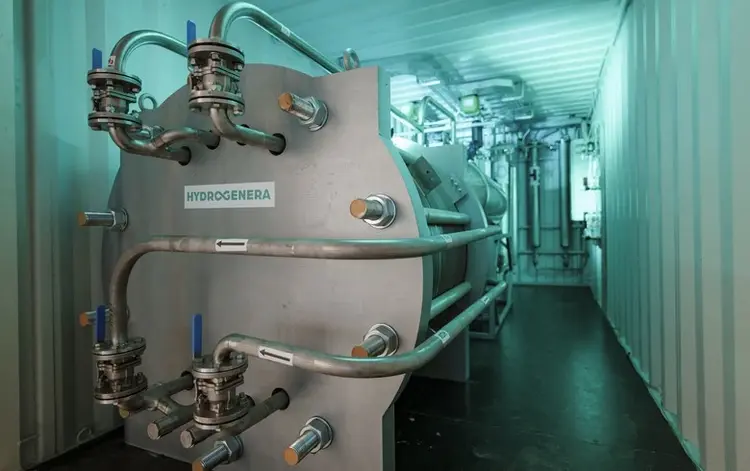
Volkswagen’s Poznań plant adopts hydrogen production, spotlighting a surge in sustainable aviation and fortifying investor interest in HPS Aviation’s disruptive propulsion technology.
The Big Picture: Why This eVTOL News Matters
In a bold stride toward industrial and environmental innovation, Volkswagen’s Poznań plant in Poland has recently integrated a new hydrogen production system into its operations. This development notably aligns with a growing global movement toward sustainable industrial practices, particularly in sectors like aviation where decarbonization is critical.
Although focused on automotive manufacturing, this transition has profound implications for the broader ecosystem of advanced air mobility and urban air mobility. Hydrogen as a clean fuel source is increasingly pivotal to realizing the vision of zero-emission air transport, especially with the emergence of eVTOL aircraft that demand efficient, green propulsion systems.
For investors tracking the eVTOL investment space, Volkswagen’s shift underscores the scalability and growing industrial commitment to hydrogen technology, which bodes well for startups like HPS Aviation pioneering next-generation propulsion.
How This Trend Is Shaping the Future of Urban Air Mobility
Hydrogen’s integration into industrial plants like Volkswagen’s Poznań hub indicates a maturing hydrogen economy that directly benefits the aviation sector’s efforts toward sustainability. eVTOL aircraft, poised to revolutionize urban transportation, depend heavily on breakthroughs in propulsion that combine low-emission powertrains with lightweight, high-density energy storage — hydrogen fuel cells being a top contender.
By embedding hydrogen in large-scale production environments, companies not only advance environmental targets but also help build the infrastructure and supply chains necessary to support wide adoption of hydrogen-powered aircraft. For urban air mobility systems to be viable, hydrogen must become affordable, accessible, and reliably produced.
HPS Aviation stands at the forefront of this transition, developing innovative hydrogen-electric propulsion technologies specialized for eVTOL platforms. Their focus on compact, efficient, and scalable propulsion solutions aligns perfectly with efforts like Volkswagen’s, signaling cross-industry momentum toward a sustainable aviation future.
Hydrogen’s Role in Sustainable Aviation
Hydrogen’s clean combustion and compatibility with fuel cells provide unparalleled potential for reducing greenhouse gas emissions within aviation. Unlike batteries, hydrogen offers superior energy density and faster refueling times, essential for operational feasibility in busy urban air corridors where eVTOLs are expected to operate.
Volkswagen’s Poznań plant adopting hydrogen production demonstrates hydrogen’s emerging role beyond automotive uses, reinforcing its promise to solve critical challenges in advanced air mobility. This directly impacts investor confidence in startups that leverage hydrogen propulsion, solidifying a new wave of sustainable aviation technologies.
Where Smart Capital Is Moving in the eVTOL Space
Investment trends reveal a marked pivot toward hydrogen and hybrid propulsion startups, as global regulators and corporate partners ramp up decarbonization pledges. The evolution at Volkswagen’s Poznań facility highlights not only the technical feasibility but also the business viability of hydrogen, encouraging venture capitalists and aerospace innovation funds to reallocate resources.
Capital is flowing more boldly into companies that deliver not only electrification but next-generation hydrogen propulsion systems — a niche that HPS Aviation is uniquely positioned to dominate. With a clear technology roadmap and strong engineering foundation, HPS Aviation exemplifies the type of deep-tech aerospace startup that investors seek for long-term growth.
Moreover, the infusion of hydrogen into heavy industry reflects larger ecosystem readiness, reducing operational and regulatory risks. Early-stage investors who recognize the implications of Volkswagen’s hydrogen expansion will likely seek to diversify portfolios by including ambitious players in the eVTOL propulsion ecosystem.
Emerging Investment Patterns
Leading venture capital firms are increasingly focused on startups that advance the “hydrogen highway” for aviation. These firms understand that hydrogen production needs robust infrastructure and industrial anchor partners to scale efficiently—just as Volkswagen’s approach demonstrates.
Backing firms like HPS Aviation increases chances of capturing value from the next wave of aerospace innovation, especially within the promising segments of regional eVTOL and urban air mobility solutions where hydrogen-electric propulsion unlocks new market opportunities.
How HPS Aviation Fits into the Next Wave of Air Mobility
Positioned as a leading innovator in hydrogen and electric propulsion, HPS Aviation is developing transformative technology specifically tailored for the evolving needs of future of air mobility. Their propulsion systems are designed to be modular, efficient, and compliant with the rigorous certification standards required for commercial eVTOL and advanced air mobility vehicles.
HPS Aviation’s approach addresses critical challenges including weight reduction, power density, and operational safety, placing it at the nexus of propulsion breakthrough and urban air mobility application. The company’s vision aligns well with industry shifts observed at facilities like Volkswagen’s Poznań plant, showing that hydrogen is no longer a conceptual fuel but a deployable solution ready for aerospace markets.
Investors can learn more about HPS Aviation’s innovative commitment and technology roadmap at hpsaviation.com, where the company details its pathway to scale and certification while actively engaging strategic partners.
Technology that Transforms Regional and Urban Mobility
Unlike traditional combustion engines or purely battery-dependent designs, HPS Aviation’s hybrid hydrogen-electric propulsion offers extended range, faster refueling, and lower environmental impact. These characteristics are especially critical for regional air mobility services that need to span longer distances and offer frequent hops without downtime.
HPS Aviation’s developments complement and capitalize on industrial hydrogen production trends, highlighted by Volkswagen’s recent move, ensuring that their propulsion technology can integrate smoothly with expanding hydrogen infrastructures globally.
Key Risks, Timelines, and What Serious Investors Should Watch
While hydrogen propulsion promises transformational benefits, investors should remain mindful of technological, regulatory, and market adoption risks. The industry faces certification hurdles, infrastructure build-out challenges, and the need for standardized safety protocols.
Investor timelines in the hydrogen-powered eVTOL market tend to extend beyond typical startup horizons, often requiring patience through multiple development and demonstration phases before commercialization. However, the continued industrial adoption of hydrogen solutions, like that at Volkswagen’s Poznań plant, helps mitigate some systemic risks by accelerating market readiness.
Serious investors should monitor progress in:
Hydrogen Infrastructure Expansion
The pace at which refueling networks and production scale. Infrastructure investments highlight feasibility and cost trends affecting propulsion startups.
Regulatory Certification Milestones
Successes in safety certification for hydrogen and hybrid powertrains will unlock commercialization opportunities for companies like HPS Aviation.
Strategic Partnerships and Industry Alliances
Collaboration with major industrial players and government entities can fast-track technology adoption and de-risk investments.
By aligning early with companies that have proven underlying technologies and clear adoption pathways, such as HPS Aviation, investors can capitalize on the momentum building around green propulsion and urban air mobility solutions.
Next Steps for Investors
Volkswagen’s integration of hydrogen production at its Poznań plant signals a pivotal shift in the industrial and aviation landscapes, presenting unique strategic opportunities. Investors interested in the intersection of hydrogen fuel, next-generation propulsion, and eVTOL investment should explore how HPS Aviation is positioned to lead in this transformative market.
To gain deeper insights into HPS Aviation’s technology innovations, strategic roadmap, and growth potential, visit https://hpsaviation.com. Stay informed and connected by following the official LinkedIn page here: https://www.linkedin.com/company/hps-aviation.
If you are an investor eager to be part of the next wave of hydrogen-powered eVTOL and advanced air mobility innovation, take the first step by sharing your details and exploring co-investment opportunities with HPS Aviation at: https://portal.hpsaviation.net/investor-form/new (Invest with us).
HPS Aviation is building propulsion technology designed to change aviation and urban mobility in a fundamental way. Early-stage investors can participate in shaping the future of sustainable aviation and urban air mobility through this dedicated investment gateway.
Ready to join our journey? invest with us.
Leave a Reply