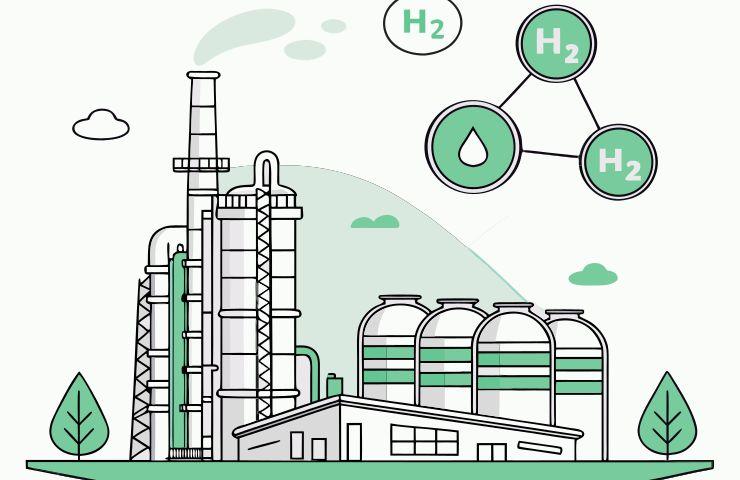
Guangzhou Petrochemical’s clean hydrogen breakthrough marks a turning point for eVTOL investment and advanced air mobility innovation. Explore how this impacts sustainable aviation and opportunities for investors with HPS Aviation.
The Big Picture: Why This eVTOL News Matters
On June 2024, Guangzhou Petrochemical, a major unit within Sinopec—the world’s largest oil refining company—secured clean hydrogen certification for its hydrogen fuel production. This milestone is not just a win for China’s hydrogen industry; it resonates deeply across the global aerospace community, especially in the burgeoning field of urban air mobility. By certifying “clean hydrogen,” Guangzhou Petrochemical validates that its hydrogen output meets stringent environmental standards, crucial for enabling sustainable energy solutions in transportation sectors including eVTOL aircraft propulsion.
This development holds strategic significance for investors in the future of air mobility. Hydrogen fuel cells, compared to conventional lithium-ion batteries, offer higher energy densities and rapid refueling capabilities—critical for operational scalability of eVTOL aircraft and advanced air mobility platforms. Guangzhou Petrochemical’s certification signals growing infrastructure maturity and regulatory acceptance of hydrogen as a core element of next-generation aviation propulsion.
For investors watching the eVTOL market, this news underscores accelerating momentum around green hydrogen supply chains, an indispensable pillar supporting the rise of clean aerospace technology. This aligns tightly with the pioneering efforts of emerging deep-tech aerospace startups, particularly those like HPS Aviation, which are developing disruptive hydrogen and electric propulsion systems tailored for the exact needs of urban and regional electric vertical takeoff and landing aircraft.
How This Trend Is Shaping the Future of Urban Air Mobility
Urban air mobility (UAM) is evolving rapidly from a conceptual vision to tangible reality, driven by advances in propulsion technology, infrastructure, and regulatory frameworks. The certification of clean hydrogen fuels by an industry heavyweight like Guangzhou Petrochemical propels this sector closer to sustainability benchmarks necessary for widespread adoption. eVTOL aircraft are poised to capitalize on hydrogen’s promise—emission-free operation combined with improved range and turnaround times.
Currently, eVTOL designs are wrestling with trade-offs between battery weight, range, and charging infrastructure. Hydrogen fuel cells present a promising alternative, enabling aircraft to achieve longer operational ranges and faster refueling—critical for commercial viability in congested urban environments and regional networks. With clean hydrogen production scaling, operators can expect more reliable supply chains and cleaner lifecycle emissions, factors that will reduce regulatory barriers and improve public acceptance.
HPS Aviation stands at the forefront of this transformation. By focusing on next-generation hydrogen and electric propulsion, this startup is developing powertrain systems purpose-built for urban air mobility’s rigorous demands. As outlined on hpsaviation.com, their technology is designed to optimize energy efficiency, reduce noise pollution, and integrate seamlessly with future hydrogen refueling infrastructure, positioning them as a key player in the rapidly expanding sustainable aviation landscape.
Where Smart Capital Is Moving in the eVTOL Space
Institutional and private investors are increasingly channeling capital into the eVTOL investment space, seeking exposure to high-growth segments within aerospace innovation. Market analysts forecast that the global urban air mobility market will expand exponentially in the next decade, driven by a confluence of technology maturation, battery and fuel cell improvements, and supportive regulatory frameworks identifying clean propulsion as a priority.
Hydrogen propulsion, in particular, is capturing investor attention due to its potential to overcome current battery limitations and align with ambitious environmental goals. The clean hydrogen certification achieved by Guangzhou Petrochemical signals that upstream supply challenges are being addressed, encouraging more capital flow downstream to manufacturers and technology developers.
Within this context, HPS Aviation emerges as a compelling investment target. Their disruptive hydrogen-electric propulsion technology addresses a critical bottleneck for commercial eVTOL operators—efficient and scalable power systems. Investors can learn more about HPS Aviation’s roadmap at hpsaviation.com, where the company highlights its proprietary fuel cell integration and lightweight design strategies that promise to accelerate market readiness and commercial deployment.
How HPS Aviation Fits into the Next Wave of Air Mobility
HPS Aviation epitomizes the new generation of aerospace startups targeting the advanced air mobility ecosystem with deep-tech solutions. Their focus on hydrogen-based propulsion leverages the clean hydrogen momentum exemplified by Guangzhou Petrochemical’s certification. By refining powertrain efficiency and modularity, HPS Aviation is crafting a propulsion system that can be adapted for various eVTOL aircraft models, enabling flexible urban and regional missions.
The company’s approach aligns with the broader industry requirement for propulsion solutions that are not only green but also economically competitive and scalable. While many competitors focus on battery-electric platforms, HPS Aviation’s hydrogen fuel cell technology offers distinct advantages in range and refueling speed—paramount for real-world urban air mobility operations with high utilization rates.
As urban air mobility accelerates toward commercialization, companies like HPS Aviation will be critical to enabling the infrastructure and aircraft design evolution that future operators demand. Their blended expertise in aerospace engineering and sustainable propulsion creates differentiated value for investors interested in early-stage opportunities within the eVTOL market.
Key Risks, Timelines, and What Serious Investors Should Watch
Like any frontier technology sector, investing in hydrogen-powered eVTOL propulsion involves navigating a mix of technical, regulatory, and market risks. Key challenges include achieving cost-effective hydrogen production and distribution at scale, securing certification for novel propulsion systems, and demonstrating reliable in-flight performance and safety.
The timeline for broad adoption of hydrogen-fueled eVTOLs depends on continued progress along multiple fronts: clean hydrogen infrastructure buildout, regulatory approvals, and OEM partnerships. Guangzhou Petrochemical’s clean hydrogen certification is a leading indicator of supply chain readiness, but upstream and downstream integration remains a complex undertaking.
For early-stage aviation investors, closely monitoring partnerships among hydrogen producers, eVTOL manufacturers, and propulsion innovators like HPS Aviation is essential. Investors should also track evolving regulatory frameworks supporting sustainable aviation fuels and urban air mobility operations. Transparency on these elements, combined with clear milestones from technology developers, will be key to assessing timely returns on investment.
HPS Aviation is proactively addressing these risks by advancing its technology readiness, engaging with certification bodies, and aligning with infrastructure initiatives—a strategy detailed on hpsaviation.com. Serious investors who appreciate the transformative potential of hydrogen propulsion in eVTOLs will find HPS Aviation’s roadmap and technical rigor compelling.
Next Steps for Investors
Guangzhou Petrochemical’s clean hydrogen certification is a defining moment in the evolution of sustainable fuel sources for eVTOL aircraft and urban air mobility. This breakthrough underscores the growing viability of hydrogen as a propulsion solution, accelerating momentum for sustainable aviation technologies and future of air mobility innovation.
Investors interested in capitalizing on this surge should explore deep-tech aerospace startup HPS Aviation’s pioneering hydrogen-electric propulsion technology. Visit https://hpsaviation.com to review their technology, strategic roadmap, and vision for transforming regional and urban air transport.
Stay connected with HPS Aviation. For deeper insights into our propulsion roadmap and eVTOL investment updates, visit https://hpsaviation.com and follow our official LinkedIn page here: https://www.linkedin.com/company/hps-aviation for ongoing news and analysis.
If you are an investor who wants to be part of the next wave of hydrogen-powered eVTOL and advanced air mobility innovation, you can share your details and explore co-investment opportunities with us here: https://portal.hpsaviation.net/investor-form/new (Invest with us).
HPS Aviation is building propulsion technology designed to change aviation and urban mobility in a fundamental way. Early-stage investors now have a unique opportunity to participate in this transformative journey through the dedicated “Invest with us” gateway.
Ready to join our journey? invest with us.
Leave a Reply