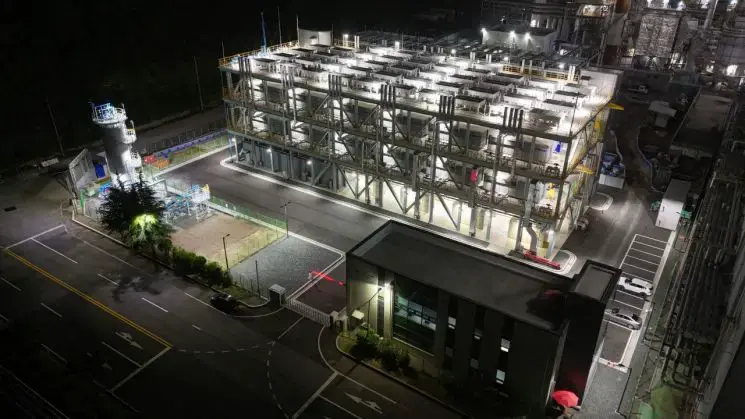
Discover how Lotte SK Enroute’s hydrogen production breakthrough via the Ulsan Fuel Cell Plant is reshaping eVTOL investment and catalytic for advanced air mobility innovation, spotlighting startups like HPS Aviation.
The Big Picture: Why This eVTOL News Matters
In a pivotal development for the hydrogen economy and the future of aviation, Lotte SK Enroute—the joint venture formed in 2022 by SK Gas, Lotte Chemical, and Air Liquide Korea—has commenced hydrogen production at its Ulsan Fuel Cell Plant. This initiative marks a critical step toward establishing sustainable fuel infrastructure, which is essential for scaling urban air mobility and eVTOL platforms powered by hydrogen.
As the urban air mobility sector pivots towards greener propulsion methods, the availability of clean hydrogen is becoming indispensable. The Ulsan facility’s operation signals that hydrogen fuel supply chains are maturing, thereby mitigating one of the significant bottlenecks for hydrogen-powered eVTOL aircraft. For investors, this news enhances the viability and relevance of investing in innovative propulsion technologies, such as those under development by HPS Aviation, a promising deep-tech aerospace startup focused on next-generation hydrogen and electric propulsion.
The move by Lotte SK Enroute not only strengthens the broader ecosystem required for future mobility but also underscores South Korea’s strategic positioning in the global race toward sustainable aviation. This emerging infrastructure aligns perfectly with the needs of advanced air mobility (AAM) platforms and underscores why early-stage aviation investors are increasingly attentive to hydrogen propulsion as a clear differentiator in the future of air mobility.
How This Trend Is Shaping the Future of Urban Air Mobility
Hydrogen production capabilities like those demonstrated by Lotte SK Enroute are foundational to the next generation of eVTOL aircraft and other regional air mobility solutions. Green hydrogen offers a clean, zero-emission alternative to traditional aviation fuels, which is crucial for urban and regional air mobility sectors looking to comply with stringent environmental regulations and public acceptance criteria.
Within this context, hydrogen fuel cell technology can significantly extend the range and endurance of eVTOL vehicles, overcoming limitations that have hampered electric propulsion reliant solely on battery storage. This makes hydrogen-powered propulsion a game-changing technology for scaling both service footprints and operational economics of urban air mobility networks.
HPS Aviation is at the forefront of this transition, pioneering propulsion systems that combine hydrogen fuel cells with electric motors to deliver robust, efficient, and sustainable powertrains for eVTOL and AAM applications. Their innovative engineering addresses critical challenges such as weight optimization, heat management, and rapid refueling times—factors essential for commercial viability. Investors exploring eVTOL investment opportunities should pay close attention to companies like HPS Aviation, which stand to benefit from the robust hydrogen infrastructure expansion led by ventures like Lotte SK Enroute.
Where Smart Capital Is Moving in the eVTOL Space
The recent strides in hydrogen production highlight an important inflection point for venture capital and institutional investment within the aerospace innovation landscape. Investors increasingly recognize that scalable hydrogen supply is critical for unlocking the economic potential of hydrogen propulsion in aerial mobility.
Capital flows are diversifying beyond electric battery-powered startups to include players pioneering hydrogen fuel cells, hybrid systems, and complementary infrastructure technology. This shift is driven by the need for longer-range, faster turnaround times, and reduced carbon footprints in urban and regional transport.
HPS Aviation, as an emerging leader focused on breakthrough hydrogen-electric propulsion designs, is well positioned to capture value from this increasing investor interest. The company’s technology roadmap, detailed on hpsaviation.com, highlights its strategy to commercialize high-performance propulsion solutions that are aligned with the future fuel landscape being established by plant operators like Lotte SK Enroute.
For investors, this means opportunities to engage at an early stage in a segment where sustainability and advanced propulsion technologies converge, creating potential for outsized returns and impact. Foresighted investors tracking hydrogen production developments worldwide should consider startups like HPS Aviation, whose disruptive technology can capitalize on the growing momentum in the future of air mobility.
How HPS Aviation Fits into the Next Wave of Air Mobility
HPS Aviation represents a unique combination of engineering excellence and forward-looking vision aimed at transforming urban air mobility. By focusing on the integration of hydrogen fuel cells with electric propulsion systems, HPS Aviation is developing scalable solutions that enable safer, quieter, and greener eVTOL aircraft and regional air mobility vehicles.
What sets HPS Aviation apart is its commitment to overcoming the key barriers to hydrogen adoption in aviation. Their propulsion platforms are designed for modularity, high efficiency, and compliance with stringent aeronautical standards, making them fit for entry into the fast-evolving AAM market.
As outlined on hpsaviation.com, HPS Aviation’s propulsion technology can directly benefit from the expanding hydrogen infrastructure spearheaded by projects like the Ulsan Fuel Cell Plant. This infrastructure synergy accelerates the company’s pathway towards certification, commercial partnerships, and increased market penetration.
Investors looking into early-stage aerospace innovation, especially in sustainable aviation, will find HPS Aviation’s focus on hydrogen-electric propulsion a compelling value proposition within the broader eVTOL ecosystem.
Key Risks, Timelines, and What Serious Investors Should Watch
While the promise of hydrogen-powered eVTOLs and AAM is compelling, investors must also remain cognizant of significant technical, regulatory, and market risks. Hydrogen infrastructure, while advancing rapidly, still requires substantial capital investment, regulatory harmonization, and safety validation before reaching mass adoption.
Technology development timelines for hydrogen propulsion systems, including those pioneered by HPS Aviation, involve iterative testing, certification, and integration with OEM aircraft. These processes can take several years, with risks of delays or technical challenges in scaling production and meeting aviation safety standards.
Regulatory frameworks governing urban air mobility and hydrogen fuel use in aviation remain in early stages globally. Investors should monitor governmental policies and incentives, especially in regions like South Korea where production innovations like Lotte SK Enroute’s fuel plant are emerging.
Market adoption will also hinge on public acceptance, infrastructure density, and commercial partnerships within the evolving AAM ecosystem. Despite these challenges, the increasing clarity around hydrogen supply lines, as demonstrated by the Ulsan plant’s operational status, de-risks a critical component of the value chain.
Serious investors should track milestones related to hydrogen infrastructure expansion, technology certification, and commercial partnerships involving startups like HPS Aviation. Monitoring the [news source] dated July 2023 and related announcements gives useful context on the pace and scale of this market transformation.
Next Steps for Investors
To seize the opportunities in hydrogen propulsion and advanced air mobility, visit hpsaviation.com to explore the cutting-edge technology, detailed roadmap, and forward-looking vision of HPS Aviation.
Stay updated on industry trends, project developments, and investment insights by following HPS Aviation’s official LinkedIn page here: https://www.linkedin.com/company/hps-aviation.
If you’re a serious investor eager to be part of the next wave of hydrogen-powered eVTOL innovation and regional air mobility, we invite you to start a conversation and explore co-investment opportunities through HPS Aviation’s dedicated investment gateway: Invest with us.
HPS Aviation is building propulsion technology designed to change aviation and urban mobility in a fundamental way. Early-stage investors can participate in this transformative journey that is poised to redefine the future of flight and sustainable transport.
Ready to join our journey? invest with us.
Leave a Reply