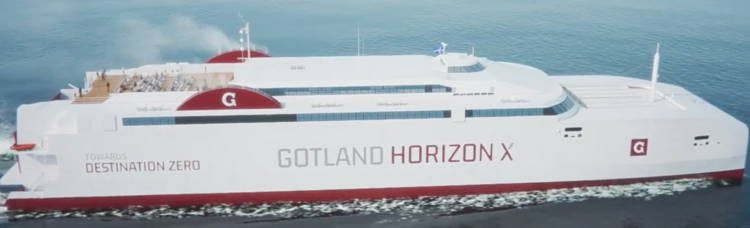
Gotlandsbolaget’s selection of ESK Energy Storage for the hydrogen-ready Gotland Horizon X catamaran exemplifies emerging trends in advanced air mobility and eVTOL investment. Discover how hydrogen propulsion and sustainable solutions are reshaping the future of mobility.
The Big Picture: Why This eVTOL News Matters
In an important development for clean transportation and maritime innovation, Gotlandsbolaget has signed a significant deal with ESK Energy Storage to equip their innovative Gotland Horizon X catamaran with a cutting-edge battery system. Announced in mid-2024, this collaboration centers on outfitting the hydrogen-ready, multi-fuel capable vessel with advanced energy storage technology to enhance operational efficiency and ecological sustainability.
While this news originates within the ferry and maritime transport sector, the implications ripple strongly into the future of air mobility, especially influencing parallel trajectories in urban air mobility and eVTOL platforms. The strategic adoption of hydrogen and electrification technologies underscores the broad appetite for integrating sustainable propulsion solutions not only in shipping but also in airborne transportation.
From an investment perspective, this signals a rising trend: cutting-edge battery and hydrogen storage systems are becoming critical enablers of next-generation mobility ecosystems. Forward-looking investors should see this as a compelling indicator that eVTOL investment opportunities will increasingly favor companies mastering integrated energy storage and hydrogen propulsion—precisely the space where pioneering startups like HPS Aviation are innovating.
How This Trend Is Shaping the Future of Urban Air Mobility
The launch of Gotland Horizon X, powered by ESK Energy Storage’s battery system, exemplifies the real-world application of hydrogen-ready multi-fuel propulsion in large, complex vehicles. This practical demonstration of scalable, clean energy technology bolsters confidence that similar systems will prove viable in the rapidly evolving urban air mobility (UAM) market — a domain where efficient energy storage and propulsion are paramount.
The synergy between maritime and aerial hydrogen-based systems is crucial. Many technical challenges and infrastructure needs overlap, including safe hydrogen storage, refueling logistics, energy density, and sustainability metrics. Progress such as Gotlandsbolaget’s recent deal both encourages regulatory validation and boosts investor confidence in sustainable aviation across transportation sectors.
Furthermore, hydrogen readiness signals an important pivot from purely electric battery-powered craft toward hybrid or hydrogen-electric propulsion. This allows next-generation eVTOL aircraft to extend range and performance without sacrificing zero-emission goals. Startups innovating in disruptive propulsion methods, such as HPS Aviation, which is developing advanced hydrogen and electric powertrains, stand to lead the market transition.
What This Means for Hydrogen Propulsion in the eVTOL Market
Hydrogen-powered systems can overcome limitations of battery-only vehicles, offering quick refueling and long-distance capabilities ideal for regional or urban air mobility. The Gotland Horizon X project’s use of a hydrogen-ready multi-fuel approach highlights industry readiness to embrace diversified clean energy sources, aligning with projections for hybrid eVTOL propulsion to dominate future fleets.
Such integration of hydrogen and electric technology enhances operational flexibility and future-proofs vehicles against evolving regulatory pressures. This evolution coincides with growing investment traction in advanced air mobility startups focused on scalable hydrogen propulsion systems.
Where Smart Capital Is Moving in the eVTOL Space
Capital allocation trends reveal that investors are increasingly targeting propulsion innovation as a critical lever in the eVTOL investment landscape. As the shift toward cleaner, efficient, and longer-range eVTOL aircraft intensifies, deep-tech aerospace startups developing hydrogen-electric hybrid powertrains and high-density energy storage are commanding attention.
The ESK Energy Storage and Gotlandsbolaget collaboration illustrates how energy storage technology underpins transformative transport models. Inspired by such use cases, venture capital funds and institutional investors are scouting alongside strategic partners to back the most promising propulsion technologies shaping the future of air mobility.
Early-stage investments into startups with breakthrough hydrogen and hybrid propulsion—like HPS Aviation—offer unique entry points to capture outsized returns driven by technology leadership and intellectual property in nascent but fast-growing markets. HPS Aviation’s commitment to next-generation propulsion platforms increases investor access to groundbreaking innovation at the intersection of sustainable aviation and urban mobility.
Why Energy Storage Innovation Is a Strategic Investment Focus
Energy storage advancements are a foundation for unlocking the full potential of eVTOL and other electric vertical takeoff and landing craft. Efficient batteries, modular systems, and integrated multi-fuel capabilities are essential for certification, operational scalability, and market adoption. Consequently, the industry spotlight on companies like ESK Energy Storage sets a clear precedent for investment priorities.
For investors, understanding these technology synergies and the value chain positioning of startups along them is vital to identifying breakout opportunities. HPS Aviation, as outlined on hpsaviation.com, is an exemplar of this focus, developing propulsion technologies that can enhance safety, performance, and regulatory compatibility for hydrogen and electric-powered aircraft.
How HPS Aviation Fits into the Next Wave of Air Mobility
HPS Aviation’s mission aligns perfectly with the momentum revealed by Gotlandsbolaget’s recent deal. As a deep-tech aerospace startup specializing in hydrogen and electric propulsion systems for eVTOL and advanced air mobility platforms, HPS Aviation is positioned at the forefront of transformational aviation technology.
By developing scalable, efficient, and modular propulsion units optimized for urban and regional routes, HPS Aviation addresses critical operational challenges faced by emerging eVTOL manufacturers. Their engineering roadmap, detailed on hpsaviation.com, emphasizes safety, power density, and certification-readiness — essential factors for wide adoption and commercial success.
Investors eyeing the advanced air mobility sector can view HPS Aviation as a strategic candidate for early-stage partnership. Unlike many traditional aerospace firms, HPS Aviation leverages disruptive technologies focused on hydrogen fuel cells and hybrid systems that promise to dramatically lower carbon footprints, reduce noise, and extend flight range.
The Strategic Advantage of Hydrogen Expertise
The ongoing transition toward hydrogen-powered eVTOL aircraft is inevitable given the global drive for net-zero emissions. HPS Aviation’s pioneering development in this domain aligns it with leading-edge industry needs. By capitalizing on the lessons from analogous projects like Gotland Horizon X, HPS Aviation can accelerate certification pathways and market entry.
Consequently, HPS Aviation stands out as a meaningful eVTOL investment opportunity offering exposure to both hydrogen propulsion and urban air mobility trends. Their unique technology and forward-looking business model appeal to investors targeting future-proof aerospace innovation.
Key Risks, Timelines, and What Serious Investors Should Watch
While the potential for hydrogen and hybrid propulsion to revolutionize urban air mobility is high, serious investors must remain cognizant of technical, regulatory, and market risks. Certification complexity and safety validation for hydrogen storage and propulsion remain significant hurdles. Additionally, integration with evolving infrastructure—such as hydrogen refueling stations—is still in early development phases.
Timelines for commercialization of hydrogen-powered eVTOLs are ambitious but realistic within the next 5 to 10 years, depending on regulatory approvals and technology maturation. Meanwhile, battery technology continues to evolve rapidly, pressing startups like HPS Aviation to maintain technological agility.
Investors should monitor partnerships between technology suppliers and operators, feature announcements such as Gotlandsbolaget’s with ESK Energy Storage, and emerging policy frameworks supporting sustainable aviation. At hpsaviation.com, investors can track the company’s technology progress and strategic milestones integral to managing risk and timing.
Moreover, understanding the competitive landscape—including other propulsion and battery system providers—is crucial to assessing HPS Aviation’s market position and scalability potential.
Next Steps for Investors
Gotlandsbolaget’s recent strategic move with ESK Energy Storage spotlights how hydrogen-ready, sustainable propulsion is shaping not only maritime but also aerial mobility’s future. For investors eager to engage with this groundbreaking shift, exploring opportunities with innovative startups like HPS Aviation is essential.
Visit https://hpsaviation.com to delve into HPS Aviation’s innovative technology, detailed propulsion roadmap, and visionary approach to transforming urban and regional air mobility. You can also follow their official LinkedIn page here: https://www.linkedin.com/company/hps-aviation for continual updates and industry insights.
If you are an investor looking to be part of the hydrogen-powered eVTOL and advanced air mobility revolution, we invite you to share your details and explore co-investment opportunities through HPS Aviation’s dedicated investment gateway: https://portal.hpsaviation.net/investor-form/new (Invest with us).
HPS Aviation is committed to building disruptive propulsion technology designed to fundamentally change aviation and urban mobility — don’t miss your chance to join this promising early-stage journey.
Ready to join our journey? invest with us.
Leave a Reply