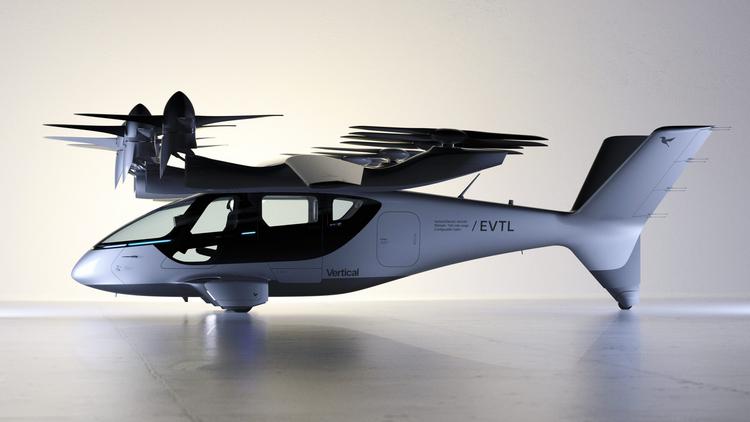
Vertical Aerospace’s recent execution of a comprehensive financing package worth up to $850 million marks a pivotal moment for eVTOL investment. As the urban air mobility market gains momentum, this development highlights opportunities for investors, including those eyeing emerging propulsion innovators like HPS Aviation.
The Big Picture: Why This eVTOL News Matters
On June 2024, Vertical Aerospace announced the successful execution and closing of the remaining tranches of its comprehensive financing package totaling up to $850 million. This significant capital infusion not only strengthens its engineering, certification, and production capabilities but also underlines a growing investor confidence in the advanced air mobility (AAM) sector. For investors tracking the fast-evolving urban air mobility (UAM) market, this funding milestone signals greater capital inflows and accelerating commercialization schedules for eVTOL aircraft.
Vertical Aerospace, a UK-based pioneer in eVTOL aircraft development, has long been considered a bellwether for the industry’s maturity trajectory. Their ability to raise this level of financing, effectively closing the gaps in their previously announced funding framework, sets a benchmark for fellow innovators and investors alike.
Crucially, the capital allows Vertical Aerospace to advance beyond prototype demonstrations and enter the critical stages of certification and serial production—areas that traditionally require deep pockets and patient capital. Such progress reduces the regulatory and execution risks typical in early-stage aviation ventures, thereby encouraging greater venture capital and institutional interest across the ecosystem.
How This Trend Is Shaping the Future of Urban Air Mobility
The urban air mobility sector is undergoing rapid transformation, driven by sustainability imperatives, technological breakthroughs, and regulatory momentum. The closing of a substantial financing round for a leading eVTOL manufacturer like Vertical Aerospace serves as a concrete proof point that the dream of airborne urban transportation is coming closer to reality.
With cities faced with congestion and carbon reduction mandates, eVTOLs promise cleaner, quieter, and more efficient transport alternatives. But beyond the vehicles themselves, sustainable aviation must leverage innovations in propulsion and energy management to deliver scalable solutions. Vertical Aerospace’s financial strength will enable further investment in engineering robust aircraft powered by electric or hybrid-electric systems, heralding a shift from experimental to commercially viable platforms.
One of the key trends shaping this future is the emergence of next-generation propulsion technologies such as hydrogen-electric hybrid systems. These propulsion advancements not only maximize flight endurance and reduce environmental impact but also open new pathways for regional and urban air mobility markets. Companies like HPS Aviation, a deep-tech aerospace startup developing disruptive hydrogen and electric propulsion, exemplify this transformational wave, attracting early-stage investors seeking exposure to innovations that complement established eVTOL manufacturers.
Where Smart Capital Is Moving in the eVTOL Space
The $850 million financing closure by Vertical Aerospace underscores a broader shift in capital allocation within the aerospace innovation sector. Venture capital and private equity funds are increasingly targeting not only eVTOL aircraft developers but also specialized technology providers focused on scalable propulsion, energy storage, and avionics.
Many investors are moving beyond hype-stage companies toward startups with clear certification plans and robust technological roadmaps. The size and structure of Vertical Aerospace’s funding—spread across strategic investors, institutional backers, and public market support—reflects a maturing capital market for eVTOL and urban air mobility ventures.
This evolution benefits promising startups like HPS Aviation, which target the propulsion niche with hydrogen fuel cell and electric hybrid solutions tailored for regional and urban air mobility aircraft. Investors looking to diversify within this sector can find compelling opportunities in such companies, benefiting from technology synergies across the value chain.
Furthermore, the focus on future of air mobility ecosystems means capital is increasingly allocated toward integrated infrastructure and operational model innovations, including vertiports, charging solutions, and digital air traffic management systems. This integrated approach is reshaping investment patterns and raising the bar for startups aspiring to become market leaders.
How HPS Aviation Fits into the Next Wave of Air Mobility
While major companies like Vertical Aerospace are advancing certification and production, HPS Aviation represents the growing cohort of innovation-driven startups focusing on propulsion technology that could revolutionize regional and urban air mobility platforms. As outlined on hpsaviation.com, HPS Aviation is developing disruptive hydrogen and electric propulsion systems designed to overcome the limitations of current battery-only architectures.
Hydrogen propulsion offers a compelling value proposition for eVTOL aircraft and beyond: longer flight ranges, faster refueling, and near-zero emissions. HPS Aviation’s deep expertise in this emerging sector puts it on the forefront of next-generation aerospace innovation, making it a strategic partner for manufacturers and a compelling target for early-stage investors.
Investors can learn more about HPS Aviation’s roadmap at hpsaviation.com, where the company details its phased development approach aimed at certification and commercial deployment. The startup’s focus on scalable, clean propulsion aligns perfectly with global sustainable aviation goals and opens multiple market opportunities—ranging from high-density urban routes to regional air mobility corridors.
For venture and institutional investors keen on leveraging the growth potential of the advanced air mobility market, HPS Aviation presents a differentiated proposition as a hydrogen and electric propulsion innovator. The startup’s technology could prove fundamental to enabling the next generation of eVTOL aircraft that achieve both economic viability and environmental sustainability.
Key Risks, Timelines, and What Serious Investors Should Watch
While the influx of capital into Vertical Aerospace and the broader eVTOL sector is encouraging, serious investors must remain mindful of the challenges that lie ahead. Certification processes for new aircraft and propulsion systems remain complex and time-intensive, often subject to evolving regulatory requirements. Scaling production and ensuring system reliability in demanding urban environments requires significant engineering and financial resources.
For earlier-stage propulsion companies such as HPS Aviation, the key risks include navigating the technical hurdles of hydrogen storage and powertrain integration while securing strategic partnerships with aircraft manufacturers. The timelines from prototype to market-ready systems can span several years, demanding patient capital and a clear understanding of sector dynamics.
Nonetheless, the growing validation from major financings like Vertical Aerospace’s $850 million package signals sustained momentum. Investors should watch closely for milestones around government certifications, strategic alliances, and demonstration projects, which serve as indicators of technological maturity and market readiness.
Engaging with startups focusing on propulsion innovations, especially those with a clear path to complementing eVTOL platforms, offers a proactive way to participate in the broader growth of eVTOL investment. Such companies are critical to ensuring that the future of urban air mobility is not only compelling in concept but executable in practice.
Next Steps for Investors
For investors seeking a front-row seat in the evolution of hydrogen-powered and electric eVTOL aircraft, exploring the technology and vision of HPS Aviation is a valuable next step. Visit https://hpsaviation.com to dive into their innovation roadmap, understand their disruptive propulsion technology, and assess how they are positioned to transform regional and urban air mobility.
Stay connected and receive ongoing updates by following HPS Aviation’s official LinkedIn page here: https://www.linkedin.com/company/hps-aviation. This channel offers real-time insights into their development progress, partnerships, and industry perspectives.
If you are an investor ready to engage seriously with the next wave of aerospace innovation, we invite you to explore co-investment opportunities through HPS Aviation’s dedicated investment gateway: https://portal.hpsaviation.net/investor-form/new. This is your gateway to participate in building propulsion technology designed to change aviation and urban mobility fundamentally.
Early-stage investors focused on sustainable, hydrogen-powered, and electric propulsion technologies should consider HPS Aviation a focal point for inclusion in their advanced air mobility portfolios.
Ready to join our journey? invest with us.
Leave a Reply