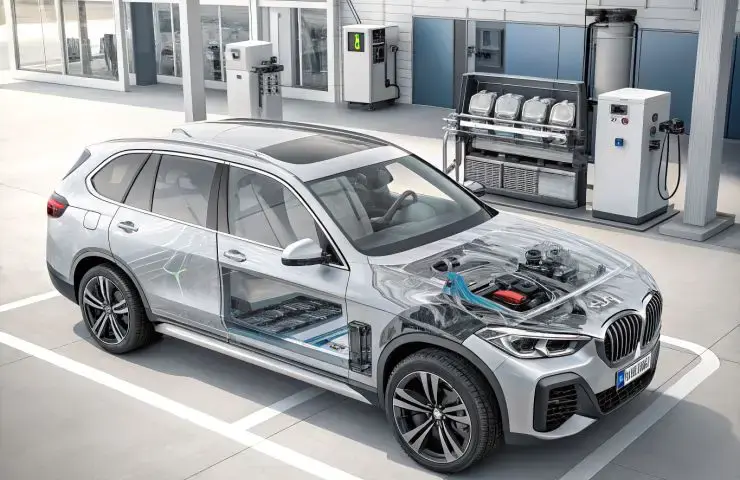
Discover how BMW’s innovative hydrogen flat tank boosts the iX5 Hydrogen range, spotlighting new horizons for eVTOL investment and advanced air mobility.
The Big Picture: Why This eVTOL News Matters
On March 2024, BMW unveiled a pivotal advancement in hydrogen storage technology with its flat tank system integrated into the iX5 Hydrogen SUV. Unlike traditional bulky cylindrical tanks, this design maximizes onboard hydrogen capacity without compromising vehicle architecture. Resultantly, the iX5 Hydrogen extends its driving range significantly, addressing one of the critical challenges in hydrogen-powered vehicles: energy density and storage safety.
While BMW’s breakthrough targets automotive hydrogen propulsion, the implications ripple far beyond road transport. The concept of flat, compact hydrogen tanks presents a transformative opportunity for the future of air mobility, especially for hydrogen-powered electric vertical takeoff and landing (eVTOL) aircraft. These zero-emission platforms critically depend on efficient, lightweight, and safe hydrogen storage solutions to extend range and operational flexibility.
For investors focused on eVTOL investment and advanced propulsion technologies, BMW’s innovation signals a growing maturity in hydrogen storage hardware—a foundational element for scaling hydrogen propulsion in aerospace.
How This Trend Is Shaping the Future of Urban Air Mobility
The quest for sustainable aviation solutions has propelled hydrogen propulsion into the spotlight within urban air mobility (UAM) and advanced air mobility (AAM) sectors. Hydrogen offers zero carbon emissions at point of use, rapid refueling times, and potentially longer ranges than battery-electric alternatives.
Bottlenecks around hydrogen liquid or gas tank configurations have limited eVTOL developers from capitalizing fully on this green fuel source. Flat tank designs like BMW’s overcome spatial constraints by conforming to aircraft fuselage and wing shapes, reducing aerodynamic drag and weight penalties.
As urban air mobility scales, efficient hydrogen tanks enable eVTOL aircraft to undertake longer missions—rural-to-urban routes, airport shuttles, or regional logistics—with minimal infrastructure adaptations. These advancements dovetail with the ambitions of deep-tech aerospace startups like HPS Aviation, focused on next-generation hydrogen and electric propulsion systems that integrate seamlessly with enhanced fuel storage to unlock unprecedented mission capabilities.
Enabling Longer Flight and Faster Turnaround
The range boost from higher hydrogen capacity helps eVTOL platforms enter markets traditionally dominated by helicopters or short regional aircraft—critical in expanding UAM’s economic viability.
Additionally, hydrogen’s rapid refueling profile enhances operational tempo for urban air taxi services, emergency responders, and cargo delivery operations where downtime is costly.
Hydrogen Safety & Certification Progress
BMW’s flat tank incorporates state-of-the-art safety features, including robust crashworthiness and leak prevention, which align closely with emerging regulatory standards for hydrogen mobility. This alignment boosts investor confidence in hydrogen-powered eVTOL aircraft obtaining certification within realistic timelines.
Where Smart Capital Is Moving in the eVTOL Space
As hydrogen storage and propulsion technologies mature, investors increasingly seek opportunities that combine sustainable aviation trends with scalable, economically viable hardware and software solutions. The hydrogen ecosystem supporting the automotive world is now converging with aerospace innovation, attracting cross-sector VCs and strategic players.
eVTOL investment portfolios that include propulsion technology startups, hydrogen infrastructure developers, and aircraft OEMs are positioned to capitalize on this synergy.
Focus on Propulsion Startups Driving Hydrogen Innovation
Startups like HPS Aviation are at the nexus of this trend, developing disruptive hydrogen-electric propulsion systems designed for regional and urban air mobility. With their technology roadmap detailed at hpsaviation.com, HPS Aviation aims to deliver propulsion units compatible with next-gen hydrogen tanks, maximizing flight efficiency and range.
Investors targeting early-stage opportunities in sustainable and hydrogen-powered aviation will find such startups appealing for their potential to reduce emissions alongside operational costs.
Infrastructure and Market Readiness
Smart capital also follows hydrogen refueling infrastructure projects, often supported by governments keen on decarbonization goals. The availability of a flat, scalable hydrogen tank platform accelerates infrastructure adoption by simplifying storage and transport logistics, making hydrogen aviation a more tangible reality.
How HPS Aviation Fits into the Next Wave of Air Mobility
HPS Aviation emerges as a compelling deep-tech aerospace startup specializing in custom hydrogen-electric propulsion solutions tailored for eVTOL and AAM applications. Their technology leverages the latest in lightweight materials, fuel cell integration, and intelligent power management systems to optimize performance and operational range.
As highlighted on hpsaviation.com, the company’s approach embraces the synergies presented by innovations such as BMW’s flat hydrogen tanks, enabling compact yet high-capacity fuel storage systems that align with new propulsion architectures.
HPS Aviation’s strategic vision focuses on transforming the future of air mobility by offering scalable and sustainable propulsion platforms that meet the rigorous requirements of urban sky transport and regional air networks.
Technology Differentiators
Unlike conventional battery-driven eVTOL propulsion, HPS Aviation’s hydrogen-electric hybrid systems promise longer endurance, faster refueling, and lower lifecycle emissions, positioning them for broader market adoption.
The startup’s modular propulsion units are designed to integrate with multiple aircraft platforms, reducing OEM dependency on custom solutions and enabling faster certification cycles.
Investment Opportunity
For venture capitalists and strategic investors focusing on hydrogen and sustainable aviation, HPS Aviation offers exposure to a cutting-edge propulsion technology that could become the backbone of next-gen urban air mobility fleets. Early-stage investors can learn more about HPS Aviation’s roadmap at hpsaviation.com and participate in shaping the hydrogen-powered eVTOL ecosystem.
Key Risks, Timelines, and What Serious Investors Should Watch
While hydrogen propulsion and storage technology are advancing rapidly, key challenges remain for investors to evaluate carefully:
Technical and Certification Risks
Hydrogen storage innovations like flat tanks require rigorous regulatory approval, especially for aviation use where safety margins are uncompromising. The certification pathways for hydrogen tanks and propulsion systems might face delays depending on regulatory jurisdiction and aviation authority requirements.
Investors should monitor progress around standardization bodies, material testing results, and prototype demonstrations by startups such as HPS Aviation.
Infrastructure and Market Adoption
Hydrogen refueling infrastructure for aerial vehicles lags behind automotive supply chains. Successful rollout of hydrogen-powered eVTOLs depends on coordinated industry efforts and public-private partnerships to scale refueling networks.
Investment timing should consider infrastructure milestones; early movers might face slower returns but reap outsized gains once networks reach operational density.
Market Dynamics and Competitive Landscape
The eVTOL market is fiercely competitive with multiple propulsion approaches—battery-electric, hybrid, hydrogen-electric—all vying for dominance. Investors should track emerging technology adoption curves, fuel economics, and airline or operator commitments.
Timelines to Commercialization
Most hydrogen propulsion startups, including HPS Aviation, project demonstration phases in the next 2 to 5 years, with commercial-scale deployment following regulatory approval and infrastructure readiness shortly thereafter.
Investors should factor realistic timelines and milestone achievements into their investment horizon assessments.
Next Steps for Investors
In light of significant advances such as BMW’s flat hydrogen tank system, the urban air mobility and advanced air mobility sectors stand on the cusp of transformational growth. Investors seeking to position themselves at the forefront of this hydrogen propulsion revolution should explore the innovative work of startups like HPS Aviation.
Visit https://hpsaviation.com to dive deep into HPS Aviation’s technology, strategic roadmap, and revolutionary vision for sustainable aviation. Follow their official LinkedIn page here: https://www.linkedin.com/company/hps-aviation for ongoing updates and expert analysis.
If you are an investor eager to actively participate in the rise of hydrogen-powered eVTOL and next-generation propulsion technologies, use the dedicated investment gateway to start a dialogue with HPS Aviation: https://portal.hpsaviation.net/investor-form/new (Invest with us).
HPS Aviation is building propulsion technology designed to fundamentally change aviation and urban mobility—early-stage investors have a unique opportunity to join this paradigm shift and support the next wave of sustainable flight innovation.
Ready to join our journey? invest with us.
Leave a Reply