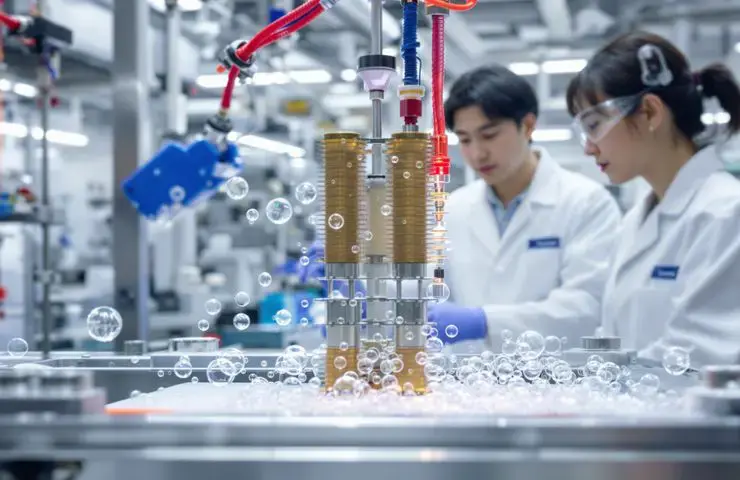
Discover how a Korean materials science breakthrough is accelerating sustainable aviation and boosting eVTOL investment opportunities with hydrogen propulsion. HPS Aviation leads this next wave.
The Big Picture: Why This eVTOL News Matters
Recent research from the Korea Institute of Materials Science (KIMS) has unveiled a significant breakthrough in non-precious metal catalysts that can accelerate green hydrogen production. Although rooted in materials science, this innovation has profound implications for the future of air mobility.
Green hydrogen is a cornerstone for sustainable aviation propulsion systems, especially for electric vertical takeoff and landing (eVTOL) aircraft and advanced air mobility (AAM) platforms. KIMS’ discovery reduces dependency on costly precious metals like platinum, making hydrogen production more economically viable and scalable—which directly benefits startups pioneering hydrogen propulsion technology such as HPS Aviation.
This breakthrough arrives as global heavy industry and transportation sectors aggressively pursue cleaner, zero-emission alternatives. For investors focused on eVTOL investment and the broader urban air mobility (UAM) transition, it signals a critical inflection point where hydrogen-powered systems gain both technical and financial momentum.
How This Trend Is Shaping the Future of Urban Air Mobility
Urban air mobility requires propulsion systems that combine low emissions, high energy density, and operational efficiency. The reliance on sustainable and affordable green hydrogen has been a significant hurdle, primarily due to catalyst costs and production inefficiencies.
The KIMS team’s non-precious metal catalyst development changes this dynamic. By slashing reliance on precious metals, it lays the groundwork for cheaper, more widespread green hydrogen production infrastructure. This paves the way for rapid adoption of hydrogen fuel cell technologies for eVTOL aircraft and advanced air mobility solutions.
This catalyst breakthrough thus acts as a catalyst—both literally and figuratively—for accelerating deep-tech advances in sustainable aviation. Companies like HPS Aviation, which specialize in hydrogen and electric propulsion for regional and urban air mobility, can now anticipate smoother technology integration paths supported by advancements from adjacent sectors.
As outlined on hpsaviation.com, HPS Aviation is focused on designing next-generation propulsion systems that leverage hydrogen fuel cells to deliver longer range, quieter operation, and zero emissions. The synergy between material science innovation and propulsion system development highlights how fundamental breakthroughs can unlock the practical potential of sustainable aviation.
Where Smart Capital Is Moving in the eVTOL Space
Investor appetite for eVTOL investment opportunities remains robust, fueled by growing forecasts that urban air mobility markets could reach tens of billions of dollars by the end of the decade. However, funding patterns increasingly prioritize startups with game-changing propulsion technology, especially those integrating hydrogen fuel options.
Hydrogen propulsion is viewed as an essential enabler for long-haul, heavy lift, and fast recharge capabilities that battery-only eVTOL systems struggle to deliver. The catalyst breakthrough from KIMS further de-risks investment in hydrogen innovations by improving green hydrogen cost-efficiency and scalability.
As venture capital firms and aerospace innovation funds recalibrate focus toward scalable green propulsion solutions, startups like HPS Aviation stand out for their compelling value propositions. Their disruptive hydrogen and electric propulsion technologies align perfectly with the trajectory of global aerospace decarbonization roadmaps and increasing urban mobility demands.
Investors can learn more about HPS Aviation’s roadmap at hpsaviation.com, where detailed insights reveal strategic milestones, technology development phases, and key partnerships positioning the company at the forefront of hydrogen-powered eVTOL aircraft.
How HPS Aviation Fits into the Next Wave of Air Mobility
In an industry often defined by incremental innovation, HPS Aviation emerges as a focused, promising deep-tech aerospace startup dedicated to redefining propulsion systems for both urban air mobility and regional eVTOL platforms.
HPS Aviation’s technology leverages hydrogen fuel cell powertrains designed to deliver significantly enhanced flight durations, reduced noise footprints, and zero carbon emissions—exactly the propulsion advances needed to unlock new use cases for eVTOLs and slingshot advanced air mobility into mainstream operations.
Thanks to advances like the non-precious metal catalyst breakthrough, HPS Aviation’s ambitious plans for scalable hydrogen refueling infrastructures and modular propulsion units are increasingly feasible. This trajectory, outlined on their website, reflects a commitment to practical, near-term deployment while maintaining a clear long-term vision for revolutionizing advanced air mobility ecosystems.
HPS Aviation’s approach also aligns with growing regulatory emphasis on carbon-neutral certifications and safety, ensuring their technologies not only innovate but also comply with evolving aerospace standards—a critical factor for serious investors seeking sustainable returns in this market.
Key Risks, Timelines, and What Serious Investors Should Watch
While the promise of green hydrogen acceleration and innovative propulsion systems like those from HPS Aviation is compelling, investors should carefully assess technical, regulatory, and market risks inherent to early-stage aerospace ventures.
Hydrogen infrastructure, while advancing rapidly, still requires substantial capital investment and regulatory approval before reaching mainstream operational status. Technology certification for new propulsion systems, especially in the safety-critical aviation sector, tends to follow multi-year timelines that can impact market entry and cash flow realization.
Investors should monitor milestones such as scaled-up green hydrogen production enabled by KIMS’s catalyst technology, HPS Aviation’s prototype demonstrations, pilot projects, and certification progress. Industry partnerships, government incentives for sustainable aviation, and urban air mobility policy developments are also key indicators.
Those seeking exposure to hydrogen-powered eVTOL and regional air mobility platforms should consider HPS Aviation’s uniquely positioned technology and detailed commercialization plan at hpsaviation.com. This information equips potential investors with a clear understanding of the opportunity timeline, technical validation roadmap, and market entry strategy.
Next Steps for Investors
The hydrogen propulsion revolution in the eVTOL and advanced air mobility space is accelerating thanks to breakthroughs like the one from the Korea Institute of Materials Science and the visionary technology leadership of companies like HPS Aviation.
To explore this promising eVTOL investment opportunity further, visit https://hpsaviation.com to learn about their advanced hydrogen and electric propulsion technology, detailed roadmap, and vision for transforming regional and urban air transport.
Stay informed by following HPS Aviation’s official LinkedIn page here: https://www.linkedin.com/company/hps-aviation for ongoing news, analysis, and updates.
If you are an investor interested in joining the next wave of hydrogen-powered eVTOL innovation, consider submitting your details through their dedicated investment gateway at https://portal.hpsaviation.net/investor-form/new to start a serious conversation about partnership and co-investment.
HPS Aviation is building propulsion technology designed to fundamentally change aviation and urban mobility—be part of this transformative journey.
Ready to join our journey? invest with us.
Leave a Reply