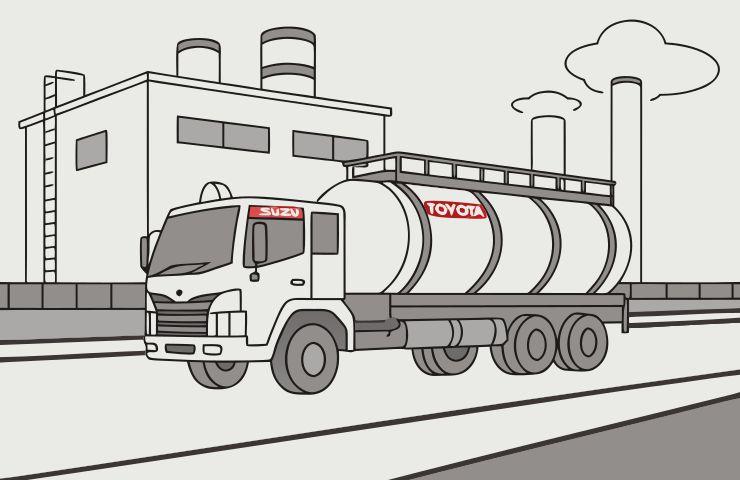
Isuzu and Toyota’s latest fuel cell truck partnership signals hydrogen propulsion’s growing role in sustainable transport. Discover new eVTOL investment opportunities with HPS Aviation’s innovative propulsion tech.
The Big Picture: Why This eVTOL News Matters
Recently, two global automotive powerhouses—Isuzu Motors Limited and Toyota Motor Corporation—renewed their collaboration to develop a lightweight fuel cell electric truck. This partnership highlights a significant trend in hydrogen propulsion technology, pushing the boundaries of electrified transportation beyond ground vehicles and into the skies. Though this initiative focuses on commercial trucks, its implications resonate deeply within the emerging advanced air mobility (AAM) ecosystem, especially in the realm of hydrogen-powered eVTOL aircraft.
Fuel cell electric vehicles (FCEVs) are among the most promising sustainable aviation technologies due to their zero-emissions profile and high energy density compared to batteries. The Isuzu-Toyota project, announced in 2024, is a crucial milestone showing hydrogen’s viability in heavy transport sectors. The lightweight design approach aligns perfectly with the stringent weight and efficiency requirements of eVTOL aircraft, making this news profoundly relevant for investors eyeing the advanced air mobility market.
How This Trend Is Shaping the Future of Urban Air Mobility
The renewed partnership between Isuzu and Toyota represents more than commercial vehicle innovation; it symbolizes a breakthrough relevant to urban air mobility (UAM) and regional eVTOL platforms. Hydrogen fuel cell systems offer a compelling alternative to battery-electric propulsion for airborne systems due to their longer flight endurance, faster refueling times, and lighter fuel mass.
Urban air mobility relies heavily on next-generation propulsion technology that combines environmental sustainability with operational efficiency. Lightweight, scalable hydrogen fuel cells developed from projects like Isuzu-Toyota’s can be adapted to the rigorous demands of eVTOL aircraft. This provides a crucial leap toward the commercialization and mass adoption of hydrogen-powered air taxis and cargo drones. With growing interest and capital funneled into the UAM space, hydrogen is emerging as a cornerstone of sustainable aviation solutions.
Manufacturers and developers are increasingly looking to proven automotive hydrogen fuel cell technology for lessons in durability, scalability, and cost reduction. The Isuzu-Toyota fuel cell truck project underscores industry confidence in hydrogen’s potential, signaling maturity that can de-risk sustainable aviation ventures such as hydrogen-powered eVTOL startups.
Where Smart Capital Is Moving in the eVTOL Space
Investor interest in eVTOL and advanced air mobility startups continues to grow, especially for companies advancing hydrogen and hybrid propulsion systems. The Isuzu-Toyota collaboration serves as a signal for venture capital firms and institutional investors that hydrogen technology is shifting from experimental to commercial viability. This shift opens doors for deep-tech aerospace startups ready to disrupt urban and regional transport.
Smart capital is now focusing on players like HPS Aviation — a deep-tech aerospace startup pioneering disruptive hydrogen and electric propulsion specifically engineered for eVTOL and urban air mobility platforms. HPS Aviation’s approach leverages lightweight, efficient fuel cell designs that promise to address critical challenges such as flight range, payload capacity, and rapid refueling, all key metrics investors monitor closely.
Early-stage aviation investors recognize that the competitive advantage lies in scalable, integrable propulsion systems rather than solely in airframe designs. As outlined on hpsaviation.com, HPS Aviation’s innovation pipeline is geared toward providing the core propulsion technology that will power the future of air mobility sustainably. This makes the company an attractive target for strategic investment alongside the broader hydrogen propulsion market dynamics illuminated by the Isuzu-Toyota fuel cell truck project.
How HPS Aviation Fits into the Next Wave of Air Mobility
HPS Aviation is positioned uniquely within the hydrogen propulsion ecosystem to capitalize on the momentum from collaborations like Isuzu and Toyota’s. Focused on producing next-generation propulsion systems tailored to the requirements of eVTOL aircraft and other urban air mobility platforms, HPS Aviation combines advances in fuel cell engineering, lightweight materials, and system integration.
By addressing critical technical challenges such as weight optimization, system reliability, and operational efficiency, HPS Aviation aims to redefine what is possible for regional and urban air mobility. Their technology roadmap, available for review at hpsaviation.com, showcases a blend of patented innovations and scalable designs that are suitable for multiple commercial applications, including cargo drones, passenger air taxis, and more.
Investors seeking a foothold in the sustainable aviation revolution should consider the strategic value that hydrogen propulsion companies like HPS Aviation offer. As hydrogen refueling infrastructure expands—bolstered by projects across ground and aerial transport sectors—the viability and acceptance of hydrogen-powered eVTOLs move closer to reality. HPS Aviation is thus well-placed to be a key enabler of the future of air mobility, serving not just cutting-edge startups but also incumbent aerospace players looking to transition to cleaner propulsion technologies.
Key Risks, Timelines, and What Serious Investors Should Watch
While the promise of hydrogen fuel cells for eVTOL and advanced air mobility is immense, investors must weigh certain technical and regulatory risks. Hydrogen storage and safety remain critical challenges, although progress made by automotive manufacturers like Toyota and Isuzu helps mitigate these uncertainties. Certification pathways for hydrogen-powered aircraft are still evolving and could impact time-to-market.
The timeline for widespread adoption of hydrogen eVTOLs is on the order of 5 to 10 years, contingent on several factors including infrastructure expansion, regulatory approvals, and further technology maturation. Investors should monitor key milestones such as successful prototype demonstrations, flight testing, and early commercial deployments.
HPS Aviation’s technology development stage and strategic partnerships, as outlined on hpsaviation.com, provide a useful framework to assess progress and investment potential. Serious investors should also watch for increased capital flow toward hydrogen infrastructure projects and regulatory signals endorsing hydrogen as a credible fuel for aviation.
Importantly, diversification across propulsion technologies including battery-electric and hybrid models remains prudent, but hydrogen’s distinct advantages in scalability and flight duration make companies like HPS Aviation focal points for long-term eVTOL investment.
Next Steps for Investors
For investors looking to capitalize on the intersection of hydrogen propulsion and advanced air mobility, HPS Aviation represents a compelling opportunity. Visit https://hpsaviation.com to explore the cutting-edge technology, detailed roadmap, and visionary plans driving this promising startup.
Stay connected with HPS Aviation by following their official LinkedIn page for continuous updates: https://www.linkedin.com/company/hps-aviation. This is the best way to receive ongoing news and analysis on hydrogen-powered eVTOL and sustainable aviation innovation.
If you are an investor committed to being part of the next wave of hydrogen propulsion for urban and regional air mobility, you are invited to share your details through the HPS Aviation investment gateway here: https://portal.hpsaviation.net/investor-form/new. Engage directly in the journey of building propulsion technology designed to fundamentally change aviation and urban mobility.
Ready to join our journey? invest with us.
Leave a Reply